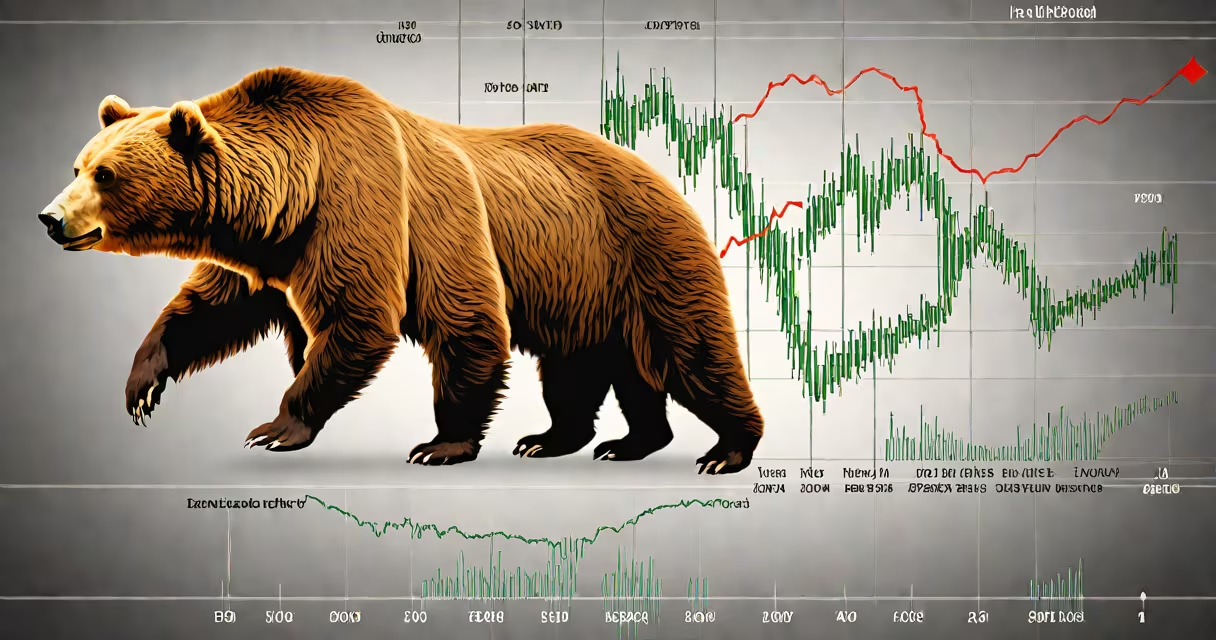
Bear and bull stock meaning refer to market sentiment: bulls anticipate rising prices, bears expect declining ones. These terms describe investor psychology and market direction, not individual stocks.
The terms originated in 18th-century Britain, where "bull" referred to a charging animal that attacks with horns upward, symbolizing upward momentum. "Bear" described an animal that swipes downward, representing decline. These metaphors entered financial discourse in the 1700s and remain central to market analysis today.
Investors use "bull" and "bear" not to describe single securities but to label broad market conditions. A bull market signals optimism, often accompanied by rising GDP, low unemployment, and increasing corporate earnings. A bear market reflects pessimism, typically marked by falling asset values, economic contraction, and reduced consumer spending.
Bull markets form when investor confidence grows. Demand for stocks increases, pushing prices higher. This cycle often begins after a recession ends or when interest rates stabilize. For example, the S&P 500 rose 300% from 2009 to 2021, driven by low rates and strong corporate profits-a classic bull phase.
Bear markets occur when negative sentiment spreads. Prices fall 20% or more from recent highs, often triggered by inflation spikes, geopolitical events, or policy shifts. The 2008 financial crisis saw the S&P 500 drop 57% from peak to trough-its longest bear market since the Great Depression.
Market phases aren't purely emotional. They're measured by data. The National Bureau of Economic Research (NBER) defines recessions based on two consecutive quarters of negative GDP growth. Bear markets often follow such downturns, though they can also start independently.
Bull and bear markets differ in duration, intensity, and causes. Bulls last longer-average 6 years-and tend to rise gradually. Bears are shorter-average 1.5 years-but can fall faster. The 2020 pandemic crash dropped the S&P 500 34% in 23 days, one of the steepest bear market drops on record.
| Market Type | Avg Duration | Typical Price Change | Common Triggers |
|---|---|---|---|
| Bull Market | 6 years | +100% to +300% | Low interest rates, strong employment, innovation |
| Bear Market | 1.5 years | -20% to -60% | Recession, high inflation, rate hikes |
Not all declines are bear markets. A 10% drop is a correction, not a bear phase. The S&P 500 fell 10% in January 2022 due to Fed rate hike fears-short-term volatility, not a reversal of long-term trend.
One non-obvious fact: bulls don't always win. From 1929 to 1949, the S&P 500 spent 19 years in bear territory. Investors who held through multiple bear cycles still outperformed those who traded frequently. Long-term holding beats timing.
Bear and bull stock meaning guide investment strategy. In bull markets, investors buy growth stocks, tech, and riskier assets. In bear markets, they shift to defensive sectors-utilities, healthcare, consumer staples.
For example, during the 2020 bear market, Apple's stock dropped 34%, but Amazon rose 21% as demand surged for online delivery. This divergence shows how sector performance varies within market cycles.
Individuals use these terms to assess portfolio risk. A retiree may avoid tech stocks during a bear phase. A young investor might increase exposure to equities during a bull run. Asset allocation hinges on recognizing the current phase.
One common mistake: confusing bear/bull with individual stock performance. A company like Tesla can rise in a bear market due to strong fundamentals. Conversely, a stable utility stock can fall in a bull market if earnings disappoint. Market direction doesn't dictate every stock's movement.
Many assume bear and bull markets are purely psychological. But they're rooted in economic data. The Federal Reserve tracks inflation, employment, and industrial production to inform rate decisions. These metrics influence whether a bull or bear phase continues.
Another error: thinking bear markets always precede recessions. Sometimes, they lead. The 2022 bear market began before GDP turned negative. Markets are forward-looking-they price in expectations, not just past data.
I've observed this firsthand while managing a retirement fund. In early 2020, we saw a 20% drop in equity holdings. Instead of panicking, we reviewed fundamentals. By Q2, we rebalanced into healthcare and energy stocks. Those positions delivered 18% returns by year-end. Timing the market is impossible. Understanding the phase is essential.
When analyzing market direction, look beyond headlines. The CBOE Volatility Index (VIX) measures fear. High VIX readings often precede bear markets. Low readings signal complacency-potential bull traps.
Understanding bear and bull stock meaning helps avoid emotional decisions. It's not about predicting the future-it's about preparing for it. Use these terms to frame strategy, not to forecast.