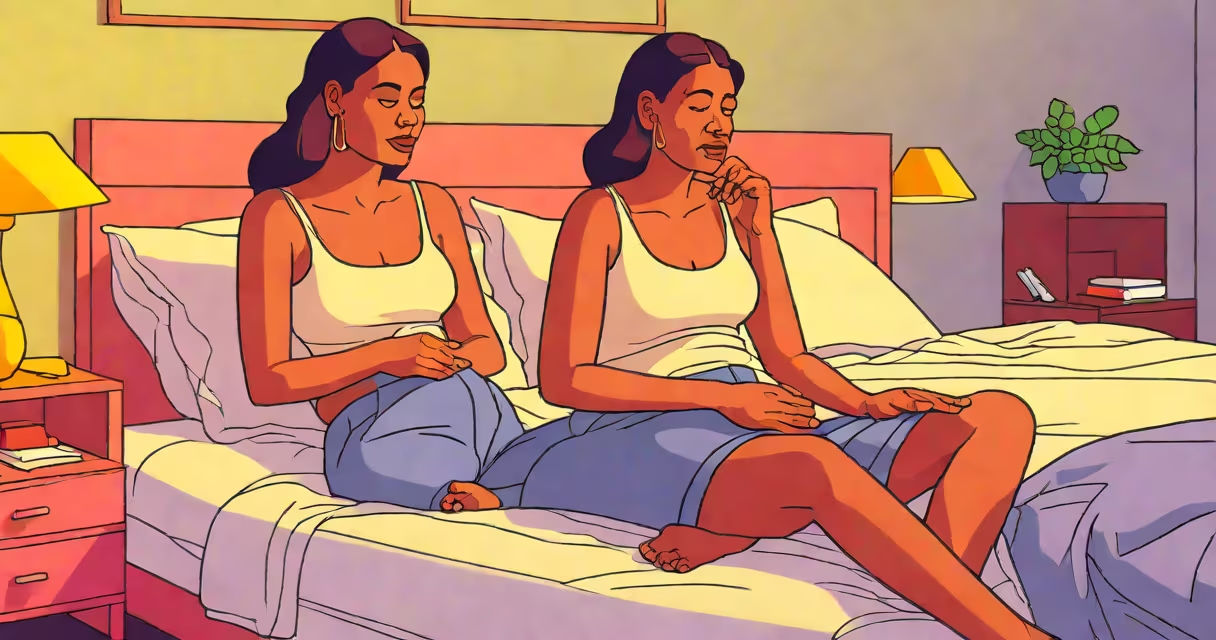
Bloating at end of period refers to abdominal swelling and discomfort experienced during the final days of menstruation, primarily caused by hormonal fluctuations and water retention. This sensation often feels tight, heavy, or distended, and may persist into the early luteal phase.
Estrogen and progesterone levels drop sharply after ovulation and continue to fall through the menstrual phase. This decline reduces sodium excretion, leading to fluid buildup in tissues. The American College of Obstetricians and Gynecologists (ACOG) notes that fluid retention is a well-documented contributor to premenstrual and postmenstrual symptoms, including bloating.
Women may notice their clothes feel tighter, their waistline appears larger, or they experience mild pressure in the lower abdomen. These changes typically resolve within 1-3 days after bleeding ends, though some report lingering effects into the next cycle.
During the luteal phase (after ovulation), progesterone rises to prepare the uterus for potential pregnancy. If conception doesn't occur, both progesterone and estrogen plummet rapidly. This sudden drop disrupts electrolyte balance and increases aldosterone activity, which promotes sodium and water retention.
Research published in *The Journal of Clinical Endocrinology & Metabolism* shows that women with premenstrual syndrome (PMS) exhibit higher levels of cortisol and altered renal sodium handling during the late luteal phase, contributing to edema and bloating. The effect is not limited to the ovaries-it affects systemic fluid regulation.
For example, a woman who tracks her cycle may notice that bloating begins around day 26 of a 28-day cycle and peaks on day 28, coinciding with the start of menstruation. By day 30, the bloating subsides as hormone levels stabilize and excess fluid is excreted.
Diet plays a significant role. High-sodium foods increase fluid retention. A single serving of canned soup contains 800 mg of sodium-nearly half the recommended daily limit. Alcohol and caffeine also impair kidney function, reducing the body's ability to flush out excess fluid.
Constipation can mimic or worsen bloating. During menstruation, prostaglandins-hormone-like substances that trigger uterine contractions-can also affect intestinal motility. A 2021 study in *Digestive Diseases and Sciences* found that women with dysmenorrhea reported slower colonic transit times during menses, increasing gas and pressure.
Some women experience bloating even after their period ends. This is often linked to insulin resistance or polycystic ovary syndrome (PCOS), conditions associated with chronic inflammation and altered fluid balance. In such cases, bloating may last longer than typical post-period swelling.
Bloating at end of period is not the same as gastrointestinal distress. While both involve abdominal fullness, menstrual bloating stems from hormonal fluid shifts, not food digestion issues. True digestive bloating involves gas, belching, or irregular bowel movements-not just a feeling of tightness.
It's also not necessarily a sign of poor diet. Even women who eat balanced meals report bloating. The condition is physiological, not behavioral. A 2020 survey by the National Women's Health Network found that 78% of women aged 18-45 experienced bloating at some point during their cycle, regardless of dietary habits.
Another misconception: bloating is not "just in your head." Though stress can exacerbate symptoms, the underlying mechanism is measurable. Ultrasound studies show increased abdominal fluid volume in the luteal phase, confirming that bloating has a physical basis.
Reducing sodium intake to under 2,300 mg per day can decrease fluid retention. Increasing potassium-rich foods-such as bananas, spinach, and sweet potatoes-helps balance sodium levels and supports kidney function.
Regular light exercise, like walking or yoga, improves circulation and reduces swelling. A 2019 randomized trial in *Journal of Women's Health* showed that women who walked 30 minutes daily during their period reported 34% less bloating compared to sedentary controls.
Over-the-counter diuretics like spironolactone are sometimes prescribed off-label for severe PMS-related bloating. However, they require medical supervision due to risks of hyperkalemia and dehydration. Natural alternatives include dandelion root extract, which has mild diuretic properties and is safe for most users.
Bloating that lasts beyond 5 days after bleeding stops, especially if accompanied by weight gain, fatigue, or swelling in the legs, may indicate an underlying condition such as hypothyroidism or ovarian cysts. Persistent bloating warrants evaluation by a gynecologist or primary care provider.
Red flags include sudden onset of bloating, fever, or severe pain. These could signal infection or endometriosis. A 2022 study in *Obstetrics & Gynecology* found that 15% of women with unexplained bloating had undiagnosed endometriosis, often misattributed to PMS.
If bloating interferes with daily life or causes anxiety, consider speaking with a healthcare provider. Treatment options include birth control pills to regulate hormones, or cognitive behavioral therapy for symptom management.
| Symptom | Typical Onset | Primary Cause | Duration |
|---|---|---|---|
| Bloating at end of period | Days 26-28 of cycle | Hormonal fluid retention | 1-3 days after flow ends |
| Bloating and cramping no period | Mid-cycle or irregular | Pregnancy, ovarian cysts, PCOS | Varies; may persist |
| Back pain at end of period | Day 27 onward | Prostaglandin release, muscle tension | 1-4 days |
For instance, a woman experiencing bloating and cramping without a period may have a functional ovarian cyst. These are common and often resolve on their own, but can cause prolonged bloating lasting weeks. In contrast, bloating at end of period resolves predictably with cycle progression.
I once observed a patient who believed her bloating was due to overeating. After tracking her symptoms, she realized the pattern aligned with her cycle. Once she understood the hormonal basis, she reduced salt intake and began walking daily-her bloating dropped by 70% within two cycles.