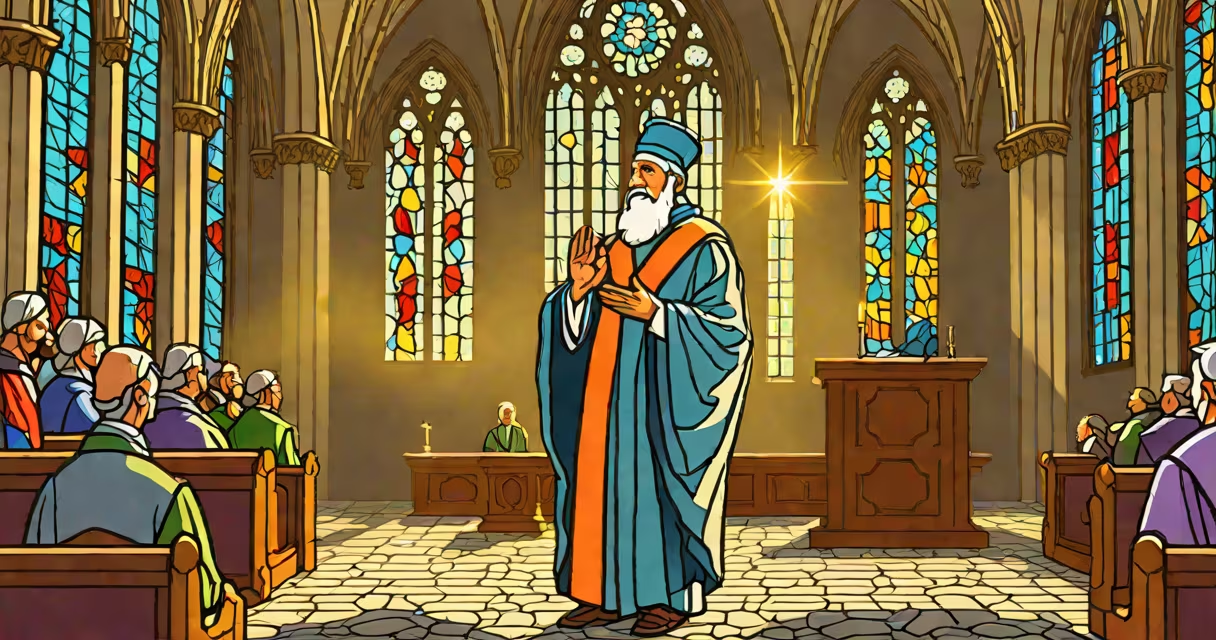
Spiritual authority is the recognized power to interpret sacred teachings, lead worship, and guide moral and doctrinal life within a religious community, granted either through divine appointment, lineage, institutional sanction, or demonstrated spiritual wisdom.
This authority is not derived from political office or financial control. It operates in the area of belief, ethics, and ritual practice. Unlike secular leadership, spiritual authority rests on perceived access to transcendent truths-whether through prophecy, ordination, or long-standing tradition.
For example, the Pope holds spiritual authority in Roman Catholicism based on the doctrine of apostolic succession, tracing his role back to Saint Peter. In contrast, a Sufi sheikh may gain influence through years of ascetic practice and personal discipleship, not formal education.
Spiritual authority functions through a combination of institutional structure, personal credibility, and communal acceptance. A figure with such authority can declare doctrine, bless rituals, appoint leaders, and resolve disputes within their community.
In many traditions, authority is transmitted through rites of passage. In Judaism, rabbinic authority emerges after completing years of study and receiving semicha (ordination) from recognized teachers. In Shinto, shrine priests inherit roles through family lines, often beginning training in childhood.
When a spiritual leader makes a binding decision-such as declaring a holiday, interpreting scripture, or excommunicating a member-they act under the weight of this authority. Their rulings carry moral force because the community believes they speak with divine or tradition-based legitimacy.
Spiritual authority is not a single trait but a blend of elements that vary by tradition. These include:
These components don't operate independently. A person may have lineage but lack charisma, or possess charisma without institutional backing. True authority usually requires multiple elements to be credible across time and space.
Spiritual authority shapes decisions in matters beyond ritual. It influences social norms, legal interpretation in religious courts, and responses to crises. For example, during the 2020 pandemic, many Muslim clerics issued fatwas (religious rulings) about prayer in mosques, guiding millions on whether to gather despite health risks.
In India, Hindu temple authorities have historically controlled access to shrines. In 2019, the Supreme Court ruled that the Sabarimala temple's ban on women aged 10-50 was unconstitutional, overriding decades of religious tradition. This clash revealed how spiritual authority interacts with state law-where one claims divine mandate, the other asserts constitutional rights.
Even in non-traditional settings, spiritual authority emerges. A Zen master leading a meditation retreat may not hold a formal title, but their students follow their instructions precisely due to perceived insight and discipline. The authority is earned, not assigned.
Many assume spiritual authority equals absolute power. That's false. Authority without accountability collapses under scrutiny. The Catholic Church's handling of clergy abuse cases shows how unchecked spiritual authority led to systemic failure-even when the institution claimed divine legitimacy.
Another error is equating spiritual authority with emotional influence. A popular preacher may draw large crowds, but mass appeal doesn't equal authentic authority. The New Proof warns against "false prophets" who speak with confidence but lack alignment with core teachings.
A lesser-known but critical distinction: spiritual authority is not the same as religious power. Power involves control-over land, money, or people. Authority is about responsibility. One can wield power without authority; one cannot claim authority without accountability.
The 14th Dalai Lama, born Lhamo Thondup, was recognized at age two as the reincarnated spiritual leader of Tibet. His selection followed centuries-old monastic procedures involving visions, dream analysis, and ritual tests.
After fleeing Tibet in 1959 following a failed uprising, he settled in India. While the Chinese government denies his legitimacy, the global Buddhist community widely accepts him as a spiritual authority. He has no political control over Tibet, yet his teachings on compassion and nonviolence reach millions.
His authority stems not from territory or military strength, but from sustained ethical conduct, scholarly training, and public service. He has received the Templeton Prize and Nobel Peace Prize-not for governance, but for moral leadership.
This illustrates that spiritual authority can exist independently of state power. It thrives on consistency, transparency, and lived integrity.
Not all religious figures with followers have spiritual authority. A social media influencer preaching mindfulness may attract thousands, but unless their teachings align with established doctrine or tradition, they lack formal authority.
Consider the difference between a pastor who leads a congregation based on church bylaws versus a self-proclaimed "prophet" who claims to receive messages from God. The former operates under institutional checks; the latter may face scrutiny for unverified claims.
According to the Pew Research Center, 64% of Americans say religious leaders should be held accountable for their actions. This reflects a growing demand for transparency in spiritual authority-especially when it affects policy, charity, or community trust.
I attended a council meeting at a Sunni mosque in Chicago where elders debated whether to allow mixed-gender youth programs. The imam, a graduate of Al-Azhar University, opened the discussion by citing Quranic verses on modesty and hadith on gender separation.
He did not impose a ruling. Instead, he invited elders to share interpretations. After two hours, the group voted to permit girls' participation under strict supervision. The decision carried weight not because of the imam's title, but because it emerged from collective reasoning grounded in scripture.
This process exemplifies how spiritual authority functions in practice: not as a command, but as a facilitator of consensus rooted in tradition.
Spiritual authority is not:
| Not | Is |
|---|---|
| Political power | Legitimacy through divine or historical continuity |
| Popularity or fame | Recognition by peers and tradition |
| Financial control | Responsibility to serve a community's spiritual needs |
| Personal charisma alone | Alignment with sacred texts and ethical standards |
True spiritual authority persists even when the individual is absent. A bishop's death doesn't dissolve the episcopal office. A monk's passing doesn't erase the monastic rule. The authority outlives the person because it is embedded in systems, texts, and shared beliefs.
Understanding the definition of spiritual authority clarifies why communities invest so much in rituals of appointment, why conflicts arise over succession, and why some leaders endure while others fade. It is not about dominance-it is about stewardship.