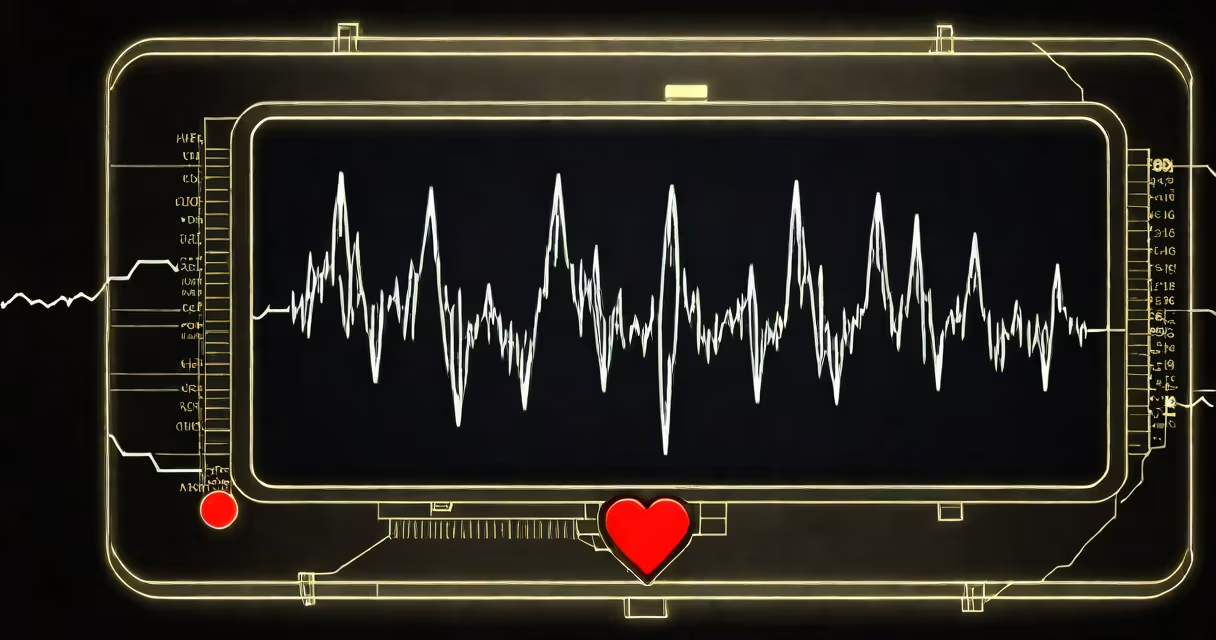
The medical term for fast heart beat is tachycardia, defined as a heart rate exceeding 100 beats per minute in adults at rest. This condition arises when electrical signals in the heart fire too quickly or abnormally, leading to rapid contractions.
Tachycardia is not a single disease but a category of cardiac rhythm disorders. It occurs when the heart's natural pacemaker or conduction system malfunctions. Common triggers include stress, dehydration, stimulants like caffeine or nicotine, and underlying heart conditions such as coronary artery disease or cardiomyopathy.
According to the American Heart Association, tachycardia affects approximately 2 million people annually in the U.S., with higher prevalence in individuals over 65. The condition can manifest as brief episodes or persist for hours, depending on the cause. It may occur without warning, especially in cases of paroxysmal supraventricular tachycardia (PSVT).
The heart's rhythm is controlled by electrical impulses generated in the sinoatrial (SA) node, located in the right atrium. These signals travel through the atrioventricular (AV) node to the ventricles, coordinating contraction. When this pathway is disrupted-due to extra circuits, damaged tissue, or abnormal firing-the result is a rapid heartbeat.
For example, in AV nodal reentrant tachycardia (AVNRT), a loop forms within the AV node due to dual pathways. This creates a self-sustaining cycle of rapid signals, often causing sudden onset of palpitations. Episodes typically last minutes to hours and resolve spontaneously or with intervention.
A 2021 study published in *Circulation* found that 68% of patients presenting with unexplained tachycardia had identifiable structural heart abnormalities on echocardiography, highlighting the importance of imaging in diagnosis.
Tachycardia is categorized by origin and mechanism. The most common types include:
| Type | Origin | Heart Rate Range | Common Triggers |
|---|---|---|---|
| Supraventricular tachycardia (SVT) | Atria or AV node | 150-250 bpm | Caffeine, anxiety, hormonal changes |
| Ventricular tachycardia (VT) | Lower chambers (ventricles) | 100-250 bpm | Heart attack, cardiomyopathy, electrolyte imbalance |
| Atrial fibrillation (AFib) | Atria | Irregular and often rapid (100-175 bpm) | Hypertension, aging, obesity |
One key distinction often missed is that not all fast heartbeats are dangerous. SVT, while uncomfortable, rarely causes long-term damage in otherwise healthy individuals. Ventricular tachycardia, however, poses a higher risk of progressing to ventricular fibrillation-a life-threatening arrhythmia requiring immediate defibrillation.
During a routine clinic visit, I observed a 34-year-old woman experiencing sudden-onset palpitations. Her ECG showed narrow-complex tachycardia at 180 bpm. After a vagal maneuver (Valsalva), her heart rate dropped to 70 bpm within 30 seconds. She was diagnosed with PSVT and referred for catheter ablation, which successfully eliminated the abnormal circuit.
Diagnosing tachycardia begins with history and physical exam. A healthcare provider listens for irregular rhythms and checks blood pressure. If suspicion remains high, an electrocardiogram (ECG) is performed. A 12-lead ECG captures the heart's electrical activity across multiple angles, helping distinguish between SVT, VT, and AFib.
For intermittent episodes, a Holter monitor (24-hour continuous ECG) or event recorder may be used. These devices capture data during daily activities, increasing detection rates. A 2020 study in *JAMA Cardiology* reported that wearable ECG patches detected 3.4 times more asymptomatic tachycardia episodes than standard clinic ECGs.
Management depends on the type and patient stability. Stable patients with SVT may respond to vagal maneuvers or medications like adenosine. Unstable patients-those with low blood pressure, chest pain, or altered mental status-require immediate cardioversion.
Many people mistake tachycardia for anxiety or panic attacks. While both can cause rapid heart rate, tachycardia involves actual electrical dysfunction. Anxiety-induced tachycardia is usually mild and resolves with breathing techniques. True tachycardia persists despite relaxation and may require treatment.
Another misconception is that all fast heartbeats are dangerous. In reality, some forms-like exercise-induced tachycardia-are normal. A 2022 review in *The Lancet* emphasized that context matters: a resting heart rate of 110 bpm in a sedentary adult warrants evaluation, but a rate of 130 bpm during a workout is expected.
One non-obvious fact: certain medications can cause tachycardia as a side effect. Beta-blockers, used to treat hypertension, can paradoxically trigger rebound tachycardia upon abrupt discontinuation. Patients should taper off these drugs under medical supervision.
Seek urgent care if fast heart beat is accompanied by chest pain, shortness of breath, dizziness, or fainting. These symptoms suggest reduced cardiac output and possible hemodynamic instability.
Chronic tachycardia increases the risk of heart failure, stroke, and sudden cardiac death. Early diagnosis and management improve outcomes. The American College of Cardiology recommends screening for tachycardia in patients with diabetes, hypertension, or a family history of sudden cardiac events.