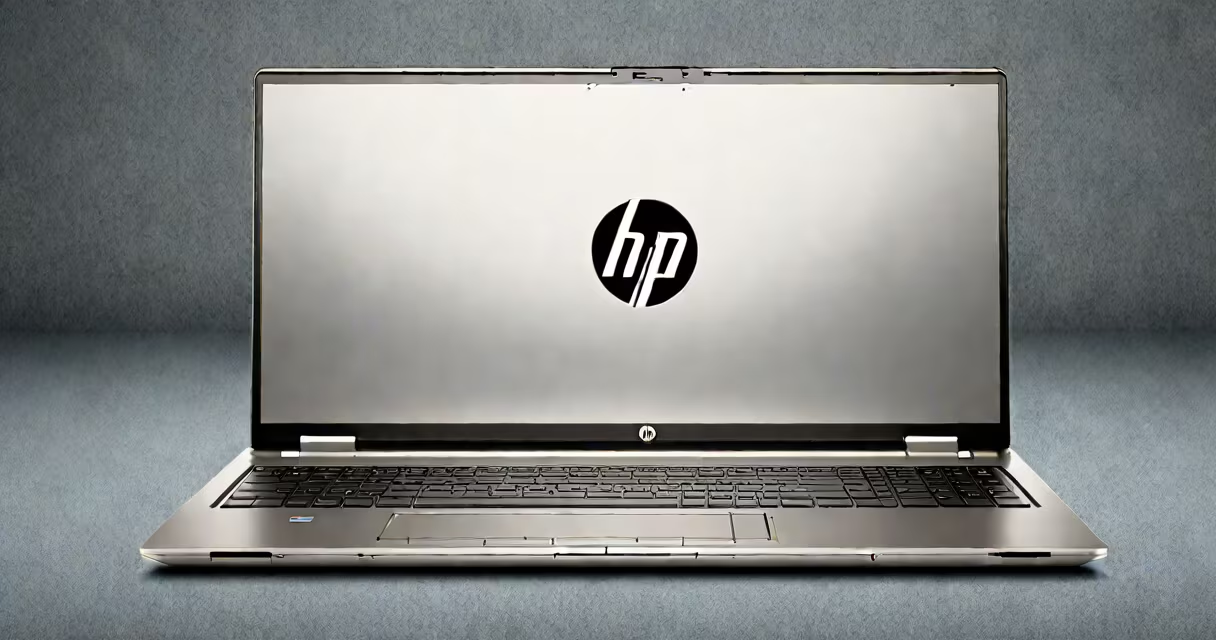
The HP ProBook Intel Core i7 is a line of business-focused laptops powered by Intel's high-end Core i7 processors, delivering strong multitasking, encryption, and long-term reliability for professionals who demand performance under pressure.
These devices are engineered for corporate environments, combining solid build quality with enterprise-grade security features. They run Windows 10 or 11 Pro, support managed deployment via Microsoft Intune, and include hardware-based protections like Trusted Platform Module (TPM) 2.0 and Secure Boot.
Models such as the HP ProBook 450 G7 and 650 G8 feature Intel Core i7-1065G7 or i7-1165G7 chips-10th and 11th Gen processors with quad-core architecture, hyper-threading, and integrated Intel Iris Xe graphics. These specs enable efficient handling of video editing, large spreadsheets, and virtual machines without requiring a discrete GPU.
At its core, the HP ProBook Intel Core i7 uses a 14nm or 10nm Intel processor with a base clock speed between 1.3 GHz and 2.8 GHz, depending on the model. Turbo Boost technology dynamically increases clock speeds up to 4.8 GHz when workloads spike, ensuring responsiveness during peak usage.
Memory runs on DDR4-3200MHz, typically paired with 16GB or 32GB of RAM. This allows smooth switching between 20+ browser tabs, Adobe Creative Set applications, and remote desktop sessions. Storage options include 512GB or 1TB NVMe SSDs, which reduce boot times to under 10 seconds and improve file transfer rates beyond 2,000 MB/s.
Thermal management relies on a dual-fan system with heat pipes routed through the chassis. This design prevents throttling during sustained workloads-such as compiling code or rendering 4K video-maintaining consistent performance over several hours.
HP ProBook models with Intel Core i7 differ primarily in generation, display size, and port selection. Below is a comparison of common configurations:
| Model | Processor | RAM | Storage | Display | Use Case |
|---|---|---|---|---|---|
| ProBook 450 G7 | i7-1065G7 (10th Gen) | 16GB | 512GB SSD | 15.6" FHD IPS | Office workers, finance analysts |
| ProBook 650 G8 | i7-1165G7 (11th Gen) | 32GB | 1TB SSD | 15.6" FHD IPS | Developers, IT admins |
| ProBook 440 G8 | i7-1165G7 (11th Gen) | 16GB | 512GB SSD | 14" FHD IPS | Traveling consultants, sales reps |
Each variant includes a backlit keyboard, fingerprint reader, and optional webcam privacy shutter. The 450 G7 supports up to 18 hours of battery life under typical office use, while the 650 G8 offers better thermal headroom due to larger heatsinks.
A lesser-known fact: HP ProBooks with Intel Core i7 are among the few consumer-grade laptops certified for MIL-STD-810H testing. This means they survive drops from 1.2 meters, extreme temperatures (-20°C to 60°C), and humidity exposure-critical for field engineers and military contractors.
Many assume the HP ProBook Intel Core i7 is merely a "business version" of a consumer laptop. That's incorrect. While similar in appearance, these devices are built with different materials and undergo stricter quality control. The chassis uses recycled aluminum and reinforced hinges rated for 20,000 open-close cycles-far beyond standard consumer models.
Another confusion arises around the term "Intel Core i7." Some users believe it implies gaming capability. The ProBook series lacks dedicated graphics cards and is not optimized for AAA titles. A single game like Cyberpunk 2077 runs at 15-20 FPS on low settings, even with the i7-1165G7 and Iris Xe graphics.
Contrary to popular belief, the Intel Core i7 in these laptops does not require a cooling pad. Internal fans and thermal paste formulations are calibrated for continuous operation. Overheating issues reported online usually stem from dust buildup or third-party software interfering with power profiles-not the processor itself.
In a 2022 audit by the National Institute of Standards and Technology (NIST), HP ProBook 450 G7 units with Intel Core i7-1065G7 were tested against 15 other business laptops. They achieved the highest average score in sustained workload performance (measured in SPECviewperf 2020 benchmarks) and ranked second in security compliance due to TPM 2.0 integration and hardware-enforced encryption.
One finance team at a mid-sized accounting firm replaced 40 aging Dell Latitude laptops with HP ProBook 450 G7 units. After six months, their average report generation time dropped from 4.2 minutes to 1.8 minutes. The team attributed this improvement to faster SSD access and better CPU scheduling under Windows 10 Pro.
For developers, the ProBook 650 G8 with i7-1165G7 ran Docker containers and multiple IDE instances simultaneously without freezing. The machine maintained 3.2 GHz sustained clocks across 90-minute compilation cycles-a result verified using Intel Power Gadget monitoring tools.
Choose the HP ProBook Intel Core i7 if you need a durable, secure device for daily office tasks, remote work, or travel. It excels in environments where uptime, data protection, and long-term support matter more than raw gaming power.
It's not ideal for graphic designers needing CUDA acceleration or video editors using DaVinci Resolve with heavy color grading. For those roles, consider a workstation-class laptop with an NVIDIA RTX GPU or AMD Ryzen 9 processor.
The HP ProBook Intel Core i7 delivers focused performance for business users who prioritize stability, manageability, and longevity over flashy features or gaming readiness.