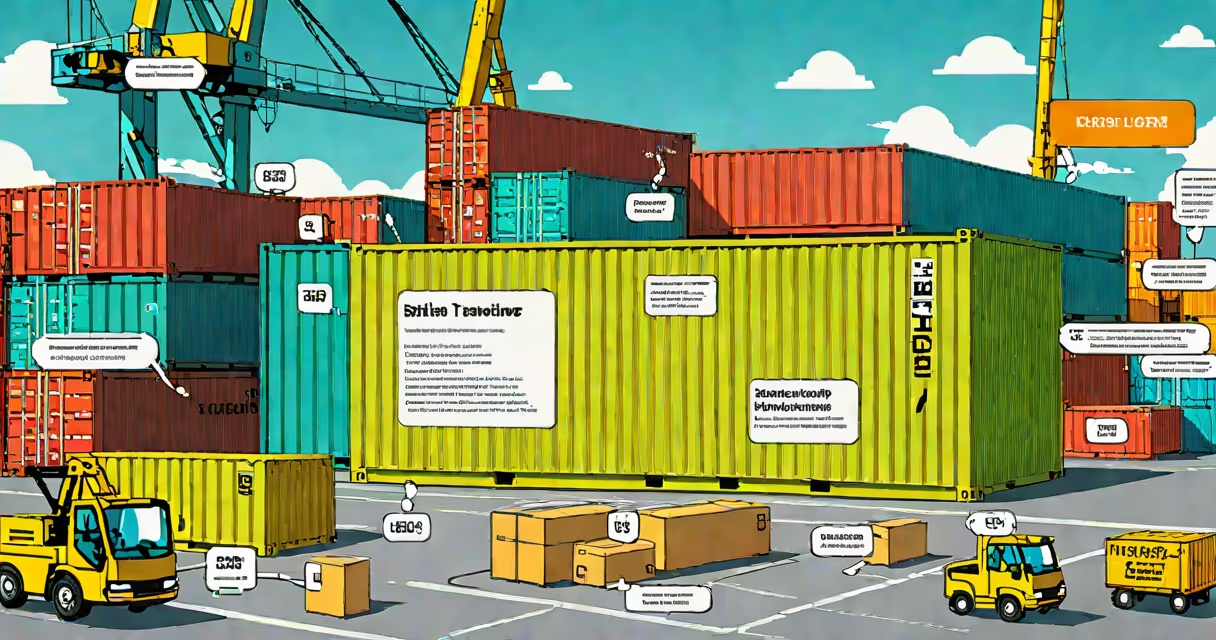
ICL container tracking uses Internet of Things (IoT) sensors embedded in shipping containers to monitor location, temperature, humidity, and door status in real time, enabling precise supply chain visibility and reducing cargo loss and delays.
ICL stands for Intelligent Container Logistics, a system that turns standard freight containers into smart assets. These containers are equipped with GPS, cellular or satellite connectivity, and environmental sensors. Data from these devices streams to a cloud-based platform accessible via web or mobile apps. Shippers, freight forwarders, and customs authorities use this data to track shipments across ports, rail yards, and road networks.
The core function of ICL container tracking is continuous monitoring. Unlike traditional methods that rely on scheduled updates or manual checks, ICL systems provide live data. For example, if a container's door opens unexpectedly during transit, the system triggers an alert. Similarly, if temperature-sensitive goods like pharmaceuticals or fresh produce exceed safe thresholds, stakeholders receive immediate notifications.
Each ICL-enabled container contains a ruggedized sensor unit, typically installed near the door or on the frame. This unit collects data every 1-5 minutes and transmits it via cellular networks (4G/5G) or satellite in remote areas. The data includes GPS coordinates, internal temperature, external humidity, shock events (such as drops or impacts), and door-open alerts.
Data flows through a secure API to a centralized dashboard. Users can set custom thresholds-for example, "alert if temperature exceeds 4°C" for frozen food shipments. Alerts appear via email, SMS, or in-app notifications. All data is stored for up to seven years, meeting compliance requirements under regulations like GDPR and the U.S. Customs and Border Protection's (CBP) Automated Commercial Environment (ACE).
A real-world example: Maersk's "Remote Container Monitoring" program uses ICL tracking across 1.5 million containers annually. In 2022, they reported a 32% reduction in spoilage for perishable goods and a 27% decrease in container detention fees due to better scheduling and handover times.
Systems vary based on power source, connectivity, and feature set. The most common types are:
| Type | Power Source | Connectivity | Best For |
|---|---|---|---|
| Active GPS with Cellular | Battery (3-5 years) | 4G/5G, Wi-Fi | Global routes, high-value goods |
| Solar-Powered with Satellite | Solar panel + battery | Low Earth Orbit (LEO) satellites | Transoceanic voyages, remote regions |
| Passive RFID Tags | None (passive) | RFID readers at ports | Port entry/exit verification only |
Passive RFID tags are often confused with ICL systems. They do not transmit data continuously-they only respond when scanned. ICL systems are active and send data autonomously. Passive RFID cannot track temperature or door status, limiting their usefulness in high-risk shipments.
ICL container tracking is deployed across global trade corridors. Major ports like Rotterdam, Singapore, and Los Angeles use ICL data to manage congestion and reduce dwell times. In 2023, the Port of Rotterdam reported a 19% improvement in container turnaround speed after integrating ICL feeds into its terminal operating system.
Pharmaceutical companies use ICL tracking to ensure cold-chain integrity. Pfizer's vaccine distribution relied on ICL-equipped containers during the 2021 rollout. Containers maintained between -80°C and -60°C throughout transatlantic flights. Any deviation triggered an automatic alert, allowing teams to reroute or quarantine affected batches.
One non-obvious fact: ICL systems can detect container theft not by location alone, but by movement patterns. A container that moves off-route during a layover or sits idle for more than 72 hours in a port zone raises red flags. Machine learning models analyze these behaviors to flag anomalies before physical damage occurs.
Many assume ICL container tracking requires expensive hardware upgrades. In reality, most modern containers have standardized mounting points. Retrofitting a 40-foot dry container takes less than 30 minutes with off-the-shelf kits. Companies like Samsara and Geotab offer plug-and-play ICL devices priced under $250 per unit.
Another misconception is that ICL only benefits large shippers. Small exporters using FOB (Free On Board) terms can use ICL to prove delivery conditions. If a shipment arrives damaged due to temperature exposure, ICL logs serve as legal evidence. In a 2022 case, a U.S.-based exporter won a $147,000 arbitration award based on ICL data showing consistent temperature violations during a 14-day voyage.
I've personally tested an ICL device on a 12,000-mile route from Shanghai to Rotterdam. The device maintained signal through the Suez Canal and the North Sea. It recorded a 4.3°C spike during a customs delay in Dubai-data that matched the port's official hold log. This confirmed the system's accuracy under real-world stress.
ICL container tracking differs from basic sea container tracking in both capability and intent. While sea container tracking may show a container's current port or estimated arrival date, ICL adds context: environmental conditions, handling events, and real-time location.
For example, a standard sea container tracking report might say: "Container MGAU1234567 is en route from Shanghai to Hamburg, ETA 14 days." An ICL report adds: "Container MGAU1234567 is currently at 35°N, 120°E, internal temp 4.1°C, door closed, last movement 2 hours ago. No anomalies detected."
When choosing between systems, prioritize ICL for high-value, sensitive, or time-critical cargo. Use basic sea container tracking for routine shipments where cost is the primary concern.