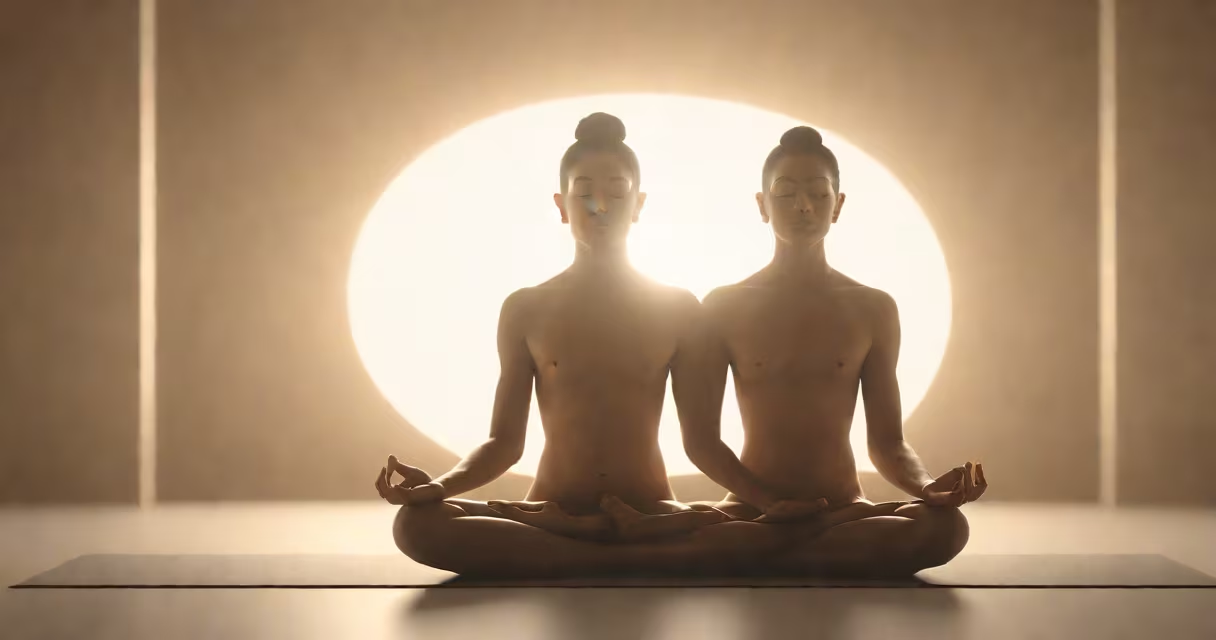
Meditation is not inherently spiritual-it is a mental practice that can be approached with religious, secular, or therapeutic intent. While many ancient traditions use meditation to cultivate spiritual insight, modern applications often focus on mental clarity, stress reduction, or emotional regulation without reference to faith.
The term "spiritual" implies connection to something beyond the physical self-often a divine presence, inner consciousness, or transcendent state. Meditation may lead to such experiences, but it does not require them. A person can meditate daily to improve focus or reduce anxiety without engaging with any belief system.
According to the National Center for Complementary and Integrative Health (NCCIH), mindfulness meditation-common in Western wellness programs-is used primarily for psychological benefits, not religious development. Over 10 million adults in the U.S. practice meditation regularly, with most citing stress relief as their primary goal, not enlightenment or communion with a higher power.
Meditation involves sustained attention, breath awareness, or mental visualization. These techniques alter brain activity in regions linked to attention, emotion regulation, and self-awareness. Functional MRI studies show increased activity in the prefrontal cortex and decreased activity in the default mode network during focused meditation-changes associated with reduced mind-wandering and improved concentration.
In Buddhist tradition, meditation aims to dissolve ego attachment and realize impermanence. Practices like Vipassana involve observing sensations without reaction, leading practitioners toward insight into suffering and liberation. The Dalai Lama has stated that meditation's core purpose is "to calm the mind and develop compassion," emphasizing ethical cultivation alongside mental training.
By contrast, secular meditation programs like Mindfulness-Based Stress Reduction (MBSR)-developed by Jon Kabat-Zinn at the University of Massachusetts Medical School-teach participants to observe thoughts without judgment. MBSR uses no religious references. Its clinical trials show measurable reductions in cortisol levels and improvements in sleep quality among patients with chronic pain.
Different forms of meditation serve different purposes. The table below outlines common types, their origins, and whether they emphasize spiritual or practical outcomes.
| Type | Origin | Primary Goal | Spiritual? (Yes/No) |
|---|---|---|---|
| Vipassana | Buddhist | Insight into reality through observation | Yes |
| Zen (Zazen) | Japanese Zen Buddhism | Awakening through seated stillness | Yes |
| Mindfulness (MBSR) | Secular, academic | Stress reduction, emotional regulation | No |
| Transcendental Meditation (TM) | Hindu-based, 1950s | Accessing pure consciousness via mantra | Yes |
| Loving-kindness (Metta) | Buddhist | Cultivating unconditional goodwill | Yes |
Even within spiritual systems, meditation varies. For example, Christian contemplative prayer includes silence and breathwork similar to Eastern practices, but its aim is union with God-not detachment from self. The Catholic Church recognizes meditation as a valid path to deeper faith, but emphasizes prayerful intention over technique.
Many assume meditation must involve chanting, incense, or a specific posture. This is not true. You can meditate while walking, lying down, or even during routine tasks like washing dishes. The practice hinges on attention, not ritual.
A frequent error is equating mindfulness with spirituality. Mindfulness is a cognitive skill-observing present experience without evaluation. It can be taught in schools, hospitals, and workplaces without mentioning gods, souls, or reincarnation. Research from Johns Hopkins University found that mindfulness meditation reduces symptoms of depression and anxiety, with effects comparable to antidepressant medication in some cases.
Another misunderstanding: that meditation is passive. In reality, it requires consistent effort. A 2016 study published in *Psychological Science* showed that participants who practiced 10 minutes of daily mindfulness for eight weeks demonstrated measurable improvements in working memory capacity and attention control. The gains were strongest in those who maintained regular practice.
I began meditating in 2018 after a burnout at work. My initial goal was not enlightenment-it was to stop racing thoughts before sleep. I used a free app, guided sessions lasting 7 minutes, focusing on breath and body scanning. After six weeks, I noticed fewer nighttime awakenings and less irritability during meetings.
This illustrates a key point: meditation is a tool. Its function depends on the user's intent. A soldier may meditate to stay calm under fire. A student may use it to retain information. A monk may meditate to attain nirvana. All are valid uses.
Meditation is not spiritual when it lacks reference to transcendence, moral transformation, or sacred identity. For example, using a meditation app to fall asleep, practicing progressive muscle relaxation, or doing breathing exercises during a panic attack are secular acts. They address physiological and psychological states without invoking a soul, divine will, or afterlife.
Even when people report mystical experiences-such as feeling "one with everything"-these are subjective interpretations. Neuroscience shows such feelings correlate with activity in the temporoparietal junction, a brain region involved in self-other boundaries. The experience may feel spiritual, but it arises from neural processes, not divine intervention.
As Dr. Andrew Newberg, a neuroscientist studying meditation's effects on the brain, notes: "The brain can generate profound experiences of unity and peace, but that doesn't mean they're supernatural." His research confirms that meditation alters brain structure and function, regardless of the practitioner's beliefs.
Meditation is not inherently spiritual. It is a flexible mental practice that can support spiritual growth, but it also serves secular, medical, and psychological purposes. Whether it becomes spiritual depends entirely on the individual's intention and context. Millions use meditation daily without referencing any religious or metaphysical structure. The practice exists independently of belief.