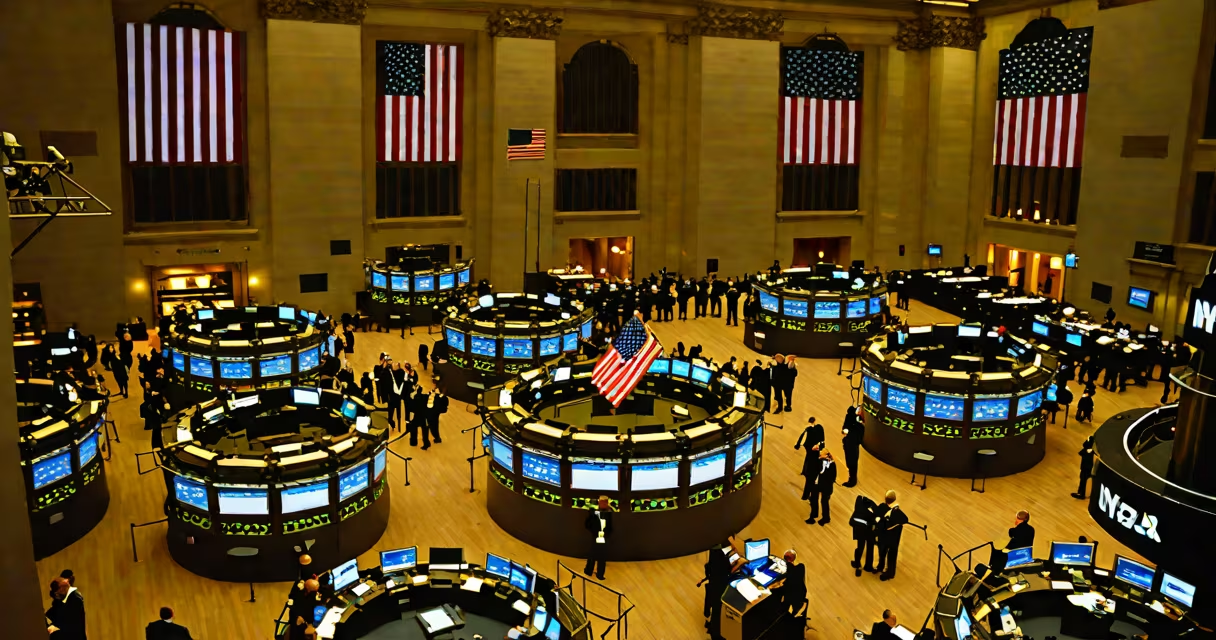
The New York Stock Exchange (NYSE) operates Monday through Friday from 9:30 a.m. to 4:00 p.m. Eastern Time, excluding recognized U.S. public holidays. This schedule applies to regular trading sessions and excludes pre-market and after-hours trading.
Market operations follow a consistent weekly pattern. Trading begins each weekday at 9:30 a.m. ET and ends at 4:00 p.m. ET. During this period, stocks, bonds, and exchange-traded funds (ETFs) are actively bought and sold. The NYSE closes early on certain holidays, such as Christmas Eve and New Year's Eve, and remains fully closed on major holidays like Independence Day, Thanksgiving, and Martin Luther King Jr. Day.
Trading resumes the next business day after a closure. For example, if a holiday falls on a weekend, the exchange typically observes the holiday on the following Monday. The NYSE maintains a published list of scheduled closures each year, updated in advance by the Securities and Exchange Commission (SEC) and the Financial Industry Regulatory Authority (FINRA).
The NYSE operates under a regulated structure enforced by the SEC and FINRA. Market participants must adhere to standardized start and end times. The opening bell rings at 9:30 a.m. ET, signaling the start of the day's trading session. The closing bell sounds at 4:00 p.m. ET, ending the regular session. These times are synchronized across all listed securities.
Pre-market trading begins at 4:00 a.m. ET and runs until 9:30 a.m. ET. After-hours trading occurs from 4:00 p.m. to 8:00 p.m. ET. These extended sessions allow investors to react to news events outside normal hours, though liquidity and volume are lower. The NYSE uses electronic systems like the NYSE Arca platform to manage trades during these periods.
For example, on January 1, 2024, the NYSE was closed for New Year's Day. The market reopened on Tuesday, January 2, at 9:30 a.m. ET. Investors who placed orders on December 31, 2023, during after-hours trading saw their orders processed on the next business day. This demonstrates how the exchange handles weekends and holidays by deferring execution until the next open day.
The NYSE divides its daily activity into distinct sessions, each with specific time windows and operational rules:
| Session Type | Start Time (ET) | End Time (ET) | Key Features |
|---|---|---|---|
| Regular Trading | 9:30 a.m. | 4:00 p.m. | Primary volume, highest liquidity, standard market hours |
| Pre-Market | 4:00 a.m. | 9:30 a.m. | Limited participation, price volatility higher |
| After-Hours | 4:00 p.m. | 8:00 p.m. | Lower volume, wider bid-ask spreads |
During regular trading, the NYSE uses a hybrid model combining floor-based specialists and electronic trading. The system supports high-frequency trading algorithms and institutional orders. Pre-market and after-hours sessions rely entirely on electronic platforms, reducing the role of human specialists.
A common misconception is that the NYSE operates 24/7. It does not. While global markets like the Tokyo Stock Exchange operate earlier in the day, the NYSE follows a strict U.S. business-day schedule. Even when international news breaks late at night, the NYSE does not reopen until the next morning unless there is a special event, such as a circuit breaker triggered by extreme volatility.
Many assume that the NYSE is open on all weekdays regardless of holidays. This is incorrect. The exchange closes on federal holidays, including Memorial Day, Labor Day, and Presidents' Day. On these days, all trading halts. The SEC publishes the official holiday calendar annually, which includes dates for closures and early closes.
Another misunderstanding is that after-hours trading reflects real-time market sentiment. While after-hours sessions do reflect investor reactions to earnings reports or macroeconomic data, they often lack the depth of liquidity seen during regular hours. A 2023 study by the Federal Reserve Bank of New York found that average after-hours trading volume was 38% lower than during regular sessions.
For example, when Tesla reported quarterly earnings after the close on July 26, 2023, its stock moved 7.2% in after-hours trading. However, the volume was 41% below the average daily volume. This illustrates how price movements can be amplified in low-volume environments, increasing risk for traders.
The NYSE observes 10 national holidays each year. These include:
On some occasions, the NYSE may close early due to weather emergencies or national events. For example, during Hurricane Sandy in 2012, the exchange suspended trading for two consecutive days. The decision was made jointly by the NYSE and the SEC based on safety concerns and infrastructure risks.
It's also important to distinguish between the NYSE and NASDAQ. While both are U.S. stock exchanges, they have different operational models. The NYSE uses a hybrid system with designated market makers, while NASDAQ relies entirely on electronic networks. Both follow similar holiday schedules, but their trading hours are not identical. The NYSE opens at 9:30 a.m. ET, and NASDAQ also opens at the same time, but their technical infrastructures differ.
I once attended a live market event at the NYSE in 2019 during a corporate earnings season. The floor was packed with traders and analysts. When the opening bell rang, the noise level spiked. I noticed that even experienced traders paused briefly before placing orders, showing how ritualistic and structured the process is. The consistency of the schedule ensures predictability for institutional investors.
Always verify the current status of the NYSE before placing trades. The exchange may announce unexpected closures due to technical failures or security threats. The most accurate source is the NYSE website or the SEC's public filings.