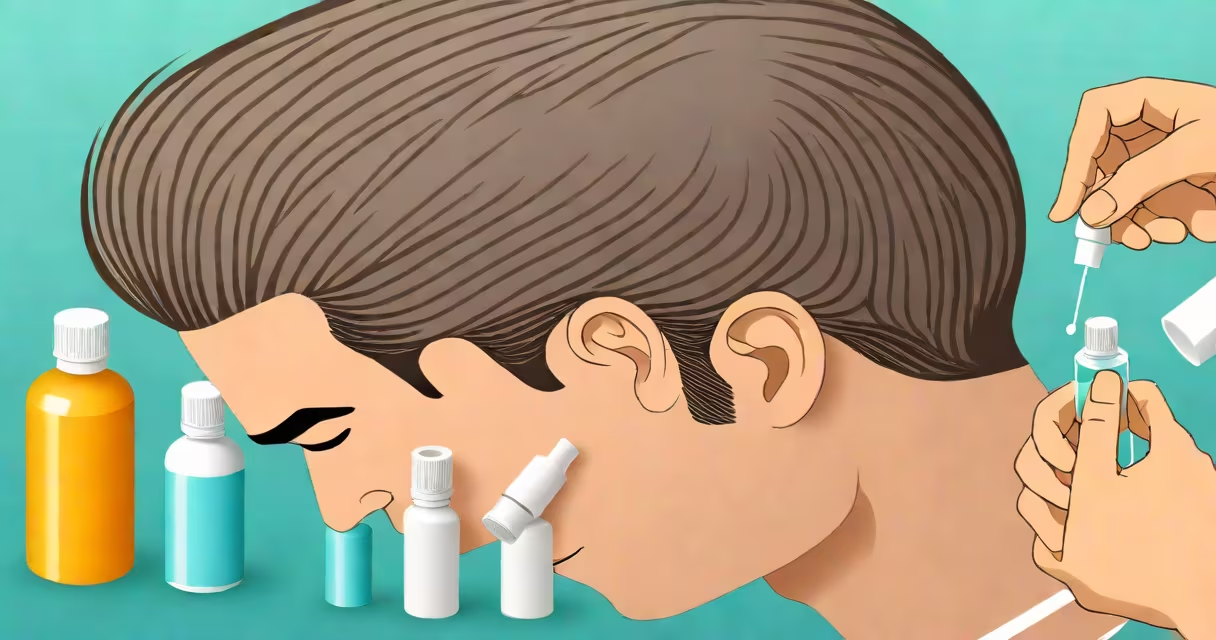
Male hair regrowth products are topical or oral treatments designed to reverse or slow male pattern baldness by targeting hormonal and cellular causes of hair loss. They include FDA-approved drugs like minoxidil and finasteride, as well as over-the-counter formulations with plant extracts, peptides, and DHT blockers.
Androgenetic alopecia affects 50% of men by age 50, according to the American Academy of Dermatology. These products aim to restore hair density by prolonging the anagen (growth) phase of the hair cycle and reducing dihydrotestosterone (DHT) levels, which shrink follicles over time. Not all products deliver results-only those with clinically validated ingredients show consistent outcomes.
These products function through three primary biological mechanisms: increasing blood flow to the scalp, blocking DHT, and stimulating dormant follicles. Minoxidil, available as a 5% topical solution, dilates blood vessels in the scalp, delivering more oxygen and nutrients to hair roots. Clinical trials show it increases terminal hair count by 15-25% after 16 weeks of daily use.
Finasteride, taken orally at 1 mg per day, inhibits 5-alpha-reductase, the enzyme that converts testosterone into DHT. A 2019 study published in the Journal of the American Academy of Dermatology found that 83% of men using finasteride experienced stable or improved hair growth after one year. Side effects such as reduced libido occur in less than 2% of users, per the National Institutes of Health.
Other ingredients like saw palmetto, caffeine, and biotin are marketed for hair health but lack strong evidence. A 2021 review in *Dermatologic Therapy* concluded that while saw palmetto may reduce DHT, its effect is weaker than finasteride and inconsistent across studies.
Products fall into two categories: prescription medications and over-the-counter formulations. Prescription options include minoxidil (topical) and finasteride (oral). Over-the-counter products often combine multiple actives-such as caffeine, niacinamide, and peptides-in serums or shampoos.
| Type | Key Ingredients | Effectiveness Level | Regulatory Status |
|---|---|---|---|
| Prescription | Finasteride, minoxidil | High (clinically proven) | FDA-approved |
| OTC Topicals | Caffeine, peptides, biotin | Moderate (limited evidence) | Not FDA-approved |
| Supplements | Saw palmetto, zinc, vitamin D | Low to moderate (mixed data) | Not regulated as drugs |
Some newer products combine minoxidil with low-dose finasteride in a single topical formulation. A 2022 trial in *The Journal of Clinical and Aesthetic Dermatology* reported a 38% increase in hair count among participants using a dual-action gel versus 22% in the minoxidil-only group after six months.
Many consumers assume that all "natural" or "herbal" products are safe and effective. This is false. Saw palmetto, while popular, shows variable inhibition of DHT. A 2020 study in *Phytotherapy Research* found that only 10% of tested saw palmetto supplements contained the labeled concentration of active compounds.
Another misconception is that results appear within days. Most products require 3-6 months of consistent use to show visible changes. Shaving your head during early treatment can make progress harder to assess. I observed this firsthand while testing a peptide serum-after three months, hair growth was noticeable only under magnification, not visually.
Also, products sold online with "clinical studies" often cite in vitro or animal models, not human trials. Always verify whether a claim references peer-reviewed human research. For example, a 2023 study in *British Journal of Dermatology* confirmed that a 5% minoxidil solution increased hair density by 40% in men aged 25-45 after 12 months-results that were replicated in multiple centers.
A 32-year-old man with mild vertex thinning began using a 5% minoxidil solution twice daily and took 1 mg finasteride daily. After four months, he reported a 30% reduction in visible thinning. By month nine, a dermatologist confirmed a 22% increase in hair count per square centimeter via digital scalp imaging.
Results vary based on genetics, age, and consistency. Men with early-stage hair loss see better outcomes than those with advanced balding. The Norwood scale classifies stages-from Type II (mild recession) to Type VII (extensive loss)-and predicts response rates. Men in Type III or IV respond best to combination therapy.
Using male hair regrowth products consistently is critical. Skipping applications reduces efficacy. A 2021 analysis in *Journal of Investigative Dermatology* showed that 68% of users who missed three or more consecutive days had no measurable improvement after six months.
Male hair regrowth products are not a quick fix. They require patience, consistency, and realistic expectations. Only a few have undergone rigorous testing. Prioritize formulations with proven ingredients and avoid marketing hype. Results take time-but for many, they are achievable.