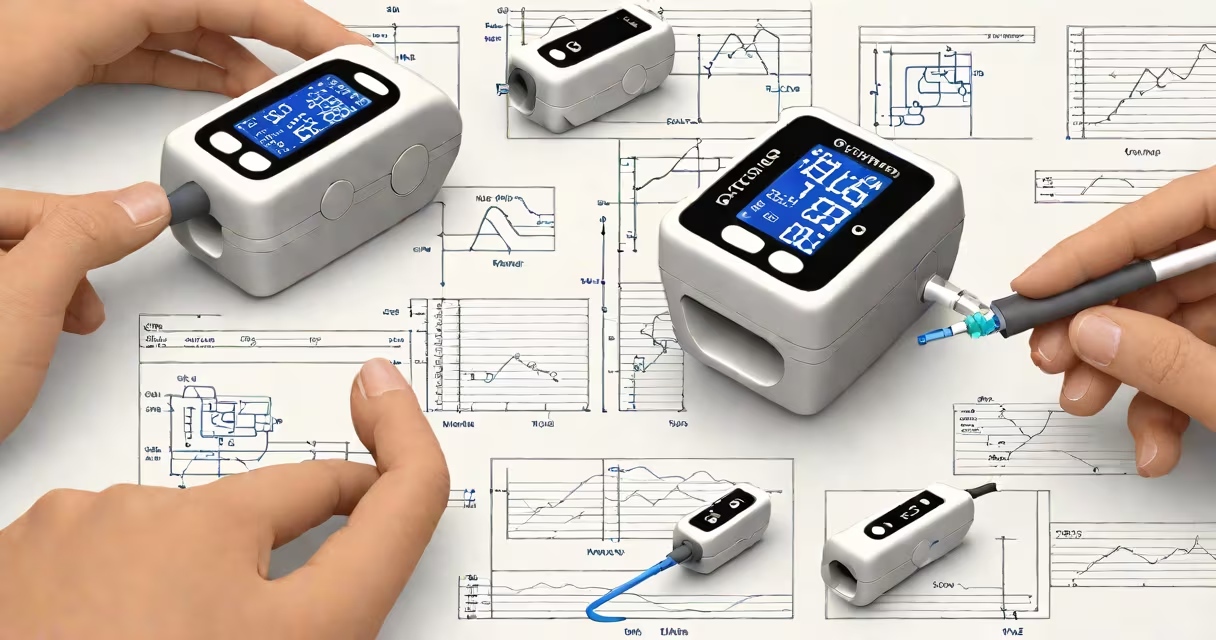
Normal o2 rate, or arterial oxygen saturation (SpO2), is the percentage of hemoglobin in the blood that is bound to oxygen. A normal value ranges from 95% to 100% in healthy individuals breathing room air. This level ensures sufficient oxygen delivery to tissues and organs.
Oxygen saturation is measured non-invasively using a pulse oximeter, a small device clipped to the finger, earlobe, or toe. The device uses red and infrared light to detect how much oxygen is attached to hemoglobin molecules. A reading below 90% indicates hypoxemia and requires medical evaluation.
The body maintains normal o2 rate through coordinated function of the lungs, heart, and circulatory system. When oxygen enters the lungs, it diffuses into red blood cells and binds to hemoglobin. The oxygenated blood then travels to tissues throughout the body. Any disruption in this process-such as lung disease, heart failure, or high altitude-can reduce oxygen saturation.
Pulse oximeters work by emitting two wavelengths of light-red (660 nm) and infrared (940 nm)-through the skin. Oxygenated hemoglobin absorbs more infrared light and allows more red light to pass through. Deoxygenated hemoglobin absorbs more red light and allows more infrared light to pass through.
The device calculates the ratio of absorbed light and converts it into a percentage. This value represents SpO2, or peripheral capillary oxygen saturation. Modern devices display the result within seconds and often include a pulse rate reading as well.
For clinical accuracy, arterial blood gas (ABG) testing remains the gold standard. ABG measures actual partial pressure of oxygen (PaO2) in arterial blood. While SpO2 correlates strongly with PaO2, discrepancies can occur in conditions like poor perfusion, anemia, or carbon monoxide poisoning.
There are two primary methods to assess oxygen levels: peripheral capillary oxygen saturation (SpO2) and arterial oxygen tension (PaO2).
| Measurement Type | Method | Normal Range | Use Case |
|---|---|---|---|
| SpO2 | Pulse oximetry (non-invasive) | 95%-100% | Quick screening, home monitoring, emergency settings |
| PaO2 | Arterial blood gas (invasive) | 80-100 mmHg | Clinical diagnosis, intensive care, precise assessment |
SpO2 is widely used because it is fast, painless, and repeatable. However, it can be inaccurate under certain conditions: low perfusion (cold extremities), nail polish (especially dark colors), motion artifact, or severe anemia. PaO2 provides more precise data but requires a blood draw and is not suitable for continuous monitoring.
A common misconception is that SpO2 reflects oxygen content in the blood. It does not. Oxygen content depends on both saturation and hemoglobin concentration. A person with low hemoglobin (anemia) may have a normal SpO2 but still be tissue hypoxic.
Values below 90% indicate hypoxemia. This threshold is clinically significant because it correlates with increased risk of organ dysfunction and mortality. For example, a study published in *Critical Care Medicine* found that patients with SpO2 below 90% had higher rates of ICU admission and longer hospital stays.
Chronic conditions such as COPD, pulmonary fibrosis, or sleep apnea can cause persistent low oxygen saturation. In these cases, supplemental oxygen therapy may be prescribed to maintain SpO2 above 90% during rest and activity. Home oximeters allow patients to monitor their levels daily.
High altitudes reduce atmospheric oxygen pressure, leading to lower SpO2. At 3,000 meters (about 9,800 feet), average SpO2 drops to around 88%. Acclimatization improves saturation over days, but supplemental oxygen may be needed during acute exposure.
During exercise, SpO2 typically remains stable in healthy people. But in those with cardiovascular or respiratory limitations, it may drop. A decrease of more than 4% from resting values during a six-minute walk test is considered abnormal and warrants further investigation.
Many assume that a reading of 100% is ideal. While 100% is within normal limits, it offers no additional benefit and may increase oxidative stress in vulnerable populations. In mechanically ventilated patients, maintaining SpO2 below 96% reduces the risk of oxygen toxicity.
Another error is equating SpO2 with oxygen content. As noted earlier, oxygen content depends on both saturation and hemoglobin levels. A patient with hemoglobin of 8 g/dL and SpO2 of 98% delivers less oxygen than a patient with hemoglobin of 15 g/dL and SpO2 of 95%. This difference is critical in anemic patients who may appear well-perfused but are functionally hypoxic.
I once observed a patient with severe anemia (hemoglobin 6.2 g/dL) who had an SpO2 of 99% on room air. Despite the normal reading, the patient was fatigued and required transfusion. The oximeter showed adequate saturation, but insufficient hemoglobin meant inadequate oxygen delivery. This case reinforced that SpO2 is a screening tool-not a complete picture.
Normal o2 rate is distinct from normal heart rate. While a typical adult heart rate ranges from 60 to 100 beats per minute, normal o2 rate refers to oxygen saturation. Confusing the two can lead to misdiagnosis. For example, a patient with atrial fibrillation may have a rapid heart rate but normal SpO2. Conversely, someone with pneumonia may have a normal heart rate but low SpO2.
When evaluating a patient, clinicians use the "O2" and "HR" together. A low SpO2 with a high heart rate suggests hypoxia-induced tachycardia. A low SpO2 with a normal heart rate may indicate chronic illness or poor cardiac output.
Understanding normal o2 rate helps identify early signs of respiratory compromise. It is not a standalone diagnostic tool but a important component of clinical assessment. Maintaining SpO2 above 95% supports cellular function, prevents complications, and guides treatment decisions.