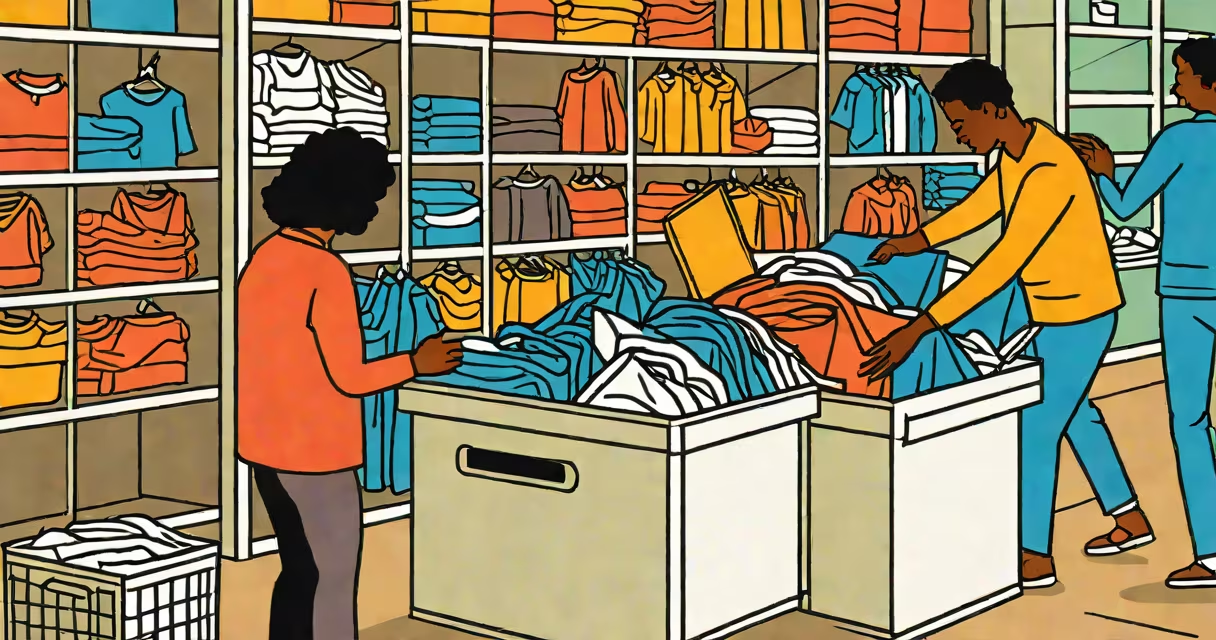
Selling to Goodwill means donating usable personal property to the nonprofit organization for resale, which allows donors to claim a tax deduction based on the fair market value of the donated items.
Goodwill Industries International operates over 3,300 retail locations across the U.S. and Canada, accepting clothing, electronics, furniture, books, and household goods. Donors receive a receipt for their contributions, which serves as documentation for claiming a tax deduction on IRS Form 8283 when the total value exceeds $500.
The process begins with sorting items that are clean, functional, and in good condition. Items must not be damaged, stained, or missing parts. Once sorted, donors drop off the goods at a local Goodwill store or schedule a pickup through the website. The organization then evaluates each item for resale potential and assigns a value based on current market conditions.
When you donate to Goodwill, you're not selling to a private buyer-you're making a charitable contribution. The nonprofit resells the items in its stores, using proceeds to fund job training programs and employment services for people with barriers to work.
To claim a deduction, you must complete IRS Form 8283 if the total value of your donation is $500 or more. For donations under $500, you can claim the deduction using Form 1040 Schedule A without needing a formal appraisal. However, the IRS requires that you have a written acknowledgment from Goodwill stating the date of donation, the name of the organization, and a description of the donated items.
For example, if you donate a set of designer handbags valued at $1,200, you must file Form 8283 and attach a receipt from Goodwill. Without this document, the IRS may disallow the deduction during an audit. The IRS mandates that donors keep records of all donations, including photos of the items and notes on their condition.
Goodwill accepts most everyday household items in working condition. Acceptable donations include:
Items rejected include hazardous materials, large appliances, mattresses, and anything with visible mold or structural damage. Goodwill does not accept items that pose safety risks or require significant repair.
A common misconception is that all donations qualify for a high-value deduction. In reality, the IRS defines fair market value as what a willing buyer would pay a willing seller in an arm's-length transaction. This means a vintage leather jacket might be worth $200 at a consignment shop-but if it's worn, faded, or out of style, its actual fair market value could be $50 or less.
One donor I observed at a Los Angeles Goodwill location brought in a collection of 1990s video games and consoles. The staff declined them due to outdated technology and lack of demand. The donor later learned that while he expected a $600 deduction, the actual value was $0 because the items were not saleable. The IRS requires donors to assess value realistically-not based on sentimental attachment or original purchase price.
Donating to Goodwill differs from giving to organizations like the Salvation Army or local food banks in how deductions are calculated. While all nonprofits offer tax benefits, Goodwill's resale model creates unique challenges in valuation.
Unlike direct cash gifts, where the deduction equals the amount given, donated goods are valued based on their condition and market demand. The IRS provides guidance in Publication 561, which states that "the value of a donated item is generally the price at which similar items sell in the marketplace."
| Type of Donation | Eligible for Deduction? | Required Documentation | Max Deduction Without Appraisal |
|---|---|---|---|
| Clothing (used) | Yes | Goodwill receipt | $500 |
| Furniture (functional) | Yes | Receipt + Form 8283 if >$500 | $500 |
| High-end electronics (new) | Yes | Appraisal required if >$500 | Full fair market value |
| Mattresses or large appliances | No | N/A | None |
Another distinction lies in how the nonprofit uses the funds. Goodwill reinvests 85% of its revenue into community programs-specifically workforce development and vocational training. According to Goodwill's 2023 annual report, they placed over 170,000 individuals into jobs last year. This impact differentiates the organization from others that may focus solely on food distribution or disaster relief.
Donors often overestimate the value of their items. A 2022 study by the National Taxpayer Advocate found that nearly 40% of claimed deductions above $500 were disallowed due to inflated valuations. The IRS emphasizes that donors cannot claim the original purchase price or retail value-they must base the deduction on what the item would sell for today in a secondhand market.
For example, a pair of Nikes originally bought for $150 might be worth $25 at a thrift store. Claiming $150 as the deduction would trigger an audit. The IRS recommends checking online marketplaces like eBay or Facebook Marketplace for comparable sales to estimate fair market value.
Another frequent error is failing to obtain a written acknowledgment. Without a signed receipt from Goodwill stating the date, description, and no goods exchanged, the IRS will not allow the deduction-even if the donation was made in person.
I once helped a client prepare their taxes after donating a vintage record collection. They had kept the original packaging and receipts but didn't realize that the IRS values used vinyl at around $5-$10 per album depending on condition and rarity. Their initial claim of $400 was reduced to $120 after research and verification. The corrected form passed audit review.
Start by creating a list of items before dropping them off. Note the brand, condition, and approximate value. Take photos for your records. Use the Goodwill website's donation calculator to estimate value ranges. Then, request a receipt at the time of drop-off.
If your total donation exceeds $500, consult a tax professional or use IRS-approved software to complete Form 8283. For donations over $500, the IRS requires a qualified appraisal if the item is worth more than $500 and is not a common household item (e.g., artwork, jewelry, vehicles).
Remember: you're not selling to Goodwill-you're donating. The act generates a tax benefit, but only if documented correctly. Always verify the value, keep proof, and follow IRS guidelines.
Selling to Goodwill is a straightforward way to reduce taxable income while supporting social programs. With proper documentation and realistic valuations, it's a practical tool for responsible giving.