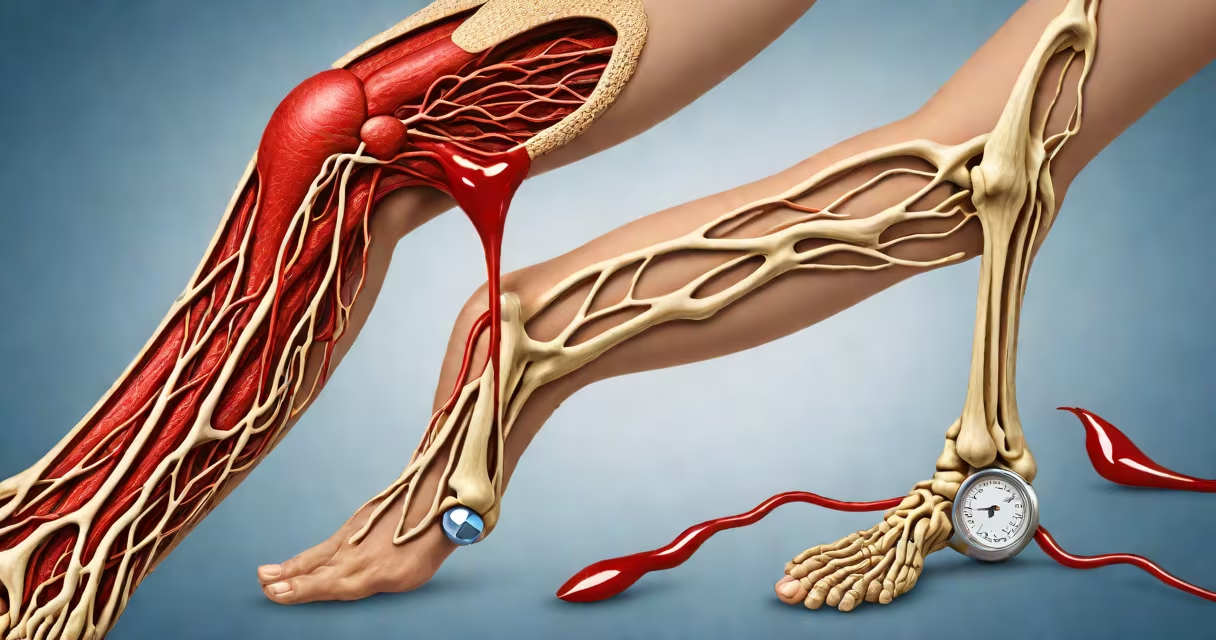
Peripheral arterial disease (PAD) is a condition where narrowed arteries reduce blood flow to the limbs, most commonly the legs. It often presents with leg pain during walking, numbness, coldness in the lower extremities, and slow-healing sores. These symptoms stem from reduced oxygen delivery to tissues due to plaque buildup in arteries.
PAD develops gradually and may go unnoticed until significant blockage occurs. The primary cause is atherosclerosis-the accumulation of fatty deposits in arterial walls. This process reduces blood volume and increases resistance, leading to ischemia in affected areas. Risk factors include smoking, diabetes, high cholesterol, and hypertension. According to the American Heart Association, approximately 8.5 million people in the U.S. have PAD, yet nearly half remain undiagnosed.
Early detection hinges on recognizing subtle warning signs. The most common symptom is intermittent claudication-pain or cramping in the calf, thigh, or buttock that occurs during physical activity and resolves with rest. This happens because muscles demand more oxygen during exertion, but restricted blood flow cannot meet the need. Other indicators include shiny, thin skin on the legs, weak or absent pulses in the feet, and toenails that grow slowly or become brittle.
People with PAD often misinterpret their symptoms as normal aging or muscle fatigue. For example, a 62-year-old woman who experiences leg cramps after walking 100 feet may assume she's out of shape. But when the pain consistently returns at the same distance and eases after stopping, it signals vascular insufficiency. A 2022 study published in *Circulation* found that 68% of patients with confirmed PAD reported walking limitations, yet only 34% had previously received a diagnosis.
Other less obvious signs include erectile dysfunction in men and non-healing foot ulcers in individuals with diabetes. These occur because poor circulation impairs tissue repair and nerve function. A patient with diabetes may develop a small cut on the foot that doesn't improve after two weeks-this is not just a wound care issue but a red flag for underlying PAD.
Physical examination reveals critical clues. A healthcare provider checks pedal pulses using a Doppler ultrasound device. Absent or diminished pulses below the knee strongly suggest PAD. Ankle-brachial index (ABI) testing compares blood pressure in the ankle to that in the arm. An ABI value under 0.9 indicates significant arterial narrowing and warrants further imaging such as CT angiography.
While PAD primarily affects the lower limbs, it can also impact the arms, especially in those with widespread atherosclerosis. However, upper-limb involvement is rare and typically seen in advanced cases. The condition is sometimes mistaken for sciatica, arthritis, or musculoskeletal strain due to overlapping pain patterns.
| Symptom | Typical Location | Associated Condition | Distinguishing Feature |
|---|---|---|---|
| Intermittent claudication | Calf, thigh, buttock | PAD | Pain stops with rest; returns with walking |
| Cold legs | Lower extremities | PAD, Raynaud's | Often bilateral; worsens in cold environments |
| Slow-healing sores | Toes, heels | PAD, diabetes | Do not improve after 2 weeks despite care |
| Weak or absent pulse | Ankle, foot | PAD | Confirmed via Doppler ultrasound |
A key distinction lies in the nature of the pain. PAD-related discomfort is reproducible-same location, same intensity after consistent effort. In contrast, musculoskeletal pain tends to vary based on posture or movement pattern. For instance, sciatica pain radiates down the back of the leg and may worsen with sitting or bending forward. PAD pain typically occurs during walking and resolves within minutes of stopping.
One major reason PAD goes undetected is that many patients do not report symptoms. A 2021 survey by the National Institutes of Health found that 40% of individuals with confirmed PAD were asymptomatic at baseline. This silent progression increases the risk of limb amputation, heart attack, or stroke. The American College of Cardiology notes that PAD doubles the risk of cardiovascular events, making it a marker for systemic vascular disease.
Another misconception is that PAD only affects older adults. While incidence rises with age, younger individuals with diabetes or a history of smoking are also vulnerable. A 35-year-old man with type 1 diabetes who smokes and reports leg fatigue during daily walks may have early-stage PAD. Ignoring these signs delays treatment and allows plaque to progress.
I once evaluated a 58-year-old woman whose primary complaint was fatigue. She walked five miles weekly but stopped when her calves began to ache. After a routine visit, her doctor dismissed it as "just getting older." A follow-up ABI test revealed an index of 0.72. She was referred for vascular imaging and later underwent angioplasty. Her symptoms resolved completely within six weeks. This case illustrates how easily PAD can be missed without targeted screening.
If you experience leg pain while walking that improves with rest, especially if you're over 50 or have diabetes, high blood pressure, or a smoking history, consult a healthcare provider. Diagnosis begins with a physical exam and ABI testing. If results indicate moderate to severe disease, imaging such as magnetic resonance angiography (MRA) or computed tomography angiography (CTA) confirms the extent of blockages.
Treatment focuses on managing risk factors and improving blood flow. Lifestyle changes-quitting smoking, regular walking programs, and controlling blood sugar-are foundational. Medications like cilostazol reduce claudication symptoms by dilating blood vessels. In severe cases, surgical interventions such as stenting or bypass surgery restore circulation.
Understanding symptoms of PAD enables timely action. Early recognition leads to better outcomes, including preserved mobility and reduced risk of heart attack or stroke. Regular screening for at-risk populations remains essential to halt progression before irreversible damage occurs.