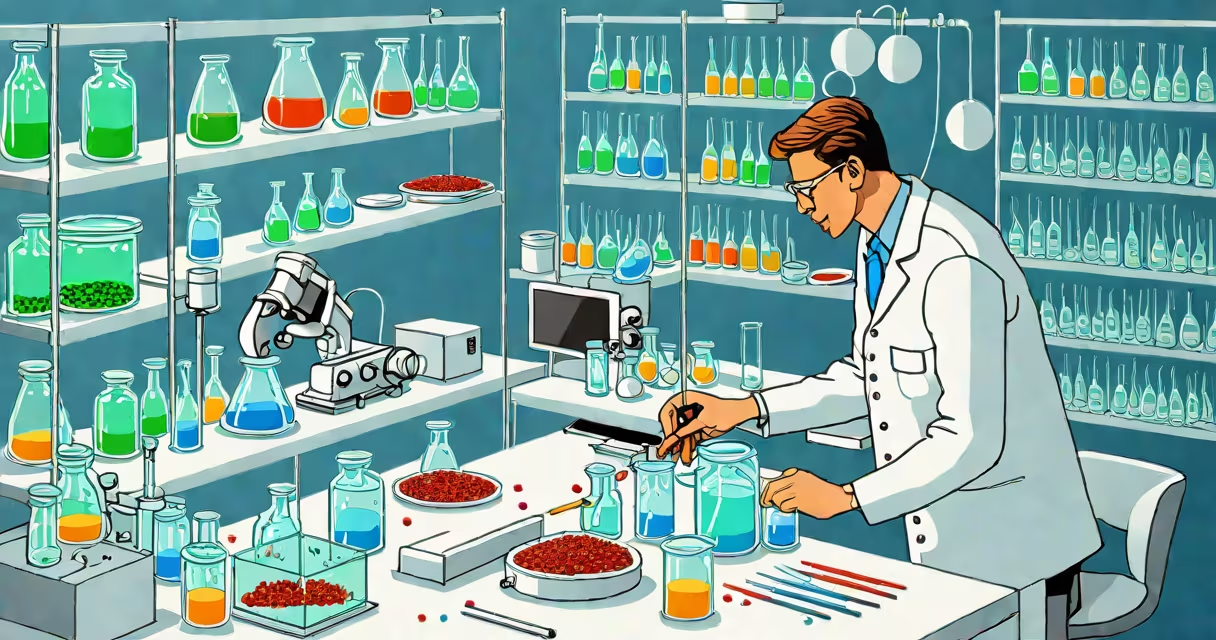
Biotechnology applies living systems and organisms to develop products and technologies that improve human health, food security, and environmental sustainability. It includes techniques like genetic modification, fermentation, and enzyme engineering used across medicine, agriculture, and manufacturing.
Modern biotechnology relies on molecular biology tools to manipulate DNA, proteins, and cells. These methods enable precise changes to biological systems, such as inserting genes into bacteria to produce human insulin. The field spans both natural processes-like yeast fermenting bread dough-and advanced laboratory techniques, including CRISPR-Cas9 for targeted gene editing.
The core idea is using biological systems to solve practical problems. For example, scientists modified E. coli bacteria to produce human insulin, replacing animal-derived sources. This process began in the 1980s and remains a standard in diabetes treatment today. The U.S. Food and Drug Administration (FDA) approved the first genetically engineered insulin product, Humulin, in 1982-marking the first commercial use of recombinant DNA technology in medicine.
Biotechnology falls into several functional categories based on application. Each uses distinct methods but shares the goal of altering biological processes for human benefit.
| Type | Key Process | Common Application | Example |
|---|---|---|---|
| Medical Biotech | Genetic engineering, protein synthesis | Disease treatment, diagnostics | Recombinant insulin, monoclonal antibodies |
| Agricultural Biotech | Gene insertion, plant tissue culture | Crop improvement, pest resistance | Bt corn, drought-tolerant wheat |
| Industrial Biotech | Enzyme catalysis, microbial fermentation | Chemical production, waste processing | Biofuels, biodegradable plastics |
| Synthetic Biology | Designing artificial genetic circuits | Custom microbes, biosensors | Engineered yeast producing artemisinin |
Medical biotechnology focuses on diagnosing and treating diseases. Insulin production through genetically modified E. coli is the most widely cited example. Human insulin gene was inserted into plasmids, which were then introduced into bacterial cells. These bacteria replicated rapidly and expressed the human insulin protein, which was harvested and purified. Today, over 90% of insulin used globally comes from this method.
Agricultural biotechnology improves crop yield and resilience. Bt corn contains a gene from Bacillus thuringiensis that produces a toxin harmful to certain insects. Field trials show Bt corn reduces pesticide use by up to 60% compared to conventional varieties. According to the International Service for the Acquisition of Agri-biotech Applications (ISAAA), Bt cotton adoption in India increased yields by 30% between 2002 and 2012.
Industrial biotechnology replaces chemical processes with biological ones. Enzymes derived from thermophilic bacteria are used in laundry detergents because they remain effective at high temperatures. The global market for industrial enzymes reached $5.7 billion in 2022, driven largely by demand for sustainable alternatives to petroleum-based chemicals.
Biotechnology addresses challenges where traditional methods fall short. In medicine, it enables treatments for conditions previously untreatable. In farming, it supports feeding growing populations amid climate change. In industry, it reduces pollution and energy consumption.
For instance, bioengineered vaccines have shortened development timelines. The mRNA-based COVID-19 vaccines developed by Pfizer-BioNTech and Moderna used synthetic RNA sequences to instruct human cells to produce spike proteins. This triggered immune responses without exposing patients to live virus. Clinical trials showed efficacy rates above 90% within weeks of administration.
Environmental applications include bioremediation-using microbes to clean oil spills or degrade plastic waste. A 2016 study published in *Nature* demonstrated that a strain of Ideonella sakaiensis could break down PET plastic in 6 weeks under controlled conditions. Researchers are now engineering faster variants to scale this process for real-world cleanup.
Many assume biotechnology means GMOs or lab-grown meat. While related, these are subsets. Not all biotech involves genetic modification. Fermentation, used for centuries in brewing and cheese-making, is a form of biotechnology that predates modern genetics.
Another misconception is that biotech is inherently unnatural. But many biotech processes mimic or improve natural biological functions. The production of penicillin from Penicillium mold is a classic example of biotechnology used since the 1940s-long before genetic engineering existed.
Some confuse biotechnology with bioengineering. Bioengineering typically involves designing artificial systems-like prosthetics or tissue scaffolds-while biotechnology focuses on modifying existing biological systems. For example, a synthetic heart valve made from biocompatible materials is bioengineering. Using bacteria to produce a therapeutic protein is biotechnology.
Insulin therapy for type 1 diabetes traditionally relied on insulin extracted from pig and cow pancreases. These sources caused allergic reactions in some patients and varied in potency. In 1978, researchers at Genentech used recombinant DNA technology to create human insulin in E. coli.
Steps involved:
This process produced pure human insulin at scale. By 1982, Eli Lilly began selling Humulin, the first FDA-approved recombinant insulin. Today, over 10 million people worldwide use biosynthetic insulin daily. The technique has since been adapted to produce growth hormones, clotting factors, and vaccines.
When I visited a biopharmaceutical facility in Indiana in 2021, I saw stainless steel fermenters holding 5,000-liter batches of E. coli cultures. The entire process-from gene insertion to final purification-was automated and monitored in real time. The consistency of the product was notable: batch-to-batch variation in purity was less than 0.5%.
While biotechnology often involves genetic manipulation, not all genetic engineering qualifies as biotechnology. For example, gene editing in animals for research purposes may not serve a direct consumer or industrial purpose. The distinction lies in application: biotechnology aims to create useful outputs, not just observe biological phenomena.
Finally, biotechnology differs from bioinformatics-a field focused on data analysis of biological information. While bioinformatics supports biotechnology by predicting protein structures or identifying gene targets, it does not involve manipulating living systems directly.
What are examples of biotechnology? From insulin to drought-resistant crops, the field delivers tangible solutions across sectors. Its power lies in harnessing biology's precision to meet human needs efficiently and sustainably.