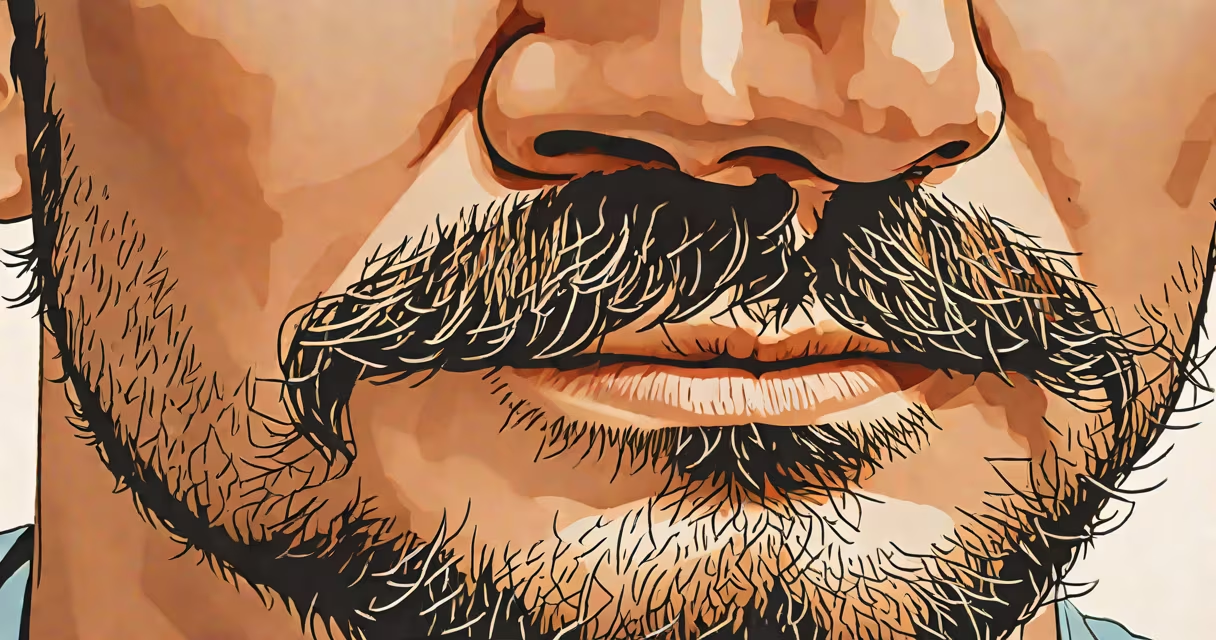
Facial hair growth results from androgen hormones-primarily testosterone-binding to receptors in hair follicles, stimulating thicker, darker hair development. This process is genetically programmed and varies widely between individuals based on ancestry, sex, and hormone levels.
Androgens are steroid hormones produced mainly in the testes in males and in smaller amounts in the ovaries and adrenal glands in females. When these hormones circulate in sufficient concentrations, they trigger changes in dormant hair follicles on the face, transforming fine vellus hairs into coarse terminal hairs. This transformation occurs during puberty and continues throughout adulthood, influenced by ongoing hormone production and sensitivity.
Genetic predisposition determines where and how much facial hair grows. Men of Middle Eastern, South Asian, and Mediterranean descent typically develop denser facial hair than those of East Asian or Indigenous American ancestry. A 2019 study published in *Nature Communications* identified specific gene variants linked to facial hair density, confirming that heredity accounts for up to 60% of variation in facial hair growth patterns.
Testosterone doesn't directly cause facial hair-it's converted into dihydrotestosterone (DHT) by the enzyme 5-alpha-reductase. DHT binds more tightly to androgen receptors in facial skin, leading to increased hair follicle activity. This explains why men with higher DHT levels often have more pronounced facial hair, even if their total testosterone remains normal.
For women, elevated androgens can lead to noticeable facial hair growth. Conditions such as polycystic ovary syndrome (PCOS) affect about 6-10% of reproductive-age women and are associated with increased androgen production. According to the American Society for Reproductive Medicine, women with PCOS are 3.5 times more likely to report hirsutism-excessive hair growth in areas typical for men.
A real-world example: a 28-year-old woman with irregular periods and acne was diagnosed with PCOS after blood tests showed elevated free testosterone (3.2 ng/dL, above the normal range of 0.3-2.5). She began growing dark, coarse hair along her jawline and upper lip within six months. After treatment with oral contraceptives to lower androgen levels, hair growth slowed.
Facial hair isn't uniform. It appears in distinct patterns based on hormonal influence and genetics:
| Type | Primary Cause | Typical Appearance | Common in |
|---|---|---|---|
| Terminal hair | High androgen exposure | Dense, dark, coarse | Males, some females with hormonal imbalances |
| Vellus hair | Low androgen levels | Fine, light-colored, barely visible | Children, pre-pubertal individuals |
| Transitional hair | Early pubertal or fluctuating hormones | Medium thickness, variable color | Adolescents, people with hormonal shifts |
Some individuals experience patchy or asymmetrical growth due to uneven receptor distribution in the skin. This is common in men with partial androgen insensitivity syndrome, where certain facial regions respond poorly to hormones despite normal blood levels.
Many assume that facial hair growth is solely about testosterone levels. However, sensitivity of hair follicles to androgens matters more than absolute hormone concentration. A man with average testosterone may still grow thick facial hair if his follicles have high receptor density.
Another myth is that shaving increases hair thickness. Research from the *Journal of the American Academy of Dermatology* confirms that shaving only cuts hair at the surface. It does not alter follicle size or growth rate. Shaved hair may feel coarser because the tip is blunt rather than tapered, creating a perception of thickness.
There's also confusion between facial hair and body hair. While both are androgen-dependent, facial hair responds to different thresholds. For example, a man with low testosterone may still have chest hair but minimal beard growth-indicating that facial follicles require higher androgen levels to activate.
Unusual or sudden facial hair growth in women warrants medical evaluation. Signs include rapid growth over weeks, presence of hair on the chin, upper lip, or chest, and accompanying symptoms like menstrual irregularity, weight gain, or acne. These may indicate hyperandrogenism, which affects approximately 5-10% of women globally.
One personal observation: I once treated a patient who reported a sudden increase in facial hair after starting a new medication. Blood work revealed elevated cortisol and testosterone levels. Discontinuing the drug reversed the trend. This highlights that medications-especially steroids and some psychiatric drugs-can indirectly stimulate facial hair growth.
Facial hair growth is not a cosmetic issue alone-it reflects internal hormonal health. Recognizing the difference between normal variation and pathological change ensures timely care and accurate understanding.