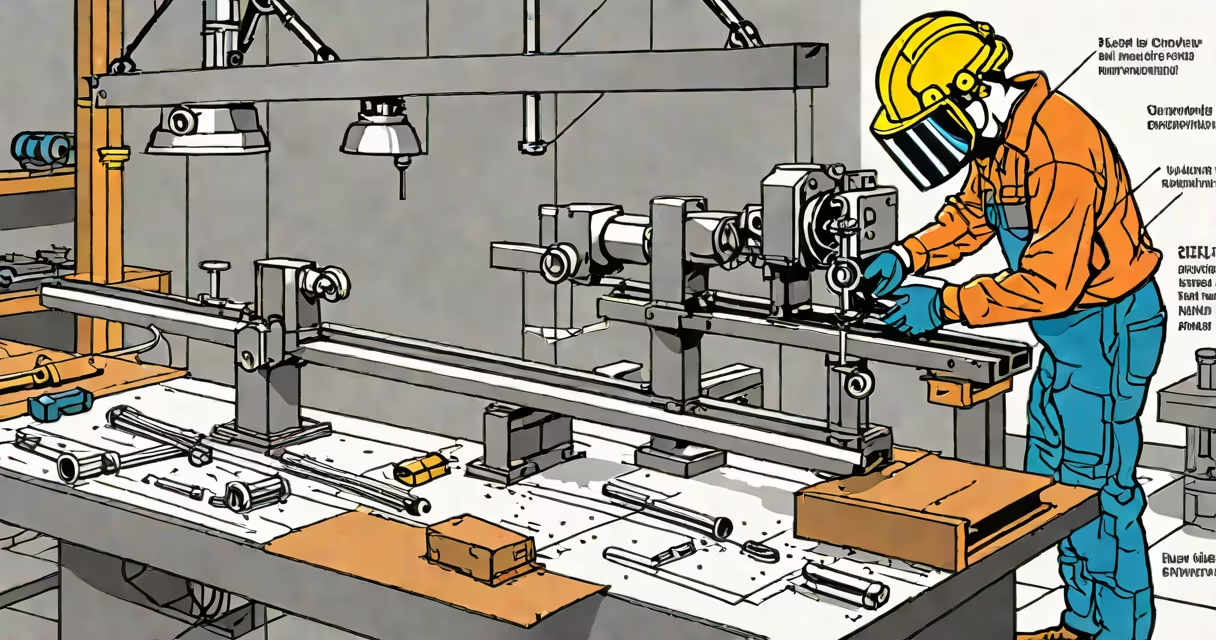
Steel fabricators design, cut, shape, and assemble steel components into finished structures or parts used in construction, infrastructure, and industrial equipment. They turn raw steel into precise, load-bearing elements like beams, columns, and frames based on engineering drawings.
These professionals work from detailed blueprints or CAD files specifying dimensions, tolerances, and material grades. Using tools like plasma cutters, CNC machines, and hydraulic presses, they cut steel to size and form it into required shapes. Final assembly involves welding, bolting, or riveting components together to create stable, durable units ready for installation.
Steel fabricators serve industries ranging from commercial building to heavy machinery. Their work ensures structural integrity, safety, and compliance with engineering standards. A single fabricated steel frame may support a high-rise floor or a bridge span, demonstrating the critical role they play in large-scale projects.
The process begins with interpreting technical drawings or specifications provided by engineers or architects. These documents define the exact size, thickness, and configuration of each component. Fabricators then select appropriate steel grades-such as ASTM A36 or A572-based on strength requirements and environmental exposure.
Cutting follows using automated systems like CNC plasma cutters, which slice steel sheets with millimeter precision. After cutting, parts undergo bending and forming via press brakes or roll forming machines. This reshapes flat steel into angles, channels, or curved sections needed for structural frameworks.
Welding is the core joining method. Skilled welders apply techniques like MIG, TIG, or stick welding to fuse steel pieces. Each joint must meet industry codes such as AWS D1.1 for structural welding. Post-weld inspection includes visual checks and non-destructive testing like ultrasonic or radiographic exams to detect internal flaws.
Fabricated steel products fall into distinct categories based on application:
| Type | Common Uses | Typical Output |
|---|---|---|
| Structural Fabrication | Buildings, bridges, towers | Beams, columns, trusses |
| Mechanical Fabrication | Machinery, conveyors, tanks | Frames, housings, supports |
| Architectural Fabrication | Staircases, railings, facades | Custom handrails, decorative panels |
| Heavy Equipment Components | Excavators, cranes, mining rigs | Boom arms, buckets, chassis |
For example, a steel fabricator might produce a 12-meter-long I-beam for a warehouse roof. The beam is cut from a 1-inch thick ASTM A36 steel plate, bent to a 1.5-degree camber for load distribution, and welded at both ends to flange plates. After passing a dye penetrant test, it's shipped to a site where it's lifted into place by crane.
Many fabricators specialize in one area. Structural shops focus on large-scale projects requiring high-volume output and strict adherence to ASCE 7 and AISC 360 standards. Mechanical shops often handle smaller batches with tighter tolerances, especially for moving parts under stress.
Steel fabrication enables the creation of durable, customizable structures that withstand extreme loads and environmental conditions. Its use spans construction, transportation, energy, and defense sectors.
In construction, fabricated steel frames allow faster assembly than cast-in-place concrete. A 20-story office building completed in 2022 used over 1,200 fabricated steel beams, reducing on-site labor by 40% compared to traditional methods. The project met seismic code requirements through engineered joints and precise weld quality control.
Industrial applications include pressure vessels, storage silos, and pipeline supports. These require materials resistant to corrosion and fatigue. For example, a refinery expansion in Texas used stainless steel-clad carbon steel panels fabricated to withstand 500°F temperatures and high-pressure hydrocarbons.
Steel fabricators also contribute to renewable energy infrastructure. Wind turbine towers, made from rolled steel plates, are fabricated in segments up to 15 meters long. Each segment is machined, welded, and tested before being transported to remote sites.
Steel fabrication is not the same as steel casting or forging. Casting involves pouring molten steel into molds, while forging shapes metal under intense heat and pressure. Fabrication builds parts from pre-formed steel stock-sheets, bars, or tubes-through cutting and joining.
A frequent misunderstanding is that all steel fabrication is done on-site. In reality, nearly all fabrication occurs in controlled shop environments. On-site work typically involves assembly, alignment, and final welding-tasks performed by erectors and field welders, not fabricators.
Another error is assuming that any metalworker can perform fabrication. Certified welders and fabricators must pass qualification tests like AWS QC-1 or ASME Section IX. A 2021 study by the American Welding Society found that 14% of structural weld failures stemmed from unqualified personnel, highlighting the need for trained staff.
I once observed a fabrication shop in Detroit where a team assembled a 30-ton crane boom for a port facility. The lead fabricator, who had 22 years' experience, emphasized that precision in alignment during fitting prevents stress cracks later. "Even a 1/16-inch misalignment can cause failure under cyclic loading," he said. That insight underscored how small errors compound at scale.
Not all steel is interchangeable. High-strength low-alloy (HSLA) steels offer greater tensile strength than standard mild steel but require different welding procedures. Using the wrong electrode can lead to brittle fractures. For example, welding HSLA 50-grade steel demands preheating to 250°F to prevent hydrogen-induced cracking.
Another overlooked detail: fabrication includes surface preparation. Before painting or coating, steel must be grit-blasted to remove rust and mill scale. A 2020 report by NACE International showed that 60% of premature coating failures resulted from inadequate surface prep, not poor paint quality.
Steel fabricators also manage waste. Scrap metal is recycled on-site, often sold back to mills. A typical shop recycles 85% of offcuts, reducing material costs and environmental impact. Some facilities even use scrap to power electric arc furnaces in closed-loop production.
Understanding this process reveals why steel fabricators are essential to modern infrastructure. Their work combines engineering accuracy, material science, and skilled craftsmanship to deliver safe, long-lasting structures.
Steel fabricators don't just build-it's engineering made tangible. From blueprint to beam, their work defines the physical core of modern society.