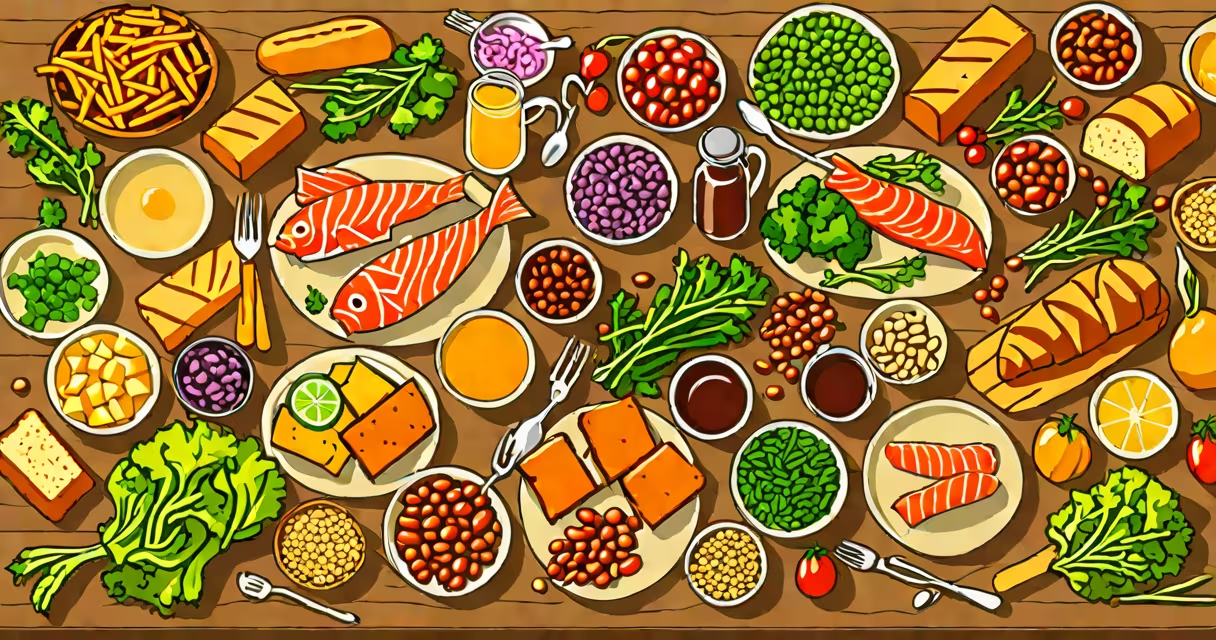
During Lent, Christians observe a 40-day period of fasting, prayer, and penance leading up to Easter, often abstaining from meat on Fridays and Ash Wednesday. What you eat depends on religious tradition, local customs, and personal discipline, but typically includes fish, vegetables, legumes, grains, and dairy.
Lent originates from the biblical account of Jesus fasting for 40 days in the wilderness. The practice evolved in early Christianity into a time of spiritual reflection, with dietary restrictions formalized by the Church. For Roman Catholics, the most common rule is abstaining from meat on Fridays during Lent and on Ash Wednesday. This means no beef, pork, chicken, or lamb-but fish and seafood are permitted. The Church allows exceptions for those with health concerns, and many dioceses offer guidance through local parish offices.
Abstinence from meat is not universal across Christian denominations. Eastern Orthodox Christians follow stricter fasting rules, often avoiding meat, dairy, eggs, oil, and wine during certain periods within Lent. Protestants may observe Lent informally, focusing on personal sacrifice rather than prescribed diets. Still, many Protestant families adopt fish-based meals on Fridays as a nod to tradition.
Fasting during Lent involves both abstinence (giving up specific foods) and moderation (reducing portion size or frequency). The Catholic Church defines abstinence as refraining from eating meat from warm-blooded animals. Fish, being cold-blooded, are not considered meat under this rule. This distinction dates back to medieval theology, which viewed fish as less "luxurious" and more aligned with humility and simplicity.
Many Lenten meals center around fish. In Italy, for example, families prepare *baccalà* (salted cod) on Good Friday. In Spain, *tortilla de patatas* (potato omelet) and *sardinas a la plancha* (grilled sardines) are common Friday dinners. In the U.S., many Catholic households serve baked salmon or fish sticks on Fridays during Lent. These choices reflect both religious obligation and cultural adaptation.
A 2021 study by the Pew Research Center found that 61% of U.S. Catholics who observe Lent report abstaining from meat on Fridays. Among those, 73% say they eat fish instead. The study also noted that younger Catholics are more likely to choose plant-based meals, such as lentil stew or vegetable risotto, even when not required by doctrine.
Traditional Lenten meals vary widely by region and culture. Below are examples from different parts of the world:
| Region | Typical Lenten Dish | Key Ingredients | Religious Tradition |
|---|---|---|---|
| Italy | Lasagna al Forno (fish version) | White fish, spinach, ricotta, egg noodles | Roman Catholic |
| Poland | Pierogi z kapustą i grzybami | Cabbage, mushrooms, potato, flour dough | Roman Catholic |
| India (Goa) | Recheado (spiced fish curry) | Red snapper, coconut milk, tamarind, curry leaves | Roman Catholic (Portuguese influence) |
| Japan | Shojin Ryori (Buddhist vegetarian cuisine) | Vegetables, tofu, seaweed, miso | Buddhist (not Christian, but similar fasting practices) |
These dishes show how Lenten eating patterns adapt to local ingredients and culinary history. In Goa, Portuguese colonization introduced fish-based Lenten recipes, while in Japan, Buddhist monasteries have long practiced seasonal fasting with plant-only meals. Even though the religious frameworks differ, the underlying principle-limiting animal products during a reflective season-remains consistent.
One lesser-known fact: the term "Lent" comes from the Old English word *lencten*, meaning "spring." The season aligns with the return of longer days and warmer weather, symbolizing renewal. This timing influenced early European diets, where spring was a natural time to consume fresh greens, herbs, and fish caught in thawing rivers.
Many people assume Lent means giving up all food or surviving on bread and water. That's incorrect. Abstinence from meat is not equivalent to fasting. Fasting means reducing daily caloric intake-typically to one full meal and two smaller ones. Abstinence refers only to the type of food, not the quantity. The Church permits eating fish, eggs, and dairy in moderation.
Another misconception is that all Lenten meals must be "simple" or "bland." While some traditions emphasize austerity, others celebrate abundance through elaborate dishes. In southern Italy, *caponata* (eggplant stew) and *frittelle* (fried fritters) are served on Holy Saturday. These are rich, savory, and deeply flavorful-proof that Lenten food can be both spiritually meaningful and delicious.
I once attended a Good Friday service in a small parish in rural Pennsylvania. After Mass, the congregation gathered for a communal meal featuring baked trout, roasted root vegetables, and homemade sourdough bread. The priest said, "This is not punishment-it's remembrance. We eat fish because Christ was crucified on a Friday, and fish were the food of the poor and the disciples." That moment reshaped my understanding: Lenten eating is not deprivation-it's memory and identity.
According to the United States Conference of Catholic Bishops (USCCB), Catholics aged 14 and older must abstain from meat on Ash Wednesday, Good Friday, and all Fridays during Lent. Fish, shellfish, and other seafood are permitted. Eggs, cheese, and dairy products are allowed unless the individual chooses to abstain further.
Plant-based meals are increasingly popular during Lent. Lentils, beans, whole grains, and seasonal vegetables form the base of many modern Lenten recipes. A 2023 survey by the National Catholic Reporter found that 44% of U.S. Catholics who observe Lent now include at least one fully plant-based meal each week during the season. Many cite environmental and ethical reasons alongside spiritual ones.
If you're unsure whether a dish fits Lenten guidelines, ask: Is it made from fish or plant-based ingredients? Does it avoid red meat and poultry? If yes, it likely complies. But remember: the goal isn't just dietary compliance-it's spiritual growth. As the USCCB states, "Fasting is not about food. It's about turning toward God."
What you eat for Lent reflects faith, culture, and personal choice. Whether you follow a strict fast or simply skip meat on Fridays, the act of choosing what to eat becomes a daily reminder of sacrifice, renewal, and community.