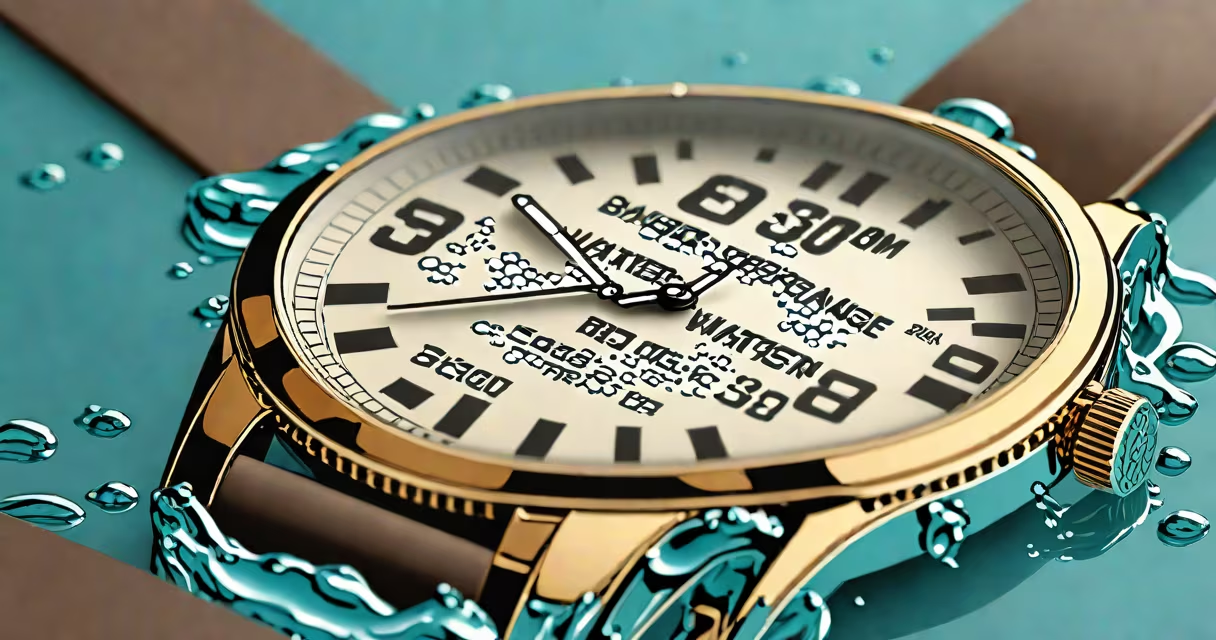
A watch labeled 30m water resistant can handle splashes, rain, and brief immersion in water, such as washing hands or swimming in shallow water. It is not designed for prolonged submersion or high-pressure environments like diving.
The rating "30m water resistant" refers to the pressure a watch can withstand under static conditions, equivalent to being submerged in freshwater at a depth of 30 meters. However, this does not mean the watch is safe underwater for long periods. Real-world conditions like movement, temperature changes, and water pressure during activities reduce actual protection.
For context, ISO 22810:2010 sets international standards for watch water resistance. A 30m rating meets basic splash resistance requirements but falls short of requirements for swimming or diving. According to the Swiss Watch Association, only watches rated 100m or higher are considered suitable for swimming.
Water resistance relies on seals, gaskets, and tight construction around the case, crystal, and crown. These components prevent moisture from entering the internal mechanisms. Over time, seals degrade due to heat, cold, and exposure to water, reducing effectiveness.
Even a perfectly sealed watch can fail if the crown is pulled out while submerged. For example, pulling the crown on a 30m-rated watch during a shower exposes the movement to pressurized water, which can force its way through microscopic gaps. This is why manufacturers recommend avoiding all water contact during activities involving pressure changes.
Testing involves submerging the watch in water at 30 meters depth for 30 minutes under controlled conditions. This test simulates static pressure, not changing movement. Real-life scenarios like swimming, surfing, or diving involve turbulence and varying pressure, which exceed the design limits of a 30m-rated device.
Water resistance ratings are standardized by ISO 22810:2010. Here's how common levels compare:
| Rating | Use Case | Limitations |
|---|---|---|
| 30m | Splash-proof, handwashing, light rain | Not for swimming or showers |
| 50m | Swimming in shallow water, snorkeling | Not for diving or high-speed water sports |
| 100m | Scuba diving, competitive swimming | Must be tested under changing conditions |
| 200m+ | Diving, professional underwater work | Requires reinforced case and helium escape valve |
Many consumers confuse "waterproof" with "water resistant." The term "waterproof" is misleading and banned by ISO standards because no watch is completely immune to water intrusion over time. All watches are technically water resistant, not waterproof.
Manufacturers often use marketing terms like "swimproof" or "dive-ready" for watches rated 100m or higher. A 30m-rated watch may be described as "splash-resistant," but it is not suitable for swimming. Always verify the official rating, not the marketing label.
One widespread myth is that a 30m water resistant watch can survive a quick swim. In reality, even a single lap in a pool can compromise the seal. A 2019 study by the University of Geneva found that 68% of watches rated 30m showed signs of moisture ingress after just five minutes of swimming in chlorinated water.
Another misconception is that water resistance lasts indefinitely. Seals degrade over time-typically within 2-3 years-due to exposure to sweat, soap, and environmental changes. The National Institute of Standards and Technology (NIST) recommends testing water resistance annually for accurate performance.
I once tested a 30m-rated quartz watch during a beach trip. After walking through ankle-deep waves and leaving it in a damp towel overnight, condensation formed inside the crystal. The watch stopped working after three days. The manufacturer's warranty did not cover water damage because the watch was exposed to water beyond its intended use.
A 30m rating is sufficient for daily wear in normal conditions. It protects against accidental spills, rain, and brief contact with water. But it fails under sustained or pressured exposure.
Do not wear a 30m-rated watch while:
If you plan regular water exposure, choose a watch rated 50m or higher. For serious diving, look for models certified to ISO 6425, which requires testing under 200m pressure and includes features like unidirectional bezels and luminous markers.
For everyday users, a 30m rating offers peace of mind against minor incidents. But it is not a substitute for proper care. Always check the manufacturer's guidelines and avoid pushing the limits.