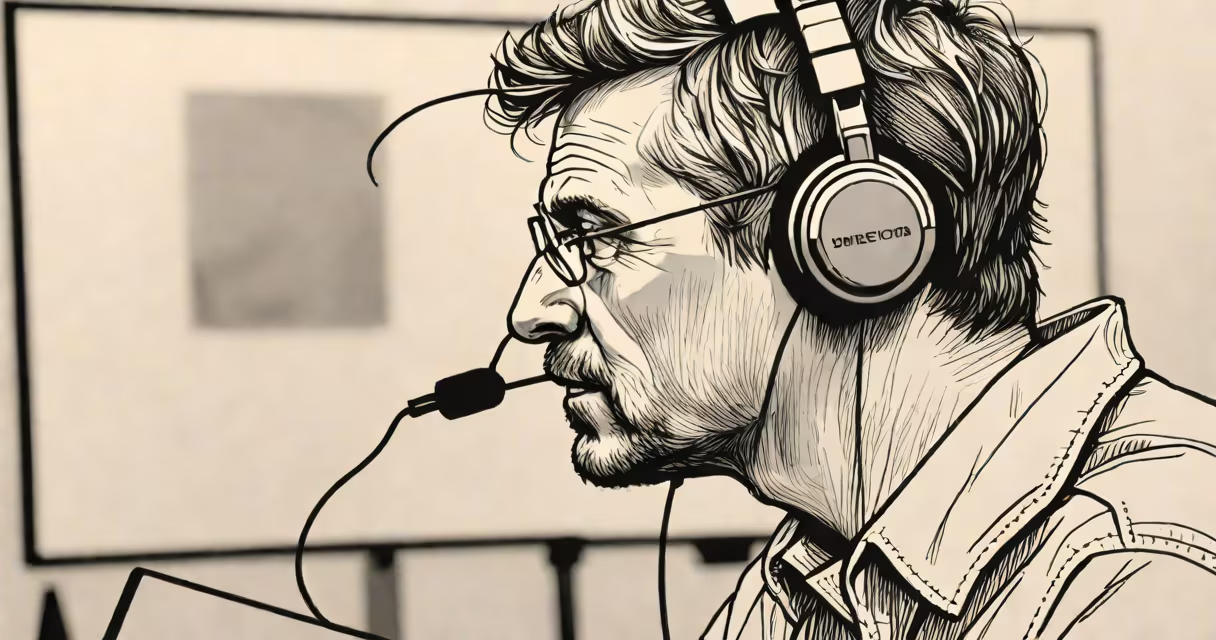
A director is the creative lead who interprets a script and guides every element of a film or television production to realize a unified artistic vision. They oversee casting, blocking, camera work, lighting, performance, and editing, ensuring all components align with the intended tone and narrative structure.
Directors are responsible for translating written stories into visual experiences. They collaborate closely with writers, producers, cinematographers, editors, and production designers to build cohesive scenes. Their decisions affect pacing, mood, character development, and audience engagement. A single director's choices can define a film's legacy-whether it becomes a cult classic or a box office hit.
According to the American Film Institute, directors must balance artistic intent with practical constraints such as budget, schedule, and technical limitations. This dual role requires both creative insight and organizational discipline. A director doesn't just manage people-they shape the emotional arc of a story through framing, timing, and performance direction.
Before filming begins, a director develops a pre-visualization plan. This includes storyboarding, location scouting, casting auditions, and rehearsing scenes. They meet with the production designer to establish the look and feel of each setting. For example, in *The Revenant* (2015), director Alejandro González Iñárritu insisted on shooting nearly all footage in natural light and on location in remote Canadian wilderness to match the film's raw, immersive tone.
During principal photography, the director controls the set. They call "action," adjust actor performances, direct camera movements, and supervise lighting setups. They often work with a team of assistants, including the assistant director (AD), who manages the daily schedule. On set, the director makes split-second decisions-like changing a shot angle because an actor's expression feels too stiff or adjusting a scene's timing based on sound recording feedback.
Post-production is where the director's influence becomes most visible in final edits. They review dailies, approve rough cuts, and collaborate with editors to refine pacing and rhythm. In *Mad Max: Fury Road* (2015), director George Miller spent months refining the film's editing pattern, using rapid cuts and changing transitions to simulate high-speed chaos. He rejected early versions that felt too slow, insisting on a faster tempo to match the film's adrenaline-driven narrative.
Directors must master several overlapping disciplines. They need strong communication skills to convey ideas to diverse teams-from grip crews to lead actresses. They must understand camera lenses, lens flares, depth of field, and how lighting affects mood. A director who knows how to manipulate focus can draw attention to a character's eyes during a key confession, subtly signaling internal conflict.
Emotional intelligence is critical. Directors often manage high-pressure environments where actors are vulnerable. A director who listens carefully can elicit detailed performances. For instance, director Greta Gerwig directed Saoirse Ronan in *Little Women* (2019) with a focus on emotional authenticity. She encouraged improvisation within scripted dialogue to capture subtle shifts in character relationships.
Technical literacy is non-negotiable. Modern directors use digital tools like slate apps, virtual production software, and AI-assisted editing platforms. Even so, the core responsibility remains unchanged: shaping narrative flow. As the BBC notes, "A director's job is not to control every frame, but to ensure every frame serves the story."
Directors vary widely by medium and genre. Feature film directors, like Denis Villeneuve (*Dune*), often work on long-term projects with large budgets. Television directors, such as Ava DuVernay (*When They See Us*), handle episodic storytelling under tight deadlines. Commercial directors create 30-second ads with precise messaging-often working with choreographed stunts and tight scripting.
There's a common misconception that a director is the sole author of a film. In reality, they operate within a collaborative hierarchy. Producers hold final authority on budget and release dates. Writers retain rights to their scripts. Directors may be replaced mid-shoot due to scheduling conflicts or creative differences. In 2016, director James Ponsoldt was replaced on *The Spectacular Now* remake after test screenings showed audience confusion-despite initial positive feedback from early reviews.
Another myth is that directors only work on big-budget films. Independent directors like Lynn Shelton (*Touchy Feely*) have built careers directing low-budget dramas with minimal crew. Her process involved extensive rehearsals and handheld cameras to create intimacy. She once said, "I don't want the camera to feel like a witness-it should feel like a friend."
| Type | Typical Projects | Common Challenges | Example |
|---|---|---|---|
| Feature Film | Studio movies, award contenders | Budget overruns, studio interference | Christopher Nolan (*Interstellar*) |
| Television | Episodic series, limited runs | Consistent tone across episodes | Shonda Rhimes (*Grey's Anatomy*) |
| Commercial | 30-second ads, brand promos | High turnover, client revisions | David Fincher (*Apple "Shot on iPhone"* campaign) |
| Independent | Festival films, low-budget features | Funding scarcity, distribution hurdles | Lynn Shelton (*Laggies*) |
In the *Resident Evil* video game franchise, the term "director" refers to the creative lead behind the game's narrative and design. For *Resident Evil 7: Biohazard* (2017), director Junichiro Tamaki led a shift from traditional survival horror to immersive first-person gameplay. He prioritized environmental storytelling-using decaying homes, flickering lights, and audio cues to build dread.
Unlike film directors, game directors must account for player agency. They design branching paths, hidden clues, and multiple endings. In *Resident Evil 7*, players could choose whether to save a character or abandon them-each choice altering the story's outcome. The director had to balance narrative cohesion with freedom of movement.
This illustrates a key difference: while a film director controls the viewer's perspective entirely, a game director must anticipate multiple viewing angles and player behaviors. The success of *Resident Evil 7* came from its ability to maintain tension across different playstyles-a feat achieved through meticulous level design and changing AI behavior.
People frequently mistake a director for the producer. Producers manage funding, contracts, and logistics. They hire the director, not the other way around. In *The Social Network* (2010), producer Scott Rudin oversaw the film's financing and legal clearances, while director David Fincher handled creative execution. The two roles are distinct-even when overlapping in practice.
Another confusion arises between directors and screenwriters. While screenwriters create the script, directors interpret it. A screenplay may describe a scene as "a tense argument in a dark room." The director decides whether to use close-ups, silence, or sudden sound effects to heighten suspense. In *No Country for Old Men* (2007), the Coen Brothers wrote the script, but director Joel Coen chose to shoot long takes with minimal music-creating a sense of inevitability.
Even within the industry, the term "director" is sometimes misapplied. A "visual effects supervisor" oversees CGI elements but does not direct scenes. A "casting director" selects performers but doesn't coach them. Only someone with creative authority-someone who signs off on final edits-is truly a director.
I once observed a student film shoot where the person calling "cut" wasn't the official director. The actual director was absent, leaving the assistant to make last-minute changes. The result was inconsistent lighting and mismatched performances. That experience taught me: the director's presence is not optional. Without them, the project loses its center.
Understanding what a director does clarifies why their role is irreplaceable. Whether leading a $100 million film or a short indie piece, they are the architect of the story's emotional process. Their decisions shape how audiences remember a scene, react to a character, or feel the weight of a moment. The final cut reflects not just talent-but vision.