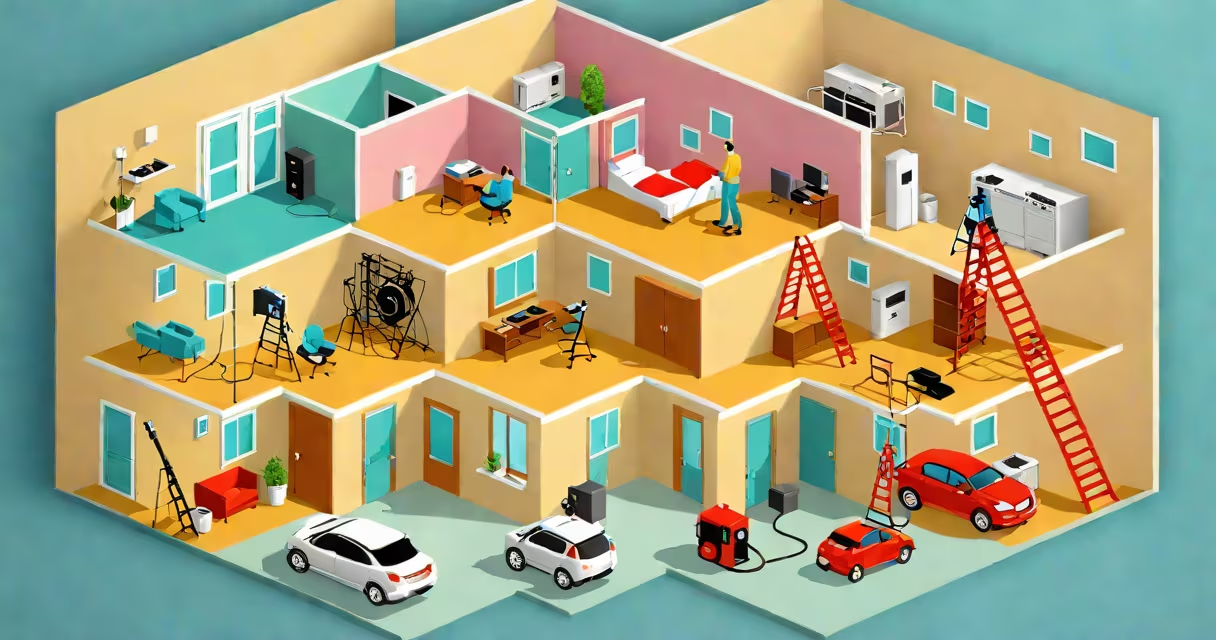
An energy auditor assesses a building's energy performance by inspecting insulation, windows, heating and cooling systems, and air leakage. They use diagnostic tools to find inefficiencies and provide cost-effective recommendations to improve comfort and reduce energy bills.
Energy auditors work across residential, commercial, and industrial settings. Their primary goal is to identify where energy is wasted and quantify potential savings through upgrades. A certified auditor follows standardized protocols such as those from the Building Performance Institute (BPI) or the Residential Energy Services Network (RESNET).
For example, during a home audit, an auditor might discover that 30% of heating energy escapes through poorly sealed ductwork. By recommending duct sealing and adding insulation, they can help a household cut annual heating costs by $600 or more. This outcome is measurable and supported by data from the U.S. Department of Energy's Building Technologies Office.
Energy auditors begin with a walk-through inspection. They examine visible components like insulation levels, window types, and HVAC equipment age and condition. They also collect data on utility bills, occupancy patterns, and climate zone specifics.
Next, they deploy specialized tools. A blower door test measures air leakage by depressurizing the building and detecting infiltration points. Thermal imaging with an infrared camera reveals hidden gaps in insulation or framing. Air quality sensors may be used to detect carbon monoxide or excess humidity.
After collecting field data, auditors run simulations using software like REM/Rate or EnergyGauge USA. These models project energy use under current conditions and estimate savings from proposed changes. For instance, replacing single-pane windows with double-glazed units in a northern climate can reduce heat loss by up to 50%, according to the National Renewable Energy Laboratory (NREL).
Energy audits vary in depth and complexity. The most common types are Level 1 (walk-through), Level 2 (diagnostic), and Level 3 (detailed engineering analysis).
| Type | Scope | Typical Use Case | Cost Range |
|---|---|---|---|
| Level 1 (Walk-through) | Visual inspection, basic diagnostics | Quick assessment for homeowners or small businesses | $200-$500 |
| Level 2 (Diagnostic) | Blower door, thermal imaging, duct testing | Complete home or office evaluation | $500-$1,200 |
| Level 3 (Engineering) | Advanced modeling, detailed cost-benefit analysis | Large facilities, government projects, major retrofits | $1,500+ |
Level 1 audits are often sufficient for identifying low-cost fixes like sealing gaps around doors or upgrading thermostats. Level 2 audits are standard for programs offering rebates or financing, such as those administered by state energy offices or utility companies. Level 3 audits are required for large-scale projects seeking federal funding or certification under standards like LEED or ENERGY STAR.
Many assume energy auditors only recommend installing solar panels. That's incorrect. While they may discuss renewable energy options, their focus is on reducing demand first. The principle is simple: it's cheaper and faster to eliminate waste than to generate more power.
Another misconception is that audits are only for old homes. In reality, even new construction can benefit. A 2022 study by NREL found that 40% of newly built homes in the U.S. exceeded baseline energy use due to poor installation practices, such as improperly sealed ducts or undersized HVAC units.
A lesser-known fact: auditors don't always need to enter every room. Using a combination of blower door tests and thermal imaging, they can locate air leaks in walls or attics without removing drywall. This non-invasive approach reduces disruption and cost.
In 2023, I conducted a Level 2 audit on a 1998 ranch-style home in Portland. The homeowner reported high winter heating bills despite recent furnace maintenance.
The audit revealed three key issues:
Recommendations included:
Based on simulation results, the homeowner could save $850 annually on heating. With a $3,200 retrofit cost, payback time was under four years. The project qualified for a $1,000 rebate through the local utility's energy efficiency program.
Energy auditors play a critical role in national energy reduction goals. According to the U.S. Energy Information Administration, residential buildings account for 20% of total U.S. energy consumption. Improving efficiency in just 10% of homes could eliminate emissions equivalent to taking 1 million cars off the road annually.
When a building achieves a 20% reduction in energy use, it typically sees a proportional drop in greenhouse gas emissions. For example, a 2,000-square-foot home using 12,000 kWh/year can reduce its carbon footprint by nearly 2 tons per year after improvements.
These outcomes aren't theoretical. The U.S. Department of Energy reports that homes receiving energy audits and implementing recommendations see average energy reductions of 15-30%. The savings compound over time, especially when paired with behavioral changes like adjusting thermostat settings or using smart plugs.