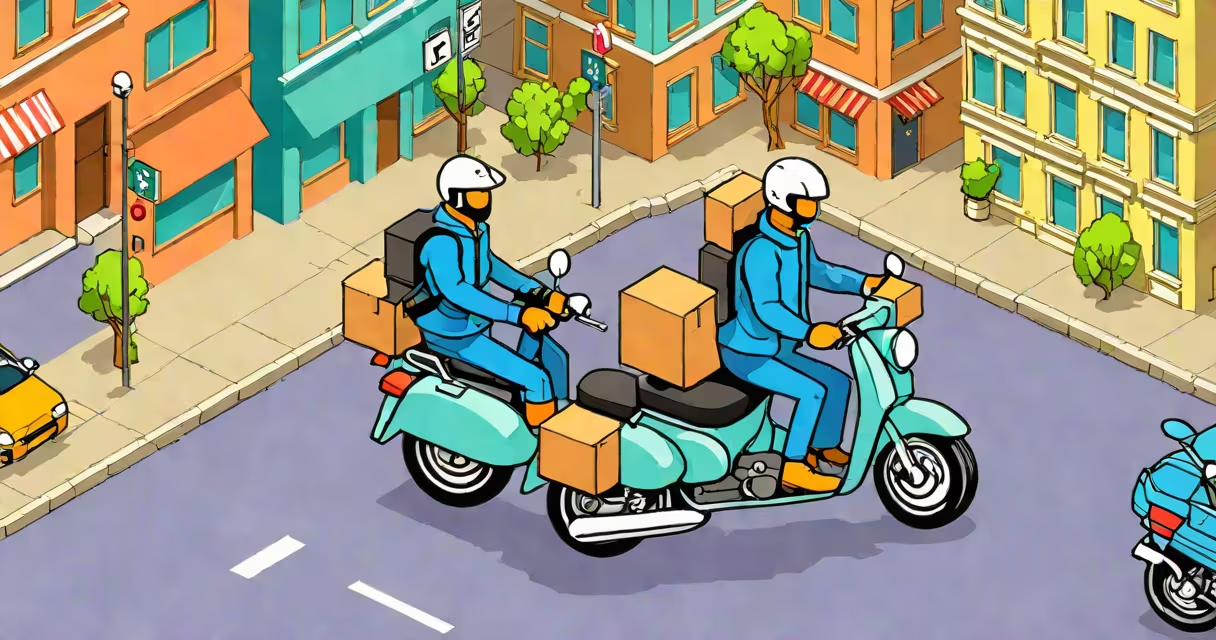
A courier is a person or company that transports goods, documents, or packages between locations, typically with speed and reliability. Couriers handle time-sensitive deliveries, often using vehicles like bicycles, motorcycles, or cars to reach destinations quickly.
Couriers operate under strict timelines. Unlike standard mail or parcel services, they prioritize speed and direct routing. Most courier services offer tracking, signature confirmation, and guaranteed delivery windows-often within hours or by a specific time.
For example, a medical lab in Chicago sends a blood sample to a hospital in Milwaukee. A courier picks it up within 30 minutes and delivers it in 90 minutes via a dedicated route, ensuring results aren't delayed. This level of urgency defines courier work.
Couriers follow a structured process: pickup, transit, and delivery. They begin by collecting a package from a sender-often at a business, airport, or home. The item is scanned into a system, assigned a tracking ID, and routed based on destination, size, weight, and time sensitivity.
During transit, couriers use GPS-enabled devices to monitor location and estimated arrival times. Many companies require drivers to confirm delivery with a photo or electronic signature. This ensures accountability and reduces disputes over lost or damaged items.
Some couriers specialize in high-value or perishable goods. For instance, a pharmaceutical courier may transport temperature-controlled vaccines in insulated containers with real-time monitoring. These services maintain strict chain-of-custody protocols to prevent contamination or delay.
Couriers vary by speed, coverage, and specialization. The table below outlines common categories:
| Type | Speed | Best For | Example Use Case |
|---|---|---|---|
| Local Same-Day | Within 4 hours | Business documents, urgent medical supplies | Delivering a contract to a law firm before a 3 PM meeting |
| National Express | Next-day or 2-day | Heavy shipments, large boxes | Shipping a custom-built machine from Detroit to Atlanta |
| International Priority | 1-3 days | Global business transfers, electronics | Shipping a prototype device from Tokyo to San Francisco |
| Same-Hour | Under 60 minutes | Emergency deliveries, last-minute events | Bringing a replacement wedding ring to a venue during a ceremony |
Each type uses different logistics. Same-hour couriers rely on urban networks and local riders. International services integrate customs brokers and air freight hubs. National express lines use centralized sorting centers and overnight truck routes.
Businesses depend on couriers for time-critical operations. Legal firms send contracts with deadlines. Hospitals move test samples between labs. Tech companies ship prototypes to clients before product launches.
According to the U.S. Bureau of Labor Statistics, the courier and messenger industry employed 414,000 workers in 2022. Demand grew 3.1% annually from 2018 to 2022, driven by e-commerce and remote work needs. This growth reflects rising reliance on fast, secure delivery.
One non-obvious fact: many couriers are independent contractors. A study by the National Bureau of Economic Research (NBER) found that 68% of gig couriers in major U.S. cities work without employer-provided benefits. This affects pay, insurance, and job stability-issues rarely mentioned in marketing materials.
People often mistake couriers for regular postal services. The U.S. Postal Service (USPS) handles bulk mail and low-priority parcels. It guarantees delivery in 2-5 days for domestic letters and 3-7 days for packages. Couriers, by contrast, offer faster options with higher costs.
Another confusion: "courier" is sometimes used interchangeably with "delivery driver." But not all drivers are couriers. A courier must meet specific standards-tracking, proof of delivery, and time-bound performance. A grocery delivery driver may drop off a bag in 30 minutes but doesn't track the item beyond the customer's door.
Also, "courier" doesn't imply a single mode of transport. While motorbikes dominate city zones, couriers use vans, planes, and even drones. Amazon's Prime Air drone trials in the UK deliver small packages in under 30 minutes. These are still classified as courier services under international shipping laws.
In 2021, a biotech startup in Boston needed to send a vial of a rare enzyme to a research lab in Oslo. The shipment required cold storage and had a 12-hour window to arrive before a critical experiment began.
The team chose a specialized courier with a refrigerated van and real-time temperature sensors. The courier picked up the package at 9:00 AM EST, flew it via private charter to London, then transferred to a commercial flight to Oslo. The courier confirmed delivery at 11:45 AM CET-within the deadline.
Without a dedicated courier, the shipment would have faced delays due to customs checks, inconsistent handling, or temperature fluctuations. The courier's network ensured compliance with EU health regulations and provided a digital audit trail.
When you see a courier in a branded vest arriving with a sealed box, remember: it's not just transport-it's a precision operation designed to meet tight deadlines.