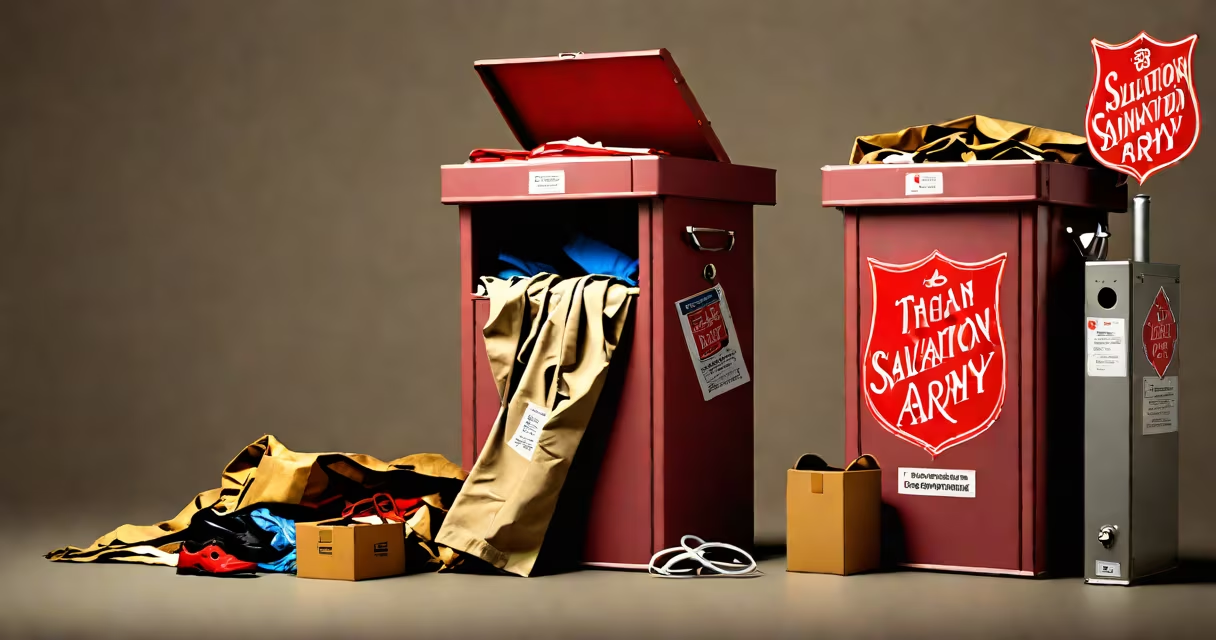
The Salvation Army accepts gently used clothing, household goods, furniture, and electronics for donation. These items are sold in Salvation Army thrift stores to fund social services like homeless shelters, disaster relief, and addiction recovery programs.
Donated goods are evaluated for quality and marketability. Items must be clean, free of stains or tears, and in working condition. The organization does not accept hazardous materials, damaged electronics, or heavily worn clothing. All donations support local communities through direct service funding.
According to the Internal Revenue Service (IRS), donations to the Salvation Army qualify as tax-deductible gifts under Section 170 of the U.S. tax code. Donors receive a receipt for items valued over $250, which must include a written appraisal for accurate deduction reporting.
The Salvation Army maintains strict standards for what it accepts. Items must be usable, safe, and suitable for resale in its network of thrift stores. Common categories include clothing, shoes, books, kitchenware, and small appliances.
Furniture donations are accepted only if they are structurally sound and free of mold or pest infestation. Large items like sofas or dressers require prior coordination with a local branch due to storage and transport limitations. The organization does not accept mattresses, cribs, or items with broken frames.
Electronics such as laptops, tablets, and small TVs are welcome if they power on and function properly. Devices must be wiped of personal data before donation. The Salvation Army partners with tech recyclers to responsibly dispose of non-functional devices.
| Item Type | Acceptable? | Notes |
|---|---|---|
| Clothing (clean, no stains) | Yes | Include seasonal wear; hats and accessories accepted |
| Furniture (intact, no structural damage) | Yes | Requires advance call for pickup; no large appliances |
| Books (no water damage) | Yes | Textbooks and children's books preferred |
| Electronics (working) | Yes | Must be wiped of data; no broken screens |
| Mattresses and box springs | No | Health and safety regulations prohibit acceptance |
Most Salvation Army donation centers operate on a drop-off basis. You can bring items directly to a local Salvation Army store or community center during posted hours. Many locations have designated bins for quick drop-offs, especially in high-traffic areas like shopping districts.
For larger donations-such as furniture or multiple bags of clothing-contact your nearest Salvation Army location to schedule a pickup. The organization provides free transportation for donations exceeding five bags or bulky items. This service reduces donor effort and ensures proper handling.
I once dropped off a box of winter coats and a small dresser at a downtown branch. The staff member weighed the items, gave me a printed receipt, and confirmed the donation would go toward youth outreach programs. The process took less than ten minutes and felt efficient and respectful.
Many people assume the Salvation Army accepts all types of used goods. This is incorrect. The organization turns away items that pose health risks, such as those with mildew, rodent droppings, or severe wear. Even if an item appears functional, it may be rejected if it fails safety inspections.
Another misconception is that all donated items are resold immediately. In reality, about 60% of donations are sold through Salvation Army thrift stores. The remaining 40% are either recycled, repurposed, or disposed of safely. For example, torn fabrics are sent to textile recyclers, and non-working electronics are dismantled for parts.
A lesser-known fact: the Salvation Army does not charge donors for dropping off items. This policy encourages participation and avoids financial barriers. However, some locations may charge a fee for large appliance pickups, though these fees are typically low and cover labor costs.
Donors who give items valued at $250 or more must obtain a written acknowledgment from the Salvation Army. This document includes the date of donation, a description of the items, and a statement that no goods were received in exchange. Without this form, the IRS may disallow the deduction.
For items valued over $500, the IRS requires a qualified appraisal. The Salvation Army does not provide appraisals, but it offers a donation receipt that serves as proof of contribution. You can use this receipt along with a professional appraisal to claim the deduction.
According to the National Council of Nonprofits, over 80% of donors report claiming their Salvation Army donations on federal taxes. The average deductible value per donation is $120, based on 2023 IRS data. This makes donating not only charitable but financially beneficial.