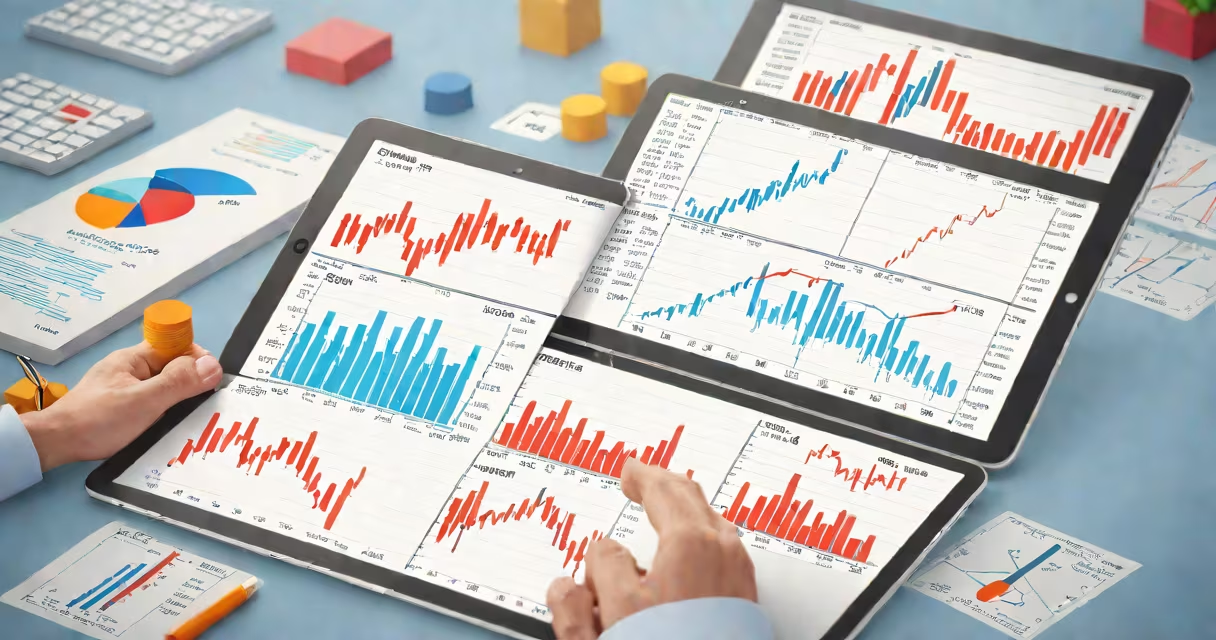
A buyback in stocks occurs when a publicly traded company purchases its own outstanding shares from the open market, reducing the number of shares available to investors. This action signals confidence in the company's future and can boost earnings per share. Buybacks are common among large, profitable firms like Apple and Microsoft.
Companies execute buybacks through open-market purchases or tender offers. Open-market buys happen regularly, often as part of a planned repurchase program. Tender offers invite shareholders to sell shares at a set price, usually above market value. These transactions reduce the float-the number of shares available for trading-and can increase the ownership stake of remaining shareholders.
Buybacks differ from dividends, which distribute cash directly to shareholders. While dividends provide immediate income, buybacks reinvest capital into the company's equity. Both actions return value to owners, but buybacks do so by increasing share value rather than paying out cash.
When a company announces a buyback, it typically sets a budget and timeline. For example, Apple announced a $90 billion buyback program in 2018, later expanding it to $100 billion. The company then buys shares on the open market at prevailing prices, often during periods of low volatility.
Buybacks are executed through brokerage firms under pre-approved authorization. The company's treasury department manages the process, ensuring compliance with SEC rules. Share purchases are reported quarterly in Form 10-Q filings, allowing investors to track activity.
Market timing matters. Buying shares when prices are low increases the efficiency of the buyback. During the 2020 market downturn, many companies accelerated buybacks as valuations fell, maximizing long-term shareholder benefit.
There are three primary methods companies use to conduct buybacks:
| Type | Description | Example |
|---|---|---|
| Open-Market Buyback | Regular purchases on public exchanges. Most common and flexible. | Microsoft's ongoing $60 billion program since 2018. |
| Tender Offer | Company offers to buy shares at a premium price. Shareholders choose to sell. | Netflix offered $220/share in 2021, above market value. |
| Accelerated Share Repurchase (ASR) | Company pays upfront to a bank, which delivers shares immediately and settles later. | Alphabet completed a $2 billion ASR in Q3 2022. |
ASRs allow faster execution and better timing control. They're often used when a company wants to reduce shares quickly, such as before earnings reports or to meet analyst expectations.
Companies initiate buybacks for several strategic reasons. The most direct is to increase earnings per share (EPS). With fewer shares outstanding, net income is divided among a smaller base, raising EPS-a metric closely watched by analysts and institutional investors.
For example, if a company earns $1 billion annually and has 100 million shares, EPS is $10. After buying back 10 million shares, EPS rises to $11.11, even if profits stay flat. This can trigger positive stock reactions, especially in valuation-driven markets.
Buybacks also signal management's belief in undervaluation. When a company spends billions to repurchase shares, it implies the stock is a good investment. According to a 2022 study by the Federal Reserve Bank of New York, buybacks were associated with higher stock returns in the following quarter, particularly in sectors with stable cash flows like tech and consumer staples.
Many assume buybacks are a sign of financial weakness. That's incorrect. Buybacks are typically funded by excess cash, not debt. A company must have strong free cash flow to sustain a buyback program. In 2023, S&P 500 firms spent $800 billion on buybacks-more than double the amount in 2010-while maintaining healthy balance sheets.
Another confusion is equating buybacks with stock manipulation. While buybacks can temporarily inflate share prices, they don't alter a company's underlying fundamentals. The Securities and Exchange Commission (SEC) requires transparency in buyback announcements. Firms must disclose plans in Form 10-K and report purchases monthly via Form 13F.
Buybacks are not tax-free for shareholders. Unlike dividends, which are taxed as income, gains from buybacks are realized only when shares are sold. Capital gains taxes apply based on holding period and tax bracket.
In 2018, Apple announced a $100 billion buyback program. Over the next four years, it repurchased 1.5 billion shares at an average price of $130. By 2022, the company had reduced its outstanding shares from 4.7 billion to 3.2 billion.
The impact was measurable. Apple's EPS rose from $12.20 in 2018 to $15.40 in 2022, despite modest revenue growth. The stock price increased from $200 to $180 (adjusted for splits), reflecting both operational performance and capital allocation efficiency.
Apple's buyback did not eliminate risk. In 2022, the company paused the program briefly due to supply chain disruptions. But it resumed when inventory levels normalized, showing that buybacks are discretionary, not automatic.
Buybacks affect investors differently depending on their holding strategy. Long-term holders benefit from increased EPS and potential price appreciation. Short-term traders may see volatility around buyback announcements, especially if the market interprets the move as a signal of declining growth opportunities.
However, not all buybacks are equally beneficial. A company with declining sales and high debt shouldn't spend cash on buybacks. The Wall Street Journal noted in 2021 that 15% of buybacks in the S&P 500 were funded by debt, raising concerns about financial sustainability.
When evaluating a buyback, investors should consider the company's free cash flow yield, debt-to-equity ratio, and historical buyback consistency. A single program doesn't guarantee value. Look at the pattern over time.
Understanding buybacks helps clarify corporate behavior. They are not magic fixes. They are tools. Used wisely, they improve shareholder value. Used poorly, they distract from deeper issues.
When you see a company announcing a buyback, ask: Is it profitable? Is it financially sound? Does it align with long-term strategy? The answer lies not in the headline, but in the numbers behind it.
Buybacks are a core component of modern capital allocation. They reflect decisions made by boards and executives-not just for profit, but for long-term stability. For investors, knowing what a buyback in stocks truly is helps separate signal from noise.