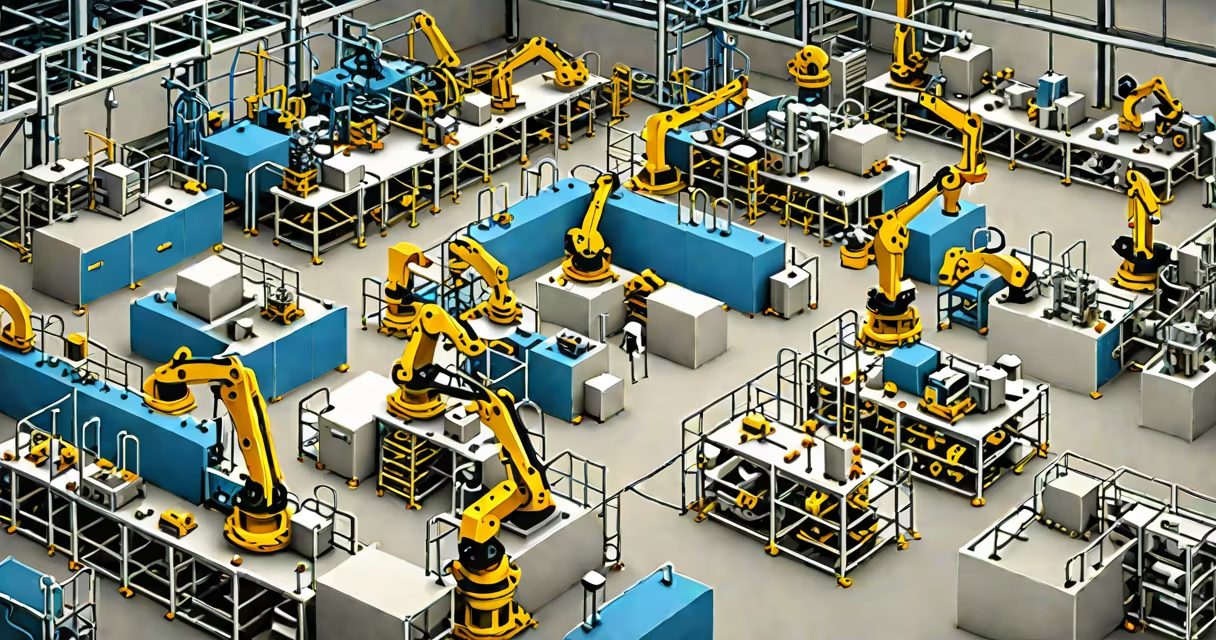
Computer aided process planning (CAPP) is a digital system that generates detailed manufacturing instructions from a product design, replacing manual route sheets and reducing setup time. It translates CAD geometry into machine-specific operations, tool selection, and sequence logic for CNC machines and assembly lines.
CAPP integrates with CAD and ERP systems to generate work orders, tooling lists, and time estimates. It ensures consistency across production batches and supports compliance with ISO 9001 quality standards. The system outputs standardized process plans used in factories worldwide.
According to the National Institute of Standards and Technology (NIST), CAPP reduces process planning time by up to 60% compared to traditional methods. This efficiency gain enables faster changeovers and improved responsiveness in high-mix manufacturing environments.
CAPP begins when a 3D model or 2D drawing is imported into the system. The software analyzes the geometry, identifies features such as holes, pockets, and fillets, and applies predefined rules based on material type, tolerance requirements, and machine capabilities.
The system then selects appropriate tools, assigns cutting parameters (speed, feed, depth), and sequences operations to minimize tool changes and maximize machine utilization. For example, a part with five drilled holes and two milled slots will have its operations ordered to reduce travel distance and avoid collisions.
Once validated, the plan is exported as a G-code file or integrated directly into a manufacturing execution system (MES). This eliminates handwritten routing sheets and reduces human error in setup. A study by the Society of Manufacturing Engineers (SME) found that CAPP implementation lowered setup scrap rates by 38% in automotive component plants.
CAPP systems fall into two categories: variant and generative. Variant systems use templates from previously planned parts. They select a similar existing plan and modify parameters like dimensions or material. This method works well for products with recurring designs, such as engine brackets or housing components.
Generative systems build plans from scratch using algorithms. They analyze the part's geometry and apply decision trees based on machining rules. These systems handle unique or complex parts, such as turbine blades or medical implants, where no prior template exists.
| Type | Best For | Setup Time | Accuracy |
|---|---|---|---|
| Variant | High-volume, repetitive parts | 1-2 hours | High (consistent templates) |
| Generative | Custom, one-off, or complex geometries | 3-6 hours | Medium-high (depends on rule database) |
Many modern systems combine both approaches. A manufacturer producing custom enclosures might use variant planning for standard mounting holes and generative planning for unique cutouts based on customer specifications.
CAPP is often mistaken for CAM (computer aided manufacturing), but they serve different roles. CAM focuses on generating machine code (G-code) for specific tools and paths. CAPP defines the strategy: which operations to perform, in what order, and with which tools. Think of CAPP as the master plan and CAM as the detailed construction blueprint.
Another misunderstanding is that CAPP replaces engineers. It doesn't. Instead, it handles routine decisions so engineers can focus on optimization, troubleshooting, and innovation. At a precision machining facility in Michigan, I observed a team using CAPP to reduce setup time from 4.5 hours to 1.8 hours on a batch of 120 aluminum housings. The engineers still reviewed each plan for safety and efficiency, but the system handled 70% of the initial drafting.
A lesser-known fact: CAPP systems can predict tool wear patterns. By tracking spindle load and vibration data from past runs, they adjust feed rates dynamically to extend tool life. This feature is embedded in advanced CAPP modules used by aerospace suppliers like Collins Aerospace.
Automotive, aerospace, and medical device manufacturers rely on CAPP to meet tight tolerances and high volume demands. In the auto industry, CAPP ensures consistent cylinder head machining across thousands of units. Each engine block follows the same sequence: drilling, milling, honing, and inspection - all automated through CAPP.
For small batch production, CAPP reduces changeover time between jobs. A company making surgical instruments switched from paper-based planning to a CAPP system and cut job preparation time from 8 hours to 2.5 hours per batch. This allowed them to take on 40% more custom orders without hiring additional staff.
Consider a steel bracket measuring 150 mm × 100 mm × 25 mm with four threaded holes and a central pocket. The design was created in 2D CAD software and exported to a CAPP system.
The system identified the following features:
Based on material (AISI 4140 steel) and available tools, the CAPP system generated this sequence:
The total cycle time was estimated at 47 minutes. The system flagged a potential collision between the tool and the fixture during the pocket operation. An engineer adjusted the tool path, and the revised plan was approved. The job ran successfully on the CNC machine with no rework.
This example shows how CAPP prevents errors before production starts. Without it, the planner might have missed the collision risk or selected an incorrect tool size.
Computer aided process planning is not a luxury-it's a necessity in modern manufacturing. It standardizes workflows, reduces waste, and accelerates time-to-market. As automation advances, CAPP will continue to evolve, integrating AI-driven suggestions and real-time feedback loops from shop floors.