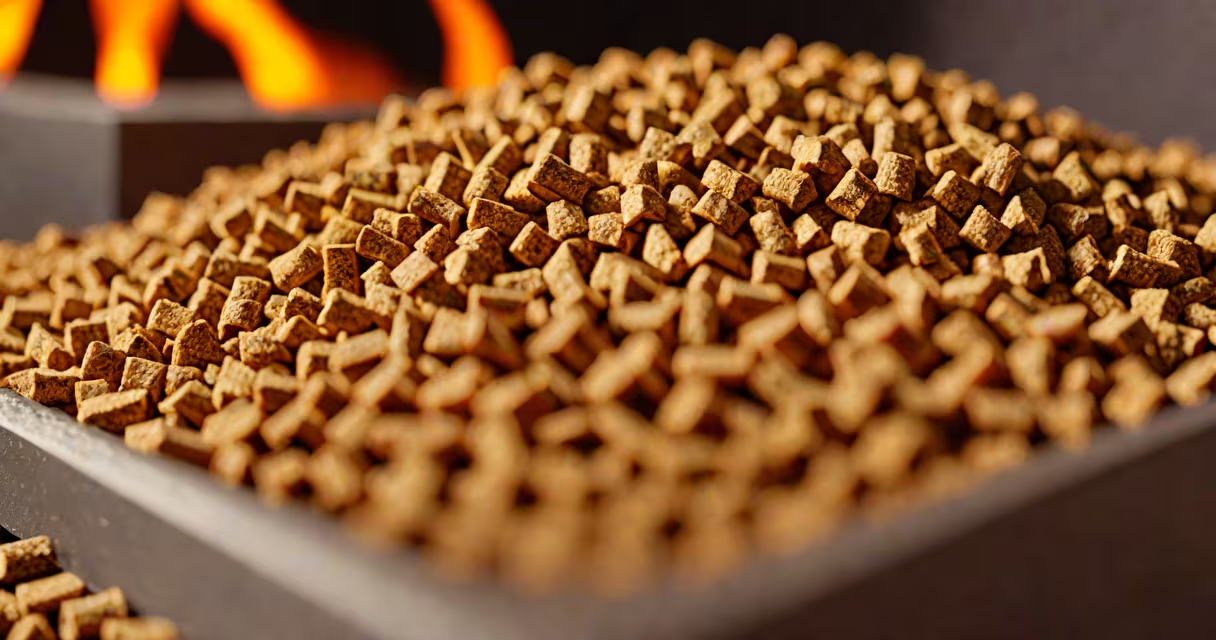
The advantage of biomass lies in its ability to provide renewable energy while reducing net carbon emissions, offering a sustainable alternative to fossil fuels in heating, electricity generation, and industrial processes.
Biomass refers to organic material derived from plants and animals, including wood, crop residues, animal waste, and dedicated energy crops. When burned or converted through thermal, chemical, or biological processes, it releases energy usable for heat, power, or transportation fuel. Its primary advantage stems from being a renewable resource that can be replenished faster than fossil fuels are formed.
Unlike coal or oil, which release carbon stored underground for millions of years, biomass recycles carbon already in the atmosphere. Plants absorb CO₂ during growth; burning them releases it back-creating a closed loop. This cycle contributes to carbon neutrality, a key goal in climate mitigation strategies.
Biomass energy systems convert organic matter into usable forms of energy. The most common method is direct combustion: burning biomass in a boiler to produce steam, which drives turbines to generate electricity. Modern facilities can achieve efficiencies above 30%, comparable to older coal plants.
Advanced methods include gasification and anaerobic digestion. Gasification heats biomass in low-oxygen environments to produce syngas-a mixture of hydrogen, carbon monoxide, and methane-used in engines or refined into synthetic fuels. Anaerobic digestion breaks down wet organic waste (like manure or food scraps) in sealed tanks, producing biogas rich in methane that can be burned for heat or upgraded to biomethane for injection into natural gas grids.
A 2022 study by the International Energy Agency (IEA) found that biomass accounted for 55% of global renewable energy consumption, with solid biomass (wood, pellets) making up 60% of that share. This dominance reflects its scalability and existing infrastructure compatibility.
Biomass is categorized by feedstock source and processing method. The table below outlines major types and their uses:
| Type | Source Material | Common Use | Emissions Comparison (vs. coal) |
|---|---|---|---|
| Wood-based | Forest residues, sawdust, wood pellets | Heating, power plants | ~70% lower CO₂ per kWh |
| Energy crops | Switchgrass, miscanthus, algae | Biogas, biofuels | ~80% lower lifecycle emissions |
| Waste-derived | Food waste, manure, municipal solid waste | Landfill gas capture, biogas | ~90% lower methane emissions |
Wood pellets are among the most widely traded biomass commodities. In 2023, the European Union imported over 30 million metric tons of wood pellets, primarily from the southeastern United States, to replace coal in power stations. These pellets have a consistent energy density of 18-20 MJ/kg, enabling stable combustion in large-scale boilers.
One underappreciated benefit is co-firing: blending biomass with coal in existing power plants. A pilot project at the Drax Power Station in the UK replaced 10% of coal with wood pellets in 2018. Over five years, this reduced CO₂ emissions by 1.2 million tonnes annually-equivalent to removing 250,000 cars from the road.
Many assume biomass is automatically clean. That's incorrect. Poorly managed biomass systems can increase deforestation, emit nitrogen oxides, and disrupt ecosystems. The key is responsible sourcing and efficient conversion.
For example, burning whole trees instead of using logging residues increases carbon debt. A 2021 analysis by the Environmental Paper Network showed that harvesting entire trees for energy can take 50-100 years to repay the carbon lost-far longer than the 10-year window recommended by the Intergovernmental Panel on Climate Change (IPCC).
Another misconception is that biomass is only for rural areas. Urban districts increasingly use biomass. The city of Copenhagen operates a district heating network powered by 40% biomass, including waste wood and straw. This system supplies heat to over 100,000 homes and cuts emissions by 1.3 million tonnes annually.
In 2020, the town of Güssing, Austria, launched a biomass district heating plant using locally sourced wood chips. The facility processes 15,000 tonnes of wood annually, providing heat to 90% of the town's buildings. It replaced a previous oil-based system that cost €2.1 million yearly in fuel.
After installation, annual fuel costs dropped to €450,000. The plant also created 22 local jobs and reduced CO₂ emissions by 18,000 tonnes per year. The town now exports excess electricity to the national grid, earning €150,000 annually in revenue.
This case shows biomass isn't just theoretical-it delivers measurable economic and environmental benefits at scale.
The advantage of biomass lies in its dual role: energy source and waste reducer. Globally, 1.3 billion tonnes of food waste are generated each year-enough to feed 2 billion people. Converting this waste into biogas captures methane that would otherwise escape and contribute to warming. According to the Food and Agriculture Organization (FAO), such systems can reduce methane emissions by up to 95%.
Biomass supports energy independence. Countries like Sweden and Finland derive over 30% of their total energy from biomass, reducing reliance on imported oil and gas. In 2023, Sweden's biomass sector contributed 14% of its GDP in rural regions, proving that green energy can drive regional development.
When evaluating the advantage of biomass, focus on lifecycle sustainability-not just immediate emissions. Responsible sourcing, advanced conversion technologies, and integration with circular economies maximize benefits.