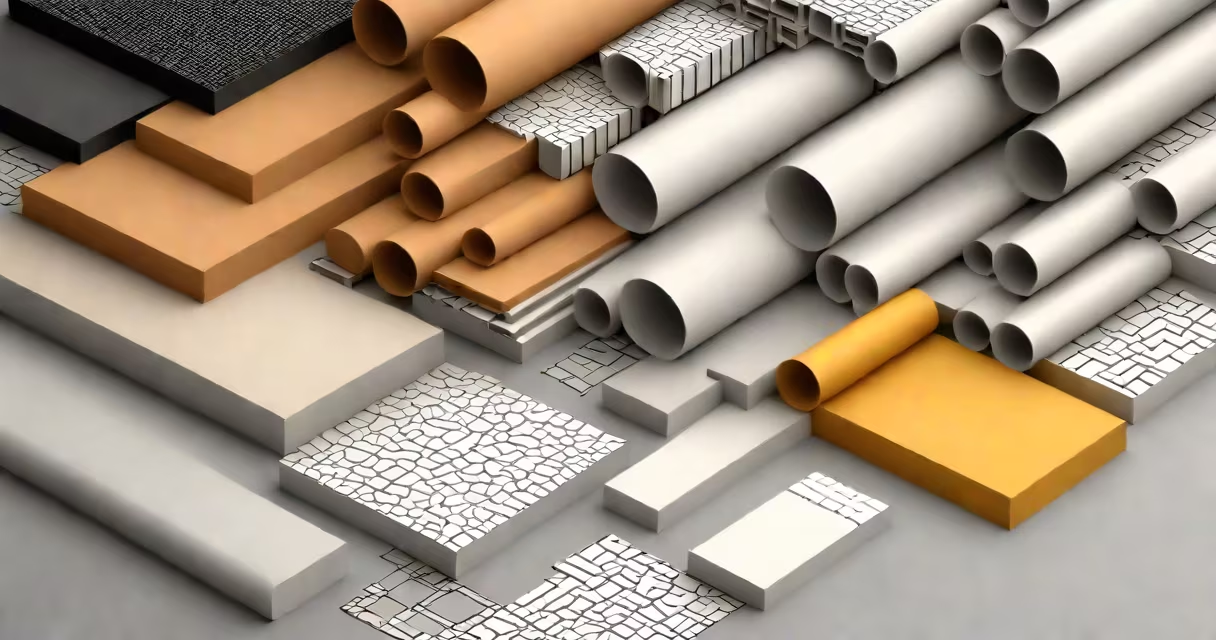
The best sound insulation material varies by application, but mass loaded vinyl (MLV) and Green Glue are top performers for blocking low-frequency noise in walls and floors. Acoustic foam excels at absorbing high-frequency reflections in recording spaces. No single material works universally-effective sound control requires layering materials based on frequency and structural context.
Sound insulation reduces sound transmission through barriers by increasing mass, adding damping, or absorbing energy. Airborne sound (voices, music) travels through air and vibrates structures. Impact sound (footsteps, dropped objects) generates vibrations in floors and walls. Effective insulation addresses both types.
Mass-loaded vinyl adds density without thickness-its high mass resists vibration transfer. Green Glue is a viscoelastic damping compound applied between layers of drywall or plywood. It converts vibrational energy into heat, reducing resonance. Acoustic foam absorbs sound waves at specific frequencies, preventing echoes and flutter in rooms.
For example, a home studio wall built with 2x4 studs uses 5/8-inch drywall on both sides, with Green Glue between them. Adding MLV behind the interior drywall blocks bass frequencies. The result is a 30 dB reduction in sound leakage compared to a standard wall.
Sound insulation materials fall into three categories: mass barriers, damping compounds, and absorbers. Each targets different aspects of sound behavior.
| Type | Best For | Key Materials | Performance Range |
|---|---|---|---|
| Mass Barriers | Blocking low-frequency noise | Mass loaded vinyl, lead sheet, dense concrete | Low to mid-frequencies (20-250 Hz) |
| Damping Compounds | Reducing panel resonance | Green Glue, Quiet-Board, viscoelastic sheets | Mid-range frequencies (250-2000 Hz) |
| Absorbers | Controlling room acoustics | Acoustic foam, mineral wool, fiberglass panels | High frequencies (1000-6000 Hz) |
Mass loaded vinyl is effective because its high density (typically 1.5-2.5 kg/m²) prevents sound waves from vibrating through it. A 1.5 mm thick MLV panel blocks 30 dB of 100 Hz sound-a level unattainable with standard drywall. However, MLV doesn't absorb sound-it only stops transmission. It must be paired with absorptive materials for full acoustic control.
Green Glue performs best when sandwiched between two rigid layers. Its damping effect increases with frequency, peaking around 1000 Hz. A study by the National Institute of Standards and Technology (NIST) confirmed that using Green Glue between two sheets of 5/8-inch drywall increased sound transmission class (STC) ratings from 33 to 52-equivalent to doubling wall thickness.
Many assume acoustic foam solves all noise problems. In reality, foam only absorbs high-frequency reflections. It does little to stop sound from passing through walls. Placing foam on a wall facing a neighbor's noisy TV won't reduce audible volume-only blocking the path will.
Another misconception is that thicker materials always perform better. A 4-inch slab of rigid fiberglass insulation outperforms 2 inches in absorption, but doubling thickness doesn't double performance. The law of diminishing returns applies: each additional inch provides less improvement.
For example, a musician building a home recording booth used 2-inch fiberglass panels on the ceiling and walls. Despite the foam, low-frequency rumbles from a neighbor's subwoofer still leaked in. Adding a 1.5 mm MLV layer behind the drywall reduced the intrusion by 22 dB. The combination of absorption and mass was necessary.
Choose materials based on the noise source and environment. For residential walls, use a double-stud wall with MLV and Green Glue. For studios, combine fiberglass panels with foam on reflective surfaces. For floors, install floating floors with underlayment and damping layers.
When selecting, prioritize materials with verified STC (Sound Transmission Class) or NRC (Noise Reduction Coefficient) ratings. STC measures airborne sound blocking; NRC measures absorption. A material with STC 50 blocks more sound than one with STC 35. NRC values above 0.8 indicate strong absorption.
I built a vocal booth using 2x4 framing, 5/8-inch drywall, Green Glue between layers, and 2-inch fiberglass panels. After testing with a calibrated microphone, the booth reduced external noise by 41 dB and eliminated echo in recordings. This setup required three materials working together-no single product delivered the result.