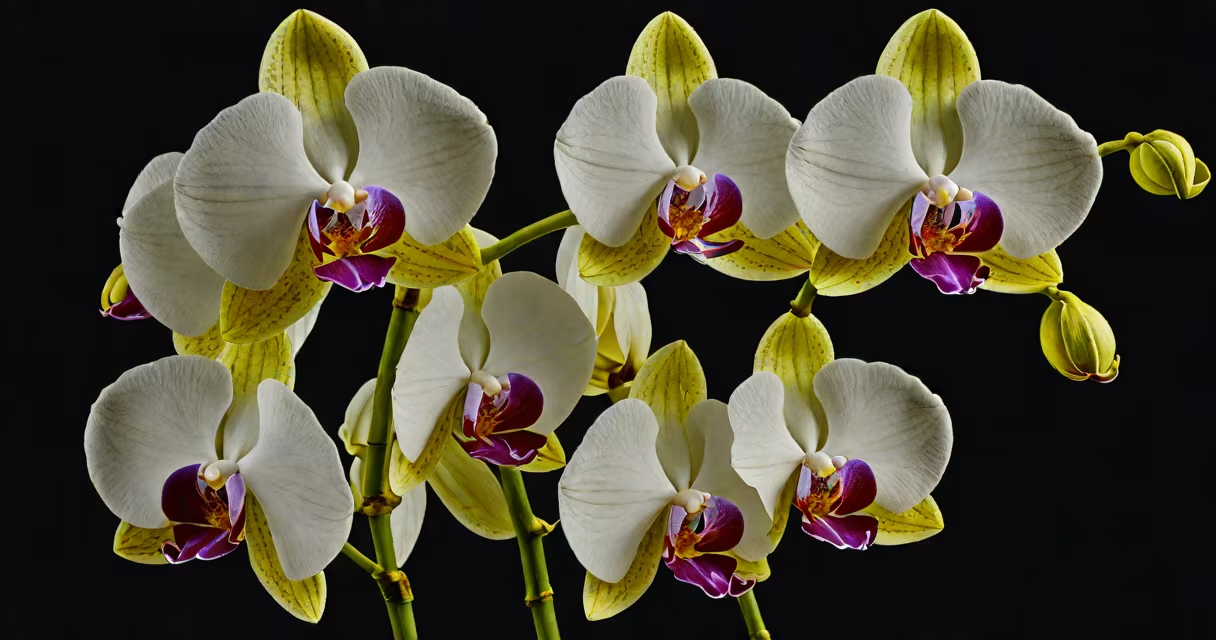
The meaning of orchid centers on beauty, rarity, and enduring love, shaped by ancient traditions and modern symbolism. In many cultures, it represents strength, elegance, and spiritual awakening. Its significance extends beyond aesthetics into emotional and philosophical contexts.
Orchids belong to the family Orchidaceae, one of the largest families of flowering plants with over 28,000 species. Their structure is highly specialized-three sepals, three petals (one modified into a lip or labellum), and a fused reproductive organ called the column. This complexity supports their reputation for intricacy and refinement.
Historically, orchids were revered in China as early as 200 BCE. The Shijing, a collection of ancient Chinese poetry, references orchids as symbols of moral integrity and noble character. In Japanese culture, the orchid appears in Noh theater and tea ceremonies, representing purity and quiet dignity. These uses reflect deeper values tied to restraint and inner grace.
In Western traditions, the orchid's meaning shifted during the Victorian era. As explorers brought exotic specimens from tropical regions, orchids became status symbols. Their rarity and difficulty in cultivation made them associated with wealth and exclusivity. A single bloom could cost more than a week's wages for a laborer.
By the late 1800s, the language of flowers-floriography-assigned specific meanings to blooms. Orchids stood for refinement, luxury, and rare beauty. A bouquet of white orchids signaled admiration and respect. Red orchids conveyed passion and desire. Yellow ones suggested friendship and joy.
Modern psychology notes that people associate orchids with emotional depth. A 2016 study published in the Journal of Environmental Psychology found that exposure to indoor orchids reduced stress markers in hospital patients by 18% compared to control groups. The visual complexity of the flower may stimulate calm focus, similar to meditative patterns.
Many assume orchids are fragile and high-maintenance, implying they represent fleeting beauty. This view overlooks their ecological resilience. Some orchid species survive in harsh environments-like the ghost orchid (Dendrophylax lindenii) in Florida swamps, which grows without soil, relying solely on air and moisture.
Another error is equating all orchids with romance. While certain colors carry romantic connotations, the plant itself has no universal love symbol. For example, in parts of Southeast Asia, orchids are used in funeral rites to represent the soul's process. In Thailand, the Phalaenopsis amabilis is placed on altars during Buddhist festivals as a sign of impermanence.
A lesser-known fact: orchids are pollinated by deception. Many species mimic female insects to lure male pollinators. The Darwin's orchid (Angraecum sesquipedale) has a nectar spur nearly 30 cm long-long enough to force a moth with a matching proboscis to visit. This evolutionary strategy underscores the orchid's role in complex ecosystems, not just decoration.
Not all orchids share the same symbolic weight. Different species carry distinct associations based on color, form, and origin.
| Species | Color | Primary Symbolism | Cultural Origin |
|---|---|---|---|
| Phalaenopsis | White, pink, purple | Elegance, lasting love | Asia (Indonesia, Philippines) |
| Cattleya | Pink, red, yellow | Passion, confidence | Tropical Americas |
| Dendrobium | Yellow, white | Friendship, prosperity | South Pacific, Australia |
| Vanilla planifolia | Brownish-green | Abundance, sweetness | Mesoamerica |
Vanilla planifolia, though often overlooked as a flower, produces the vanilla bean used in global cuisine. Its orchid origin ties it to both luxury and everyday indulgence-a duality reflected in its dual symbolism.
Understanding the meaning of orchid informs design, marketing, and personal expression. In wedding planning, couples choose orchids for centerpieces not just for appearance but because of their association with enduring commitment. A 2022 survey by the National Wedding Study found that 41% of U.S. brides selected orchids as a primary floral element-second only to roses.
Brands use orchid symbolism in branding. The luxury perfume brand Orchidée uses a stylized orchid in its logo, drawing on historical associations with sensuality and refinement. The scent profile features jasmine and sandalwood-notes linked to emotional warmth and intimacy.
I once observed a small art gallery in Kyoto displaying a series of ink paintings titled "Orchids of the Mind." Each piece depicted a single orchid with subtle brushwork. The curator explained that each bloom represented a stage of emotional recovery after trauma. The orchid's resilience mirrored human perseverance-its roots growing in darkness, yet blooming in light.
The meaning of orchid is not limited to romance or luxury. It is not synonymous with femininity, despite frequent use in women's fashion. Nor is it inherently exotic-many native orchids grow in temperate zones, including North America's Cypripedium calceolus, known as the lady's slipper.
Some confuse orchids with epiphytes like bromeliads or ferns. But while all grow on trees, only orchids have the specialized root system and symbiotic relationship with fungi necessary for survival. This biological distinction shapes their symbolic role as survivors.
When interpreting the meaning of orchid, avoid reducing it to a single emotion. Its value lies in multiplicity-beauty, endurance, mystery, and transformation. A single bloom can represent rebirth, devotion, or quiet strength depending on context.
The meaning of orchid is not static. It changes with context, culture, and individual experience. Whether displayed in a museum, gifted at a milestone, or grown in a home garden, the orchid continues to carry layered significance-rooted in biology, shaped by history, and alive in interpretation.