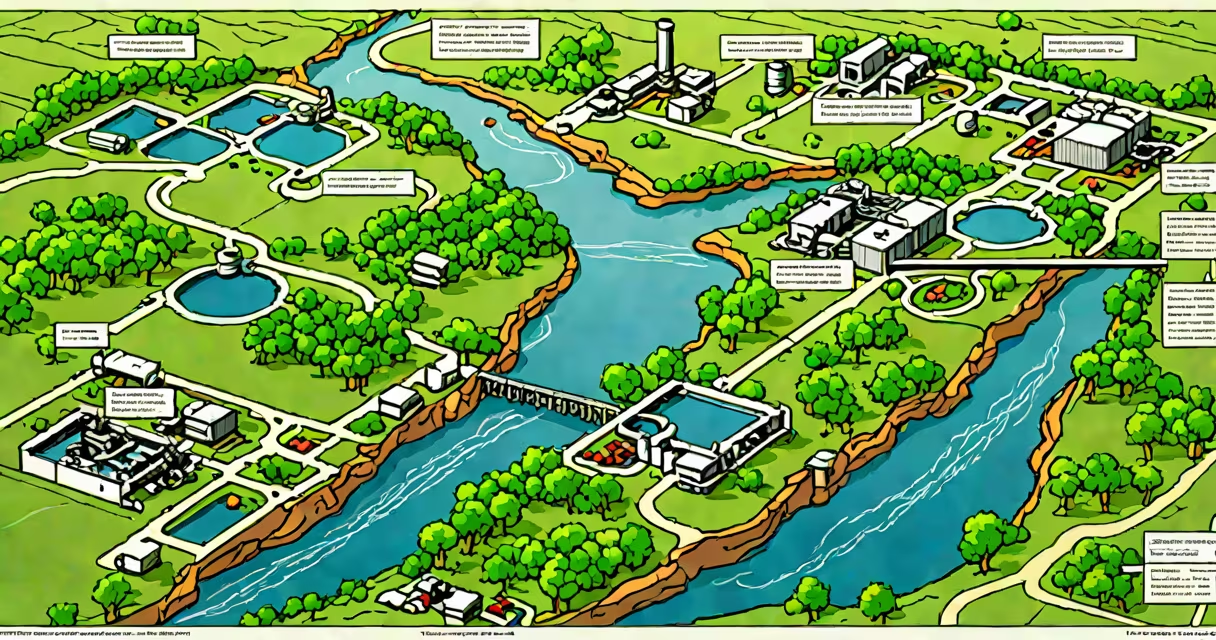
The Clean Water Act was enacted in 1972 as a federal law to restore and maintain the chemical, physical, and biological integrity of U.S. waters by regulating pollutant discharges and setting national water quality standards.
Before 1972, rivers like the Cuyahoga in Ohio caught fire due to industrial waste. The 1969 fire on the Cuyahoga became a national symbol of environmental neglect. Public outcry intensified pressure on Congress to act. The law passed with bipartisan support and was signed into law by President Richard Nixon on October 18, 1972.
It amended the Federal Water Pollution Control Act of 1948, which had limited enforcement power. The 1972 version established a complete regulatory structure. The Environmental Protection Agency (EPA) gained authority to issue permits under the National Pollutant Discharge Elimination System (NPDES), requiring industries and municipalities to obtain permission before releasing pollutants into navigable waters.
The law operates through a permit system. Any entity discharging pollutants into U.S. waters must obtain an NPDES permit. These permits specify allowable pollutant levels, monitoring requirements, and reporting schedules. Violations trigger fines, legal action, or shutdowns.
Permits are issued based on technology-based effluent limits (TBELs). These reflect the minimum level of treatment achievable using existing industrial processes. For example, a paper mill must install equipment capable of removing at least 90% of suspended solids from wastewater. The EPA sets TBELs annually based on performance data from similar facilities.
States also play a role. They develop water quality standards for specific water bodies, defining uses such as fishing, swimming, or drinking water supply. If a body of water fails to meet these standards, the state must identify the sources of pollution and create a Total Maximum Daily Load (TMDL) plan to reduce contaminants. A TMDL specifies the maximum amount of a pollutant a waterway can receive while still meeting standards.
The Clean Water Act defines "navigable waters" broadly. This includes rivers, lakes, wetlands, and even intermittent streams connected to larger water systems. The Supreme Court's 2006 decision in Rapanos v. United States clarified that isolated wetlands may fall under federal jurisdiction if they have a significant nexus to downstream waters.
Enforcement relies on multiple tools. The EPA conducts inspections and audits. Citizens can sue polluters under the citizen suit provision. In 2021, a coalition of environmental groups filed a lawsuit against a chemical plant in Louisiana for violating its permit by discharging excess arsenic. The court ordered the company to pay $1.2 million in penalties and implement corrective measures.
Another mechanism is the Section 404 permit program. This regulates dredging and filling of wetlands. Developers must apply for a permit from the U.S. Army Corps of Engineers, with oversight from the EPA. In 2023, the Corps denied a permit for a pipeline project through a wetland in West Virginia after a public review concluded it would harm endangered species habitat.
Many assume the Clean Water Act bans all pollution. That is incorrect. The law allows regulated discharges through permits. It does not prohibit industrial activity-it requires it to be controlled. A steel manufacturer can release treated wastewater, but only within limits set by its permit.
Another misconception is that the law applies only to large rivers. It covers all waters subject to federal regulation. This includes urban stormwater runoff, agricultural drainage, and even groundwater seepage into surface waters. The 2015 Waters of the United States (WOTUS) rule expanded coverage to ephemeral streams and adjacent wetlands. The 2023 revision narrowed it, sparking debate over jurisdictional boundaries.
A lesser-known fact: the Clean Water Act does not require all water to be drinkable. It focuses on protecting aquatic ecosystems and human health through recreation and fishing. Drinking water safety falls under the Safe Drinking Water Act of 1974, which sets different standards. A water body can meet Clean Water Act standards yet still require additional treatment before being safe to drink.
By 1980, the percentage of U.S. rivers deemed unsafe for swimming dropped from 40% in 1972 to 15%. The EPA estimates that over 200,000 miles of rivers and streams were restored to fishable and swimmable conditions between 1972 and 2020. The Great Lakes saw a 70% reduction in phosphorus loading, reversing algal blooms that once killed fish populations.
However, challenges remain. Agricultural runoff remains a leading cause of water impairment. In 2022, the EPA reported that 60% of assessed river segments in the Mississippi River Basin failed to meet water quality goals due to nitrogen and phosphorus from fertilizers. Nonpoint source pollution-runoff from fields, roads, and construction sites-is harder to monitor and regulate than point-source discharges.
I observed this firsthand during a 2021 field study in Iowa. We sampled water from a tributary feeding into the Missouri River. Nitrate levels exceeded the EPA's drinking water standard of 10 mg/L by 300%, primarily from corn and soybean fields. Despite the Clean Water Act's structure, enforcement gaps persist in rural areas where monitoring resources are limited.
| Regulatory Approach | Scope | Enforcement Authority | Example |
|---|---|---|---|
| NPDES Permits | Point sources (factories, sewage plants) | EPA and states | Wastewater treatment plant in Detroit must meet effluent limits for lead and mercury |
| TMDL Plans | Impaired water bodies | State agencies with EPA approval | Chesapeake Bay watershed developed a TMDL to reduce nitrogen by 25% |
| Section 404 Permits | Wetland alteration | U.S. Army Corps of Engineers, EPA review | Denial of a landfill expansion in Florida due to mangrove destruction |
The Clean Water Act has evolved through amendments and court rulings. The 1977 amendment strengthened standards for toxic pollutants. The 1987 amendment introduced the concept of "best management practices" for nonpoint sources. In 2023, the EPA finalized a rule expanding protections for headwater streams and adjacent wetlands, reversing earlier rollbacks.
The Clean Water Act was created in 1972 to establish enforceable standards for water quality and limit pollution in U.S. waters. Its legacy is measurable: cleaner rivers, revived fisheries, and stronger regulatory frameworks. Yet enforcement gaps remain, especially for nonpoint sources and rural watersheds. The law continues to adapt to new challenges like climate change and emerging contaminants.