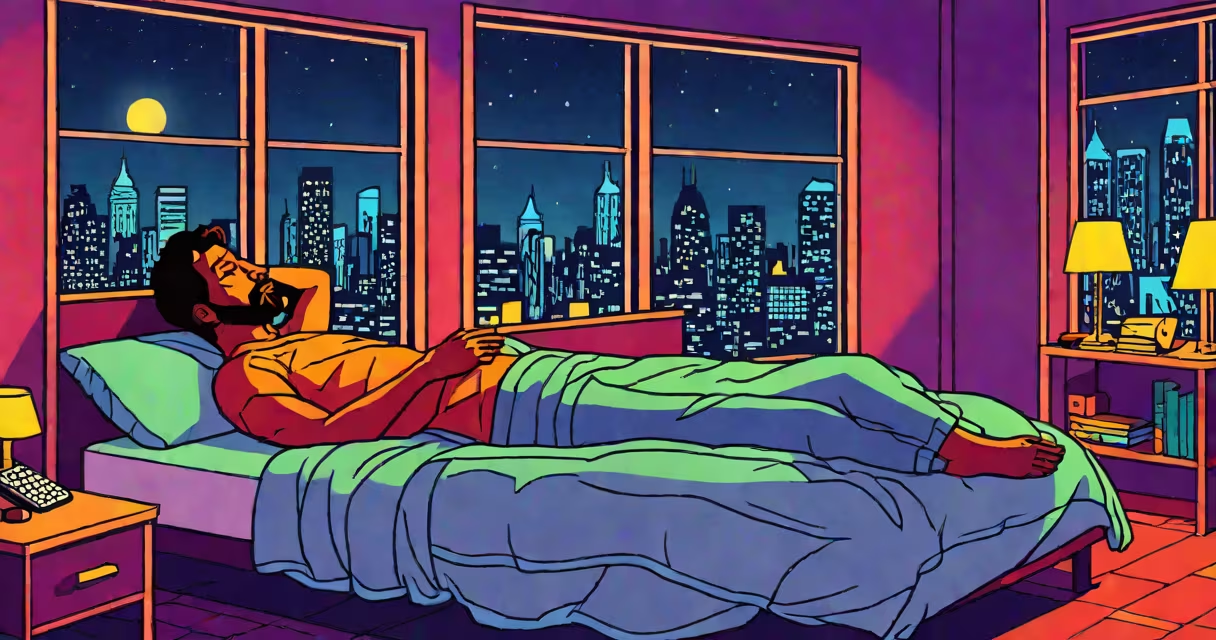
Why do I sleep so late? This pattern often stems from a misalignment between your internal circadian rhythm and external social demands, especially when melatonin release is delayed due to evening screen use, inconsistent sleep schedules, or underlying conditions like delayed sleep phase syndrome (DSPS).
Your body runs on a 24-hour cycle governed by light and darkness. When daylight fades, your brain signals the pineal gland to release melatonin, a hormone that promotes sleepiness. But if you're exposed to blue light from screens after sunset, that signal gets disrupted. Your body delays melatonin production, pushing your natural sleep onset later-sometimes until 2 a.m. or later.
Delayed sleep phase syndrome affects roughly 7% of adolescents and young adults, according to the American Academy of Sleep Medicine. It's not laziness-it's a neurological condition where the internal clock runs slower than the standard 24-hour day. People with DSPS often fall asleep hours past midnight and struggle to wake up early, even when they're exhausted.
The suprachiasmatic nucleus (SCN) in your hypothalamus acts as your master clock. It receives light signals through your eyes and adjusts your biological rhythms accordingly. When light hits your retina in the morning, the SCN suppresses melatonin and boosts cortisol and body temperature to promote alertness.
If you skip morning light-say, by sleeping in past sunrise-you delay the start of your day. That shift cascades: your melatonin release shifts later each night, reinforcing a late sleep pattern. After a few days, your body adapts to this new timing, making it harder to reset.
A 2021 study published in *Sleep* journal found that participants who used phones or tablets within an hour of bedtime experienced a 30-minute average delay in melatonin onset compared to those who avoided screens. The blue light spectrum (460-480 nm) is particularly effective at suppressing melatonin.
Many assume late sleep patterns result from poor discipline or lack of motivation. But research shows that genetics play a major role. Variants in the PER3 gene are linked to longer sleep cycles and a preference for later bedtimes. People with these variants often report feeling most alert in the evening.
Other contributors include:
Some people confuse this pattern with insomnia. But while insomnia involves difficulty falling or staying asleep, delayed sleep phase is about timing-not quantity. A person with DSPS may sleep 8 hours but still feel groggy because their sleep occurs too late for school or work.
Not all late sleepers have DSPS. Here's how to differentiate:
| Type | Key Features | Typical Onset | Common Triggers |
|---|---|---|---|
| Delayed Sleep Phase Syndrome (DSPS) | Consistent late sleep/wake times; normal sleep quality; genetic component | Evening to early morning (1 a.m. - 4 a.m.) | Screen use, irregular schedules, genetics |
| Insomnia | Difficulty falling/staying asleep; daytime fatigue; anxiety-related | Any time, but often early night | Stress, depression, poor sleep hygiene |
| Shift Work Sleep Disorder | Disrupted sleep due to rotating or night shifts | Varies by shift | Work schedule conflicts with natural rhythm |
One non-obvious distinction: people with DSPS usually sleep deeply and feel refreshed upon waking-but only if they can sleep at their preferred time. They don't suffer from fragmented sleep. That's a key difference from insomnia, where sleep is often restless and unrefreshing.
I once worked with a college student who consistently slept from 2 a.m. to 10 a.m. He reported low energy during lectures, missed deadlines, and felt "always behind." His doctor diagnosed him with DSPS after reviewing his sleep log and actigraphy data.
We implemented a gradual phase advance: he shifted bedtime earlier by 15 minutes every three days, using morning light therapy (30 minutes under a 10,000-lux light box). He also stopped using screens after 8 p.m. and began drinking herbal tea instead of coffee after 2 p.m.
After four weeks, his sleep onset moved to 12:30 a.m., and he woke at 8:30 a.m. with improved focus. He didn't change his preferences-he just aligned his habits with his biology.
Resetting your sleep schedule requires consistency and environmental control. Start with:
For persistent cases, cognitive behavioral therapy for insomnia (CBT-I) has shown success in shifting sleep timing. A 2022 meta-analysis in *JAMA Internal Medicine* found CBT-I reduced sleep onset latency by 38 minutes on average and improved sleep efficiency in 75% of participants.
Consult a sleep specialist if you've tried consistent routines for at least four weeks and still can't fall asleep before 2 a.m. or wake before 10 a.m. without feeling drained. A formal sleep study (polysomnography) can rule out sleep apnea, periodic limb movement disorder, or other conditions.
Remember: why do I sleep so late isn't a moral failing. It's a biological mismatch. With targeted adjustments, you can realign your sleep with your life-and reclaim your mornings.