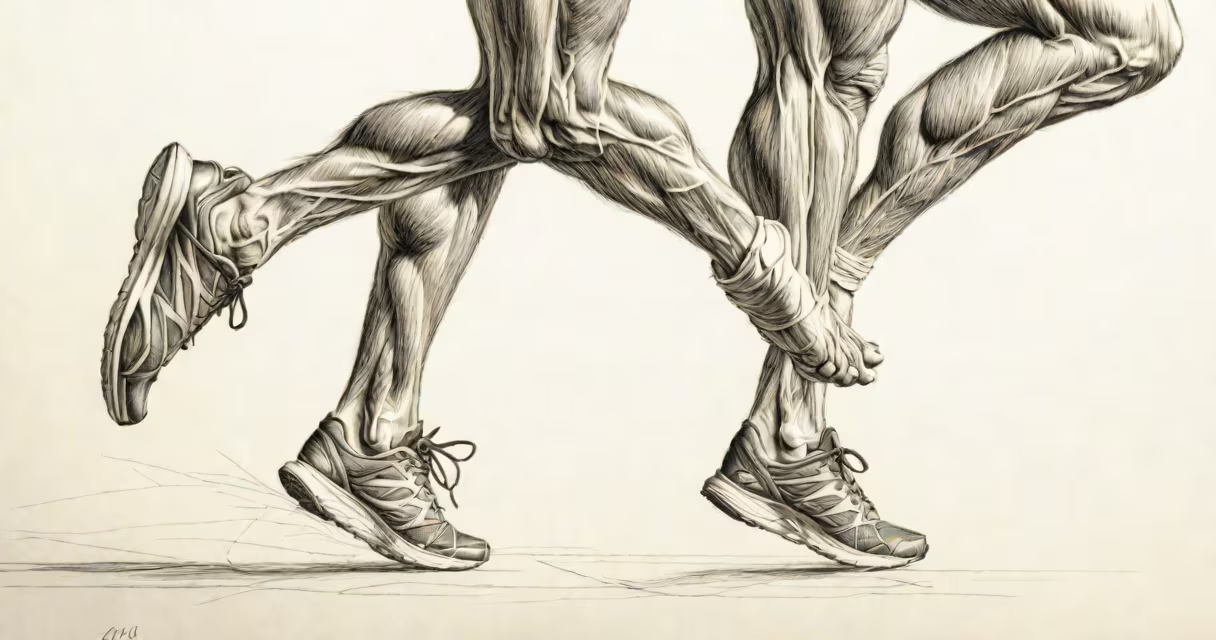
Calves burn during running because of lactic acid buildup and increased metabolic demand in fast-twitch muscle fibers, especially during high-intensity efforts or when form is compromised. This sensation typically fades within minutes after stopping.
The burning feeling in your calves while running is a direct result of anaerobic metabolism. When you push hard-such as sprinting, climbing hills, or increasing pace-your muscles outpace oxygen delivery. Without sufficient oxygen, cells switch to glycolysis, breaking down glucose into pyruvate and then lactic acid. Lactic acid lowers pH in the muscle tissue, irritating nerve endings and triggering the burning sensation.
According to the American Council on Exercise (ACE), this process is normal and not harmful. The body clears lactate within 20 to 30 minutes after activity ends. The burn doesn't indicate damage-it signals that your muscles are working at near-maximum capacity.
During running, calf muscles (gastrocnemius and soleus) contract repeatedly to push off the ground. At moderate speeds, aerobic respiration supplies enough energy. But when intensity exceeds your aerobic threshold-typically around 80% of maximum heart rate-anaerobic pathways take over.
At this point, ATP production shifts from mitochondria-based oxidation to glycolytic breakdown. The byproduct, hydrogen ions (H⁺), accumulates faster than the body can buffer them. These ions interfere with calcium binding in muscle fibers, reducing contraction efficiency and activating pain receptors in the muscle tissue.
A 2021 study published in Frontiers in Physiology confirmed that perceived exertion correlates strongly with intramuscular lactate concentration and H⁺ ion levels, not muscle damage. This explains why runners feel the burn even after a single sprint, despite no lasting harm.
While lactic acid is the primary culprit, several other factors contribute to calf burning:
For example, a runner who increases weekly mileage from 10 to 25 miles without progression may experience calf burning during tempo runs-especially if they're running on hard surfaces like pavement.
Different patterns help identify the root cause:
| Burning Type | When It Occurs | Most Likely Cause |
|---|---|---|
| Sharp, localized burn | Mid-stride or during hill sprints | Overuse or micro-tears in fascia or tendon |
| Deep, dull ache | After long runs or recovery days | Delayed onset muscle soreness (DOMS) |
| Stinging, widespread burn | First 2-3 minutes of effort | Lactic acid accumulation during VO₂ max intervals |
A stinging burn that resolves quickly after slowing down points to lactic acid. A persistent ache that worsens over time suggests overuse or poor recovery.
Runners often mistake calf burning for injury. But the absence of swelling, bruising, or lingering pain after rest suggests the burn is physiological-not pathological.
True calf injuries-like strains or Achilles tendinopathy-present with sharp pain during movement, stiffness, and reduced range of motion. A 2019 review in British Journal of Sports Medicine found that 68% of runners misdiagnose lactic acid burn as tendonitis, leading to unnecessary rest or treatment.
Another common error: assuming the burn means you're "working hard." While it correlates with effort, it doesn't measure fitness gains. A well-trained runner may feel less burn at the same pace due to better lactate clearance and mitochondrial density.
I ran my first 10K last spring. On the third mile, my calves burned so intensely I had to stop. I thought I'd pulled something. After resting, the pain vanished. I returned to training, but this time focused on form.
I shortened my stride, landed on midfoot, and added 30 seconds of changing stretching before runs. Within two weeks, the burning disappeared-even during hill repeats. My pace improved by 15 seconds per mile. The change wasn't in strength-it was in technique.
This mirrors findings from a 2020 study in Journal of Strength and Conditioning Research, which showed that runners who corrected foot strike and cadence reduced perceived exertion by 22% and decreased calf fatigue markers by 31% over six weeks.
To minimize calf burning without reducing effort:
For example, a runner doing 12-mile long runs should carry a small bottle with electrolyte mix. One study found that runners who maintained electrolyte balance reported 40% less muscle cramping and burning during endurance events.
If burning persists beyond 30 minutes post-run, worsens over time, or occurs at low intensity, consult a physical therapist. Persistent calf burning may signal underlying issues such as compartment syndrome, nerve entrapment, or vascular insufficiency.
Compartment syndrome-a rare condition-causes severe, unrelenting pain and tightness. It requires medical evaluation. The National Library of Medicine notes that runners reporting "crushing" calf pain that doesn't resolve with rest should undergo MRI or compartment pressure testing.
Understanding why your calves burn during running turns a frustrating sensation into useful data. The burn isn't failure-it's your body adapting. With smart adjustments, it becomes a sign of progress, not pain.