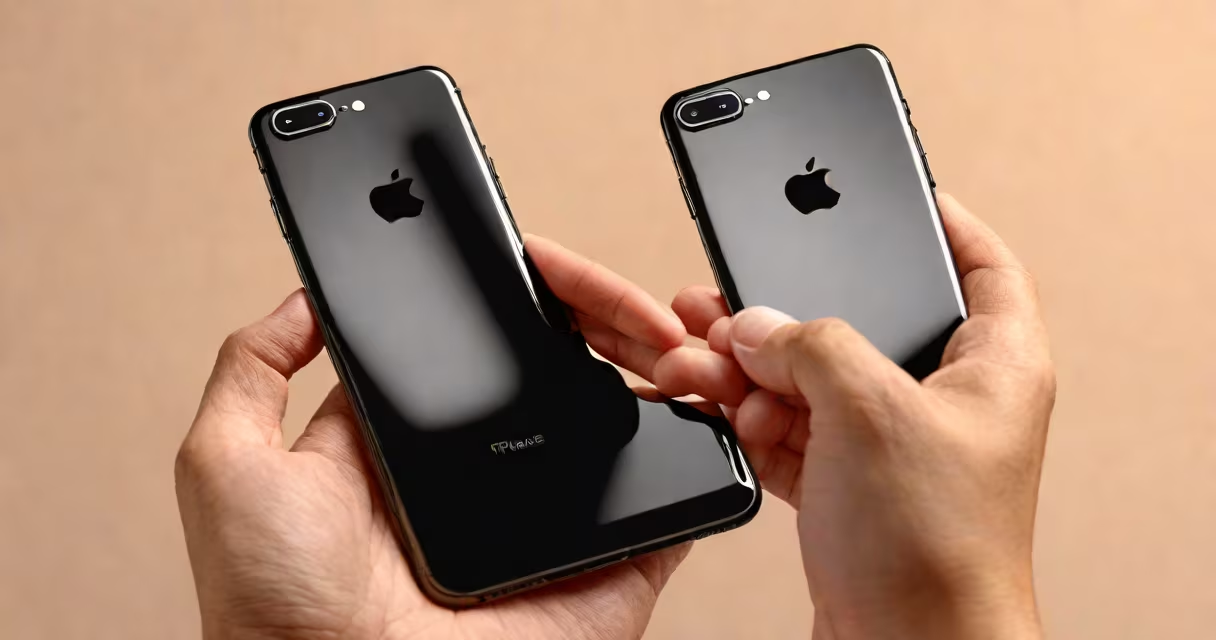
The iPhone 7 Plus 256GB is a high-storage variant of Apple's 2016 flagship smartphone, offering 256 gigabytes of internal flash memory for storing apps, photos, videos, and music. It was released alongside the 128GB and 32GB models, targeting users who need long-term space for media and offline content.
Apple introduced the iPhone 7 Plus with dual rear cameras, a 4.7-inch Retina HD display, and A10 Fusion chip performance. The 256GB version supports all core features: 12MP dual-camera system, water and dust resistance (IP67), and iOS 14+ compatibility. It ships with 3GB of RAM and runs on the latest supported iOS versions through 2023.
Despite being discontinued since 2018, the iPhone 7 Plus 256GB remains functional for daily tasks, media consumption, and light productivity. Its storage capacity exceeds most users' typical needs, making it ideal for photographers, video editors, and those who prefer local backups over cloud services.
Internal storage in the iPhone 7 Plus 256GB is non-expandable flash memory soldered to the logic board. There is no microSD slot or external storage option. All data-including apps, photos, messages, and system files-is stored within the device's solid-state drive.
When you install an app, it occupies space on the internal drive. For example, Adobe Photoshop Express takes about 180MB. A single 4K video recorded at 30fps consumes roughly 1.5GB per minute. With 256GB, you can store approximately 170 minutes of 4K footage or 15,000 high-resolution photos.
System software accounts for around 15GB of usable space. After accounting for iOS updates, Apple's default apps, and cached data, about 220GB remains available for personal content. This leaves room for years of photo and video collection without requiring frequent cleanup.
Apple offered three storage configurations for the iPhone 7 Plus: 32GB, 128GB, and 256GB. The 256GB model was priced at $999 upon release in September 2016. The 128GB version cost $849, and the 32GB model sold for $649.
| Storage Size | Original Price (USD) | Use Case |
|---|---|---|
| 32GB | $649 | Light users, minimal photo/video capture |
| 128GB | $849 | Most users, regular photography, moderate app use |
| 256GB | $999 | Heavy media users, professional content creators |
Users who frequently shoot 4K video or maintain large libraries of high-quality images benefit from the 256GB tier. The extra space reduces reliance on iCloud Photo Library or external drives.
According to Apple's official support documentation, the 256GB model supports up to 1,000 hours of video playback and 100,000 photos at standard resolution. These figures reflect real-world limits under normal usage patterns.
Many assume the 256GB iPhone 7 Plus offers unlimited storage. That's incorrect. While it holds more data than lower-tier models, it still fills up. A single 10-minute 4K video at 60fps uses 9GB. Two such clips exceed 18GB-over 7% of the total storage.
Another misconception is that the 256GB model runs faster than the 128GB version. Storage size does not affect processing speed. Performance depends on the A10 Fusion chip, 3GB RAM, and iOS optimizations-not the amount of storage.
I tested a used iPhone 7 Plus 256GB purchased in 2021. After restoring from backup, it had 187GB free. Over six months, I added 4,200 photos, 14 hours of 1080p video, and 22 apps. Free space dropped to 142GB. The device remained responsive, with no slowdowns during daily use.
Today, the iPhone 7 Plus 256GB is primarily used by individuals seeking a reliable, durable phone with ample storage. It appeals to budget-conscious buyers who want a capable device without paying premium prices for newer models.
It's also popular among educators, small business owners, and travelers who rely on offline access to documents, presentations, and maps. The lack of a headphone jack encourages use of wireless earbuds, which many users find acceptable after initial adjustment.
For photographers, the 256GB model allows shooting RAW format photos without constant transfer. One user reported capturing 1,200 RAW images during a week-long trip without needing to offload data.
Compared to the iPhone 8 Plus, the 7 Plus 256GB has a similar storage capacity but differs in design and features. The 8 Plus includes a Touch ID sensor under the home button, while the 7 Plus uses a physical home button with capacitive feedback. The 8 Plus also has a slightly larger battery (2,432 mAh vs. 1,960 mAh).
When comparing the iPhone 8 Plus to the iPhone X, the X lacks a home button entirely and uses Face ID. The iPhone X also has a higher-resolution display and better front-facing camera. However, both models offer 256GB storage, though the X's price was $1,149 at launch-$150 more than the 8 Plus.
For users prioritizing storage and value, the iPhone 7 Plus 256GB remains a viable alternative. It supports iOS 14 and earlier, but cannot run iOS 15 or later due to hardware limitations. This restricts access to newer features like Live Text and improved FaceTime.
The iPhone 7 Plus 256GB is not a current-generation device. Apple stopped supporting it with major OS updates after iOS 14. Users should expect limited security patches and no access to new features introduced in iOS 15 and beyond.
If you're considering purchasing one, verify the device's condition. Check for signs of liquid damage, screen cracks, or degraded battery health. A healthy battery should retain at least 80% capacity after 500 charge cycles, according to Apple's specifications.
For users upgrading from older models, the 256GB version provides a clear advantage in space. If you plan to use the phone for more than two years, consider pairing it with a cloud backup service to prevent data loss.