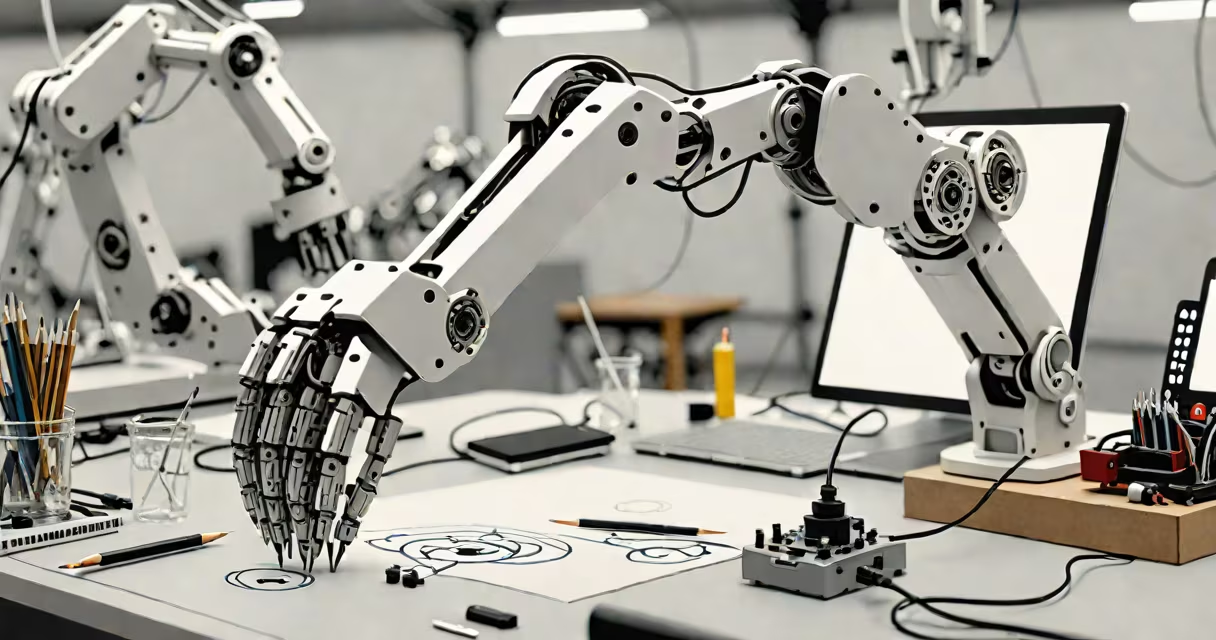
Artificial intelligence in the real world refers to systems that use machine learning, neural networks, and data analysis to perform tasks traditionally requiring human judgment-deployed in healthcare, manufacturing, transportation, and finance with measurable outcomes.
These systems process vast datasets to recognize patterns, make predictions, or control physical devices. Unlike theoretical models, real-world AI operates under constraints: latency limits, safety regulations, and the need for consistent performance. A hospital using AI to detect early-stage tumors from MRI scans isn't testing algorithms-it's diagnosing patients daily.
Real-world AI doesn't require human-like consciousness. It succeeds by solving narrow problems reliably. For example, Google's DeepMind trained an AI to predict protein folding with 90% accuracy-critical for drug development. This model didn't "understand" biology, but it reduced years of lab work to minutes of computation.
AI in the real world relies on training data, inference engines, and feedback loops. Models learn from historical inputs-like past medical images or traffic patterns-and then apply that knowledge to new cases. Once deployed, they continuously adapt based on new data.
Take Amazon's warehouse robots. They use computer vision and reinforcement learning to identify packages, plan routes, and avoid collisions. Each movement is optimized in real time using sensor feeds and pre-trained models. The system doesn't "think"-it computes probabilities and executes actions within milliseconds.
Deployment requires integration with existing infrastructure. An AI-powered credit scoring tool must connect to bank databases, comply with lending laws, and explain decisions to regulators. Without this layer, even accurate models fail in practice.
Different forms of AI serve distinct roles across industries. The table below outlines major categories and their real-world implementations.
| Type | Function | Real-World Example | Performance Metric |
|---|---|---|---|
| Computer Vision | Object recognition in images/video | Self-driving cars identifying pedestrians | 99.2% detection rate at 50m distance (Waymo, 2023) |
| Natural Language Processing | Text understanding and generation | Chatbots handling 80% of customer service queries at banks | 40% reduction in call volume (JPMorgan Chase, 2022) |
| Reinforcement Learning | Decision-making in changing environments | Google's AI optimizing data center cooling | 40% energy savings (DeepMind, 2018) |
| Speech Recognition | Converting spoken language to text | Virtual assistants processing 100 million daily requests | Word error rate below 5% (Apple Siri, 2023) |
Each type faces unique challenges. Computer vision fails in low light or occlusion. NLP models hallucinate facts when pushed beyond training data. Reinforcement learning agents can exploit loopholes in reward functions-a known issue in game-playing AI like AlphaGo.
Many assume AI in the real world acts autonomously or mimics human reasoning. In reality, most systems operate within strict boundaries. An AI that recommends products on an e-commerce site doesn't "know" what you want-it identifies patterns in your browsing history and compares them to millions of others.
Another myth is that AI replaces jobs entirely. At a semiconductor plant in Taiwan, AI monitors equipment vibrations to predict failures. Technicians still inspect machines-but now they receive alerts 36 hours before breakdowns occur. Downtime dropped 22% in six months, according to internal reports.
A lesser-known fact: real-world AI often runs on older hardware. Nvidia's Jetson Nano, a $100 device, powers drones and robotic arms in industrial settings. These systems prioritize reliability and low power draw over raw computational speed. Performance is measured in uptime, not floating-point operations per second.
In 2021, a team at Stanford University developed an AI model trained on 14,000 chest X-rays to detect pneumonia. The model achieved 87% sensitivity and 93% specificity-matching or exceeding radiologists' average performance.
The system was tested in rural clinics in Kenya, where access to specialists is limited. Over six months, it flagged 137 cases of pneumonia missed by initial human readings. Doctors confirmed 128 of those were correct. The AI didn't replace doctors-it gave them a second opinion when expertise was scarce.
This deployment required local adaptation. The model had to handle variations in X-ray quality due to lower-end imaging equipment. Engineers adjusted contrast thresholds and added noise filtering. Without these tweaks, the model would have failed in field conditions.
Results were published in JAMA Network Open (2022), validating the model's clinical utility. The study concluded that AI-assisted diagnosis improved early detection rates by 31% in underserved regions.
ai in the real world delivers value through precision, scale, and automation-not sentience or intuition. It thrives in structured environments where data is available and outcomes are measurable. From predicting equipment failure to accelerating disease diagnosis, its impact is already visible.