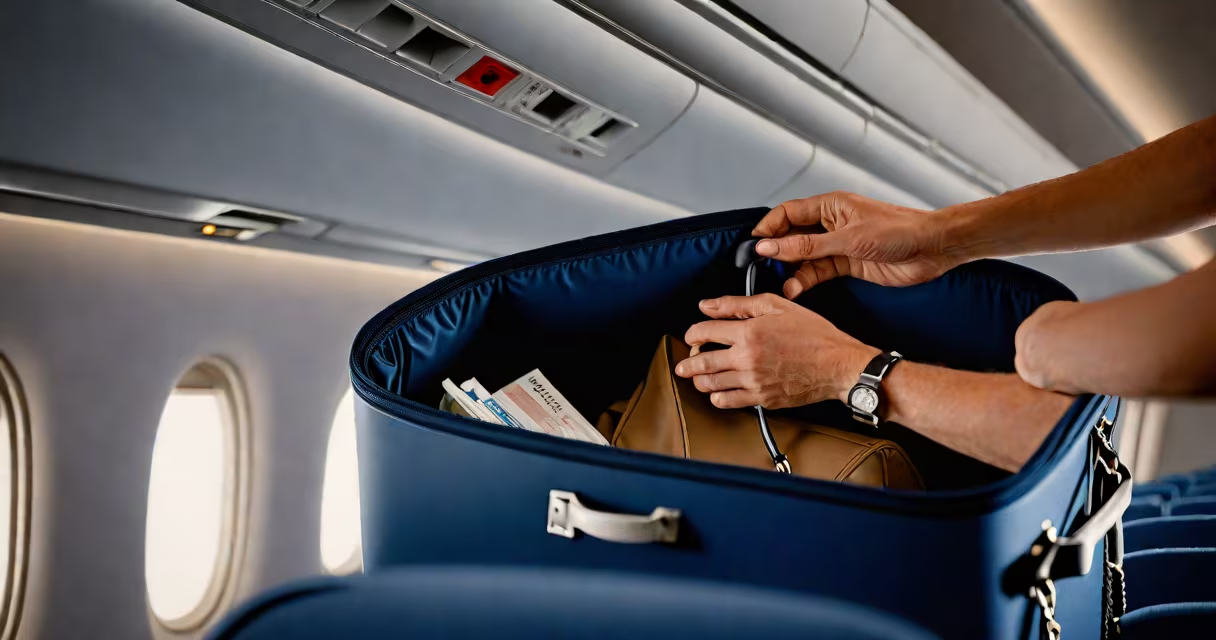
Air France allows one piece of hand baggage measuring 55 cm x 40 cm x 20 cm (21.7 x 15.7 x 7.9 inches), including wheels and handles. This size fits most overhead bins on domestic and European flights. The maximum weight is 12 kg (26.5 lbs).
These dimensions apply to all passengers, regardless of fare class or destination. The bag must fit within the specified measurements when packed and closed. Air France enforces these limits at check-in and boarding gates. Bags exceeding the size or weight are subject to a fee or may be checked at the gate.
The airline uses a standardized measurement system based on international IATA guidelines. This ensures consistency across carriers in the SkyTeam alliance. All bags must be stowed in the overhead bin or under the seat in front. Overhead bins are limited to one bag per passenger.
Most standard carry-ons, such as the Samsonite Pro 55cm suitcase, meet the 55 x 40 x 20 cm requirement. The width (40 cm) is measured at the widest point, including side pockets and zippers. The height (55 cm) includes the handle and wheels. Depth (20 cm) is measured from front to back.
When packing, ensure the bag remains within these limits. A bag that measures 56 cm in height will not pass through the gate scanner. Even small expansions due to soft materials or bulging pockets can trigger rejection. Airlines use automated scanning systems that flag bags exceeding 55 cm in any dimension.
For example, a 40-liter backpack with a rigid frame and external compression straps can exceed the depth limit if the frame extends beyond 20 cm. A 20-inch rolling suitcase typically fits, but a 22-inch model often exceeds the depth limit. Always measure your bag before travel.
Passengers may bring one personal item and one carry-on bag. The personal item must fit under the seat and cannot exceed 35 x 20 x 15 cm (13.8 x 7.9 x 5.9 inches). Examples include a laptop bag, small purse, or camera case.
| Bag Type | Max Dimensions (cm) | Max Weight | Examples |
|---|---|---|---|
| Carry-on | 55 x 40 x 20 | 12 kg | Rolling suitcase, large duffel |
| Personal item | 35 x 20 x 15 | 5 kg | Laptop bag, tote, small backpack |
Some travelers use a wheeled carry-on with a detachable personal bag. This setup works if both items stay within their respective limits. A 40-liter backpack with a removable shoulder strap counts as a personal item only if it fits under the seat.
Children's strollers and medical equipment are exempt from size rules. These items are stowed in the cabin if space allows. They do not count toward the carry-on allowance.
Many travelers assume that the 55 x 40 x 20 cm rule applies only to rolling suitcases. This is incorrect. Backpacks, duffels, and even large camera bags must comply. A 50 cm wide backpack with a thick frame can exceed the 40 cm width limit.
Another misconception is that weight matters less than size. Air France checks both. A 12 kg bag that fits the dimensions is acceptable. A 13 kg bag, even if it meets size requirements, is rejected at the gate. The airline uses calibrated scales at the boarding area.
Some passengers believe that premium classes allow larger bags. This is false. All fare classes follow the same hand baggage policy. Business and First Class passengers may receive priority boarding but not increased size allowances.
KLM, a sister airline in the SkyTeam network, uses the same hand baggage dimensions as Air France. This simplifies travel for connecting flights between the two carriers. Both airlines enforce the 55 x 40 x 20 cm rule and 12 kg weight limit.
However, some low-cost carriers differ. Ryanair allows 20 x 30 x 40 cm bags for free, but charge extra for larger ones. EasyJet permits 56 x 45 x 25 cm bags, which exceed Air France's limits. Always verify rules for each airline in a multi-carrier trip.
When transferring between Air France and a non-SkyTeam carrier, confirm the hand baggage policy of the connecting airline. A bag that fits Air France may not fit Lufthansa or Delta. The IATA standard is widely adopted, but exceptions exist.
I traveled from Paris to Amsterdam with a 55 cm Samsonite Lite 2 spinner. The bag measured exactly 55 x 40 x 20 cm when closed. I packed a 1.5 kg laptop, a 2 kg jacket, and a 0.5 kg toiletry kit. Total weight was 10 kg.
At Charles de Gaulle Airport, I passed through security with no issues. The bag fit in the overhead bin on the plane. I had room for a small personal item (a 30 cm wide crossbody bag) under the seat. No fees were applied.
Had the bag been 56 cm tall, it would have been rejected at the gate. Had the weight reached 13 kg, I would have been asked to pay a fee or check the bag. The airline's system flagged the excess weight during boarding.
Always measure your bag before leaving home. Use a ruler or tape measure. Include wheels and handles in the height and width. A bag that appears to fit may exceed the limit when fully extended.
Use a hard-shell suitcase with a flat profile. Soft-sided bags can stretch or bulge when packed. This increases the risk of exceeding the 40 cm width or 20 cm depth.
If you're traveling with a companion, avoid bringing two bags that are near the limit. Gate agents may reject one if they suspect overpacking. One bag per passenger is standard.
For international flights, especially to the U.S., verify that your bag complies with TSA rules. Some U.S. airports require bags to be opened for inspection. Air France's size rules align with TSA standards, but weight enforcement varies.
Travelers who frequently fly with Air France should consider a carry-on that fits the 55 x 40 x 20 cm standard. Many brands offer models designed specifically for this size. Look for "SkyTeam compatible" or "IATA compliant" on packaging.
When flying with children, pack essentials in the personal item. Diapers, wipes, and snacks go in the under-seat bag. This avoids delays during boarding and keeps the carry-on light.
Final note: Air France does not accept bags with visible damage or loose wheels. The airline reserves the right to refuse any bag deemed unsafe for storage. Always inspect your bag before arriving at the airport.