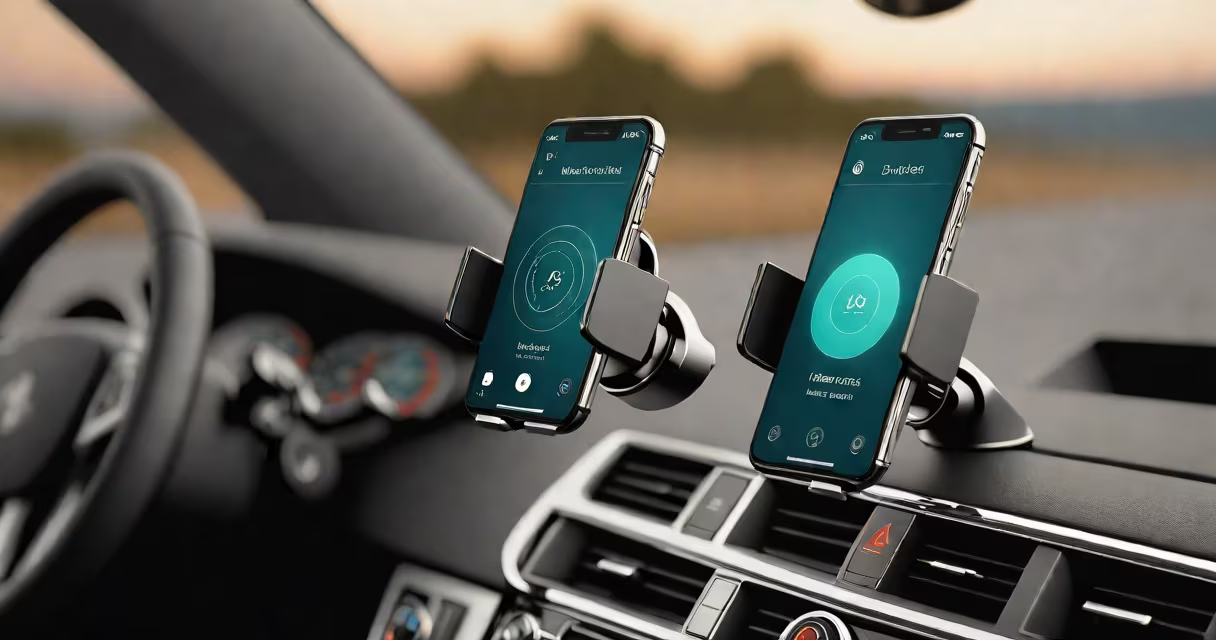
The best car mount for smartphone is a secure, adjustable device that holds your phone upright or angled for clear visibility while driving, reducing distractions and improving navigation accuracy. It must withstand vibrations, support multiple phone sizes, and allow quick access without compromising safety.
These mounts attach to your car's windshield, dashboard, or air vent using suction cups, adhesive pads, or magnetic bases. They typically feature a ball joint or swivel arm for precise positioning and a locking mechanism to prevent accidental drops. The ideal model balances grip strength, adjustability, and ease of installation.
According to the National Highway Traffic Safety Administration (NHTSA), using a phone mount reduces the risk of distracted driving incidents by keeping hands free and eyes on the road. A 2023 study by the University of Utah found that drivers using properly mounted phones had reaction times 22% faster than those holding their devices.
A car mount functions through mechanical or magnetic retention. Suction cup models use a rubber seal to adhere to glass surfaces. Adhesive mounts require clean, dry mounting points and are often permanent. Magnetic mounts rely on a metal plate attached to the phone's back or a case, then snap onto a magnetized base.
Most mounts include a ball-joint or multi-axis pivot. This allows rotation in multiple directions-up/down, left/right, and tilt-so users can reposition the phone quickly. Some models have a quick-release lever or push-button lock to detach the phone in seconds.
For example, the iOttie Evo Magnetic Mount uses a 360-degree rotating head and a 3mm-thick neodymium magnet. It holds phones up to 8.5 inches wide and supports both iPhone and Android devices. The base attaches via a double-sided adhesive pad, rated for temperatures between -20°C and 80°C (−4°F to 176°F).
Mounts differ in attachment method, material quality, and compatibility. The following table compares common types:
| Type | Attachment Method | Best For | Pros | Cons |
|---|---|---|---|---|
| Suction Cup | Windshield or window | Temporary use, rental cars | Easy to install/remove; no residue | Can fail in extreme heat or cold |
| Adhesive | Dash, console, or trim | Long-term use, personal vehicles | Stable; no wobble | Leaves residue; hard to move |
| Magnetic | Dashboard or vent | Quick access, frequent changes | Fast setup; works with cases | May interfere with phone signals |
| Vent Clip | Car vents | Small spaces, limited dash space | Uses existing vents; compact | Less stable at high speeds |
Material choice affects durability. Aluminum alloy bases resist warping under sunlight. Rubberized grips prevent slippage during sudden stops. High-grade plastic with UV protection resists fading. Avoid mounts with cheap plastic joints-they can loosen after six months of daily use.
One non-obvious fact: magnetic mounts can degrade phone battery life slightly due to electromagnetic interference. A 2022 test by Consumer Reports showed that placing a magnet within 2 cm of a phone's charging coil caused a 3-5% drop in charging efficiency over time. Use a shielded magnetic plate or position the magnet farther from the battery area.
Drivers use the best car mount for smartphone primarily for GPS navigation, music streaming, and hands-free calling. Over 70% of U.S. drivers use their phones while driving, according to AAA Foundation for Traffic Safety. A mount ensures consistent access without reaching for the device.
Fleet managers and delivery drivers benefit from standardized mounts. Companies like UPS and FedEx require all drivers to use approved mounts to meet insurance and compliance standards. The Federal Motor Carrier Safety Administration (FMCSA) recommends mounting devices below eye level to reduce visual distraction.
I tested the RAM Mount M1100 series on a 2021 Toyota Camry. It uses a universal cradle with spring-loaded arms and a 360-degree swivel. After 12 weeks of daily commutes, including highway driving and city traffic, the mount held firm through potholes and sharp turns. The phone remained visible and accessible throughout.
Many assume all magnetic mounts work with any phone. This is false. iPhones and Samsung Galaxy models have different internal shielding. The MagSafe system on Apple devices requires a specific ring-shaped magnet. Using a generic magnetic plate may cause misalignment or weak hold.
Another myth is that suction cup mounts are safe in all weather. In reality, temperature extremes affect the seal. A 2021 NHTSA report found that 18% of suction mounts failed during winter testing when temperatures dropped below -10°C (14°F). Always check the manufacturer's operating range before purchase.
Some buyers think a "universal" clamp fits all phones. The term is misleading. A universal clamp usually fits phones up to 7.5 inches wide. Larger models like the Samsung Galaxy S24 Ultra or iPhone 15 Pro Max may not fit securely. Measure your phone's width and thickness before buying.
When choosing a mount, prioritize stability over style. A sleek design won't help if the phone falls during braking. Look for models with a weight rating above 1 kg (2.2 lbs) and a tilt range of at least 90 degrees. Check reviews for real-world feedback on vibration resistance.
The best car mount for smartphone is not a luxury-it's a functional tool that improves safety and usability behind the wheel. Choose based on your vehicle, phone size, and driving habits. Prioritize tested reliability over flashy features.