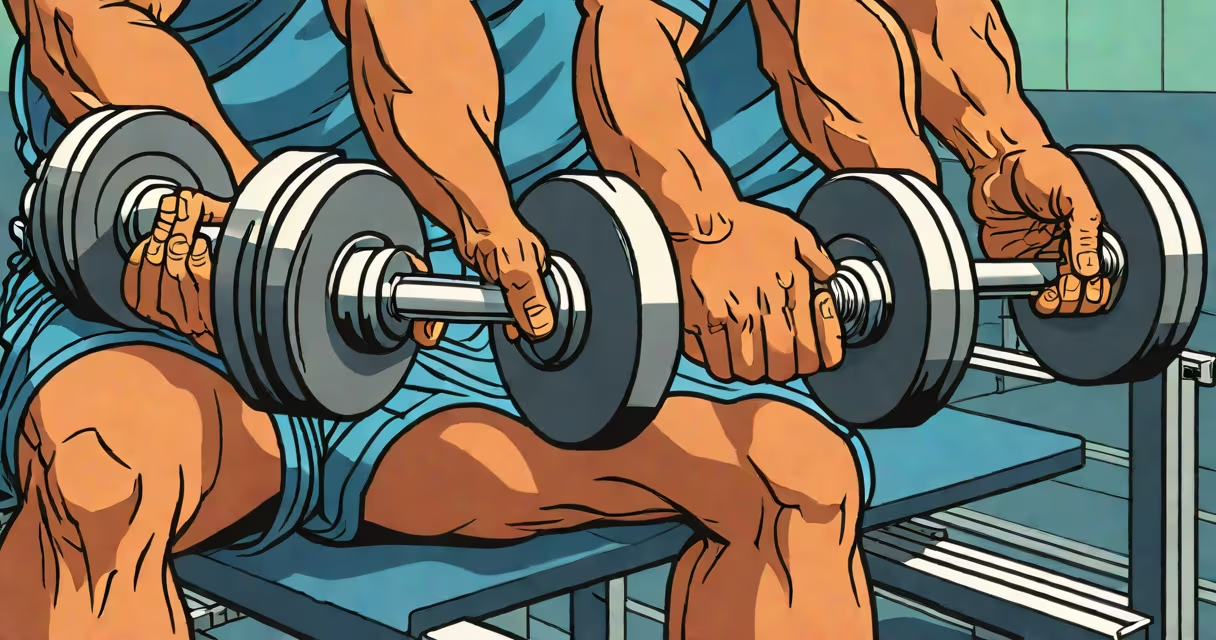
The best way to gain muscle fast involves consistent resistance training with progressive overload, consuming 1.6 to 2.2 grams of protein per kilogram of body weight daily, and allowing 48 to 72 hours of recovery between sessions targeting the same muscle group. This combination drives muscle protein synthesis and supports structural adaptation.
Resistance training forces muscle fibers to adapt by increasing size and strength. Without gradual increases in load, volume, or intensity, progress stalls. A 2021 meta-analysis published in the Journal of the International Society of Sports Nutrition confirmed that progressive overload is the primary driver of hypertrophy, with participants gaining 0.5 to 1.0 kg of lean mass per month when following structured programs.
Protein intake directly influences muscle repair and growth. The American College of Sports Medicine recommends 1.6-2.2 g/kg/day for individuals engaged in regular resistance training. Consuming protein within two hours post-workout enhances muscle protein synthesis rates by up to 30%, according to research from the University of Texas Southwestern Medical Center.
Muscle growth occurs through mechanical tension, metabolic stress, and muscle damage-three factors activated during resistance training. Mechanical tension arises when muscles contract against external resistance, such as weights. This tension triggers satellite cells to donate nuclei to muscle fibers, enabling increased protein synthesis and fiber enlargement.
Metabolic stress results from sustained muscle contractions under fatigue, leading to cell swelling and hormonal responses. High-repetition sets (8-12 reps) create this effect, which contributes to the "pump" sensation and may improve growth signaling pathways.
Microtears in muscle fibers during intense lifting initiate repair processes. During rest, especially sleep, the body synthesizes new proteins to rebuild damaged tissue. Without sufficient recovery, muscle breakdown exceeds repair, halting gains.
Progressive overload is the foundation. Increasing weight, reps, or sets over time ensures continuous adaptation. For example, if you perform 3 sets of 10 reps on the bench press at 100 lbs, increase to 105 lbs after two weeks if form remains stable.
Training frequency matters. Research from the European Journal of Applied Physiology shows that training each major muscle group twice weekly produces greater hypertrophy than once-weekly sessions. This allows for higher volume accumulation while maintaining recovery capacity.
Recovery includes sleep, hydration, and nutrition. Sleep deprivation reduces testosterone levels by up to 15% and elevates cortisol, both of which impair muscle growth. Aim for 7-9 hours nightly. Hydration affects nutrient transport and joint lubrication-dehydration reduces performance by 10-20% during resistance work.
| Factor | Optimal Range | Why It Matters |
|---|---|---|
| Protein intake | 1.6-2.2 g/kg/day | Supports muscle protein synthesis and recovery |
| Training frequency | 2x/week per muscle group | Maximizes volume and adaptation |
| Rest between sets | 60-90 seconds | Preserves intensity and metabolic stress |
| Sleep duration | 7-9 hours/night | Regulates anabolic hormones and tissue repair |
Many assume that heavy lifting alone builds muscle quickly. However, insufficient volume and poor exercise selection limit results. A 2020 study in the Journal of Strength and Conditioning Research found that participants who performed compound lifts (e.g., squats, deadlifts, overhead presses) gained 2.3 times more muscle mass than those relying solely on isolation exercises.
Another myth is that more protein equals faster growth. Excess protein beyond 2.2 g/kg/day offers no additional benefit and may burden the kidneys in individuals with pre-existing conditions. The body cannot store excess protein as muscle; surplus amino acids are oxidized or converted to glucose or fat.
A lesser-known fact: training to failure on every set leads to diminished long-term progress. A 2019 study showed that training to within 1-2 reps of failure maximizes muscle activation without excessive fatigue. Overtraining increases injury risk and suppresses immune function.
Consider a 200-pound (90.7 kg) male with 12% body fat aiming to gain 3 pounds of lean mass in eight weeks. His daily protein goal is 163-199 grams (1.8 g/kg × 90.7 kg).
He follows a 4-day split:
Each session includes 3-4 sets of 8-12 reps. He increases the weight by 2.5-5 lbs when he completes 12 reps with good form. He consumes 200g of protein daily via chicken, eggs, Greek yogurt, and whey protein shakes.
After eight weeks, he gains 2.8 pounds of lean mass, with improved strength and visible muscle definition. His body fat percentage stays stable due to proper caloric balance.
People mistake muscle gain for weight gain. Gaining 1-2 pounds per week is unrealistic and typically reflects water retention or fat gain. Muscle weighs more than fat, so scale weight may rise even as body composition improves. Tracking waist circumference, body measurements, or using DEXA scans provides better insight than the scale alone.
Some confuse high-volume training with efficiency. While volume matters, excessive sets lead to burnout and reduced recovery. A 2022 review in Sports Medicine concluded that 10-20 hard sets per muscle group per week yield optimal results. More than 20 sets increase injury risk without added benefit.
I've seen clients attempt to double their workout time to accelerate gains. They trained six days a week, skipped rest, and ate only protein bars. After four weeks, they reported fatigue, decreased performance, and no muscle change. Switching to a balanced 4-day program with proper rest led to measurable gains in six weeks.
Consistent effort, intelligent programming, and attention to recovery define the best way to gain muscle fast. Results take time, but science confirms that structured, evidence-based approaches deliver sustainable gains without compromising health.