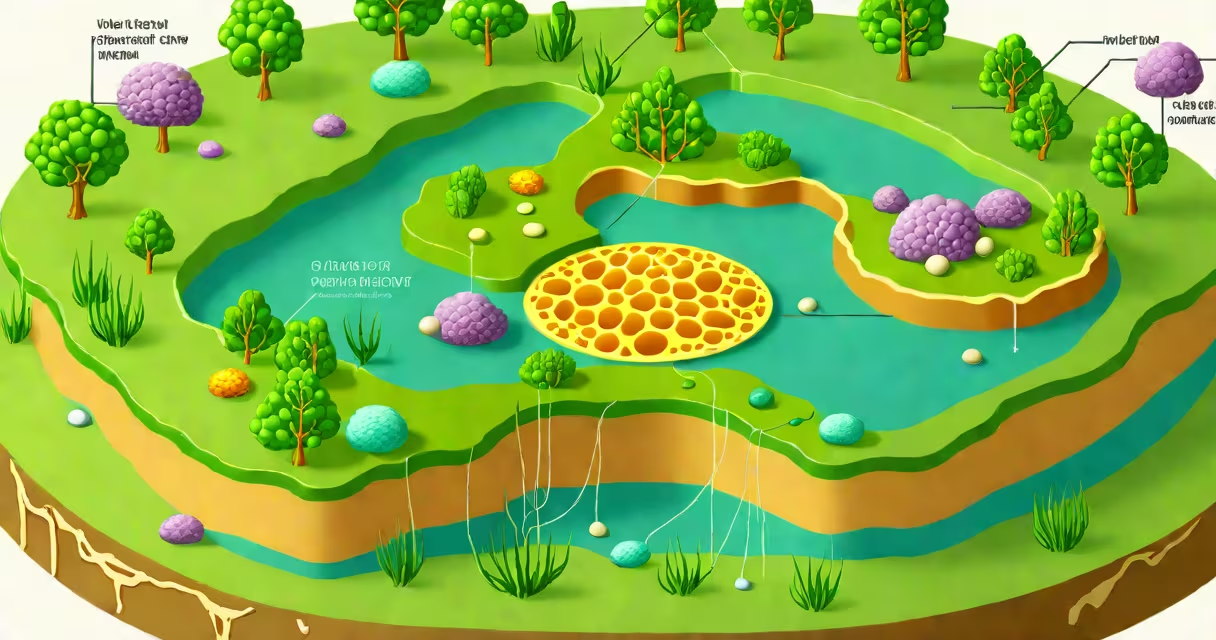
A biology plant cell is a eukaryotic cell characterized by a rigid cellulose cell wall, chloroplasts for photosynthesis, and a large central vacuole that maintains turgor pressure. These features distinguish it from animal cells and enable plants to grow upright and produce their own food using sunlight.
Plant cells are the foundational units of all land plants and many aquatic species. They perform photosynthesis, store energy as starch, regulate water balance, and support structural integrity through their cell walls. Each component serves a specific role in survival and growth under varying environmental conditions.
Understanding plant cell biology is essential for fields ranging from agriculture to medicine. For example, researchers manipulate plant cell pathways to increase crop resilience to drought or pests. The study of these cells also informs bioengineering projects such as lab-grown meat alternatives derived from plant-based proteins.
Plant cells operate through coordinated systems involving organelles, membranes, and biochemical pathways. The process begins with light absorption by chlorophyll in chloroplasts, which converts carbon dioxide and water into glucose and oxygen via photosynthesis. This reaction occurs in two stages: the light-dependent reactions in the thylakoid membranes and the Calvin cycle in the stroma.
Glucose produced during photosynthesis fuels cellular respiration in mitochondria, generating ATP-the energy currency of the cell. Excess glucose is stored as starch in plastids or converted into sucrose for transport through the phloem. Water enters the cell via osmosis through aquaporin channels in the plasma membrane, creating internal pressure that pushes against the cell wall.
The central vacuole plays a critical role in maintaining turgor pressure. When filled with water and ions, it expands and presses outward against the cell wall, keeping the plant rigid. Without adequate water, the vacuole shrinks, causing wilting-a visible sign of dehydration in leaves.
Each organelle in a plant cell contributes to its function. The following table outlines the primary components and their roles:
| Structure | Function | Unique Feature |
|---|---|---|
| Cell Wall | Provides structural support and protection | Made of cellulose fibers; prevents bursting under osmotic pressure |
| Chloroplast | Conducts photosynthesis | Contains thylakoid stacks and chlorophyll; produces oxygen as a byproduct |
| Central Vacuole | Stores water, ions, and waste; regulates turgor pressure | Can occupy up to 90% of the cell's volume in mature cells |
| Nucleus | Households DNA and controls gene expression | Surrounded by a double membrane with nuclear pores |
| Plastids | Store pigments and nutrients; include amyloplasts and chromoplasts | Non-photosynthetic plastids can differentiate into specialized forms |
One non-obvious fact: plant cells lack centrosomes, which animal cells use to organize microtubules during mitosis. Instead, plant cells form spindle fibers from dispersed microtubule-organizing centers around the nucleus. This difference affects how chromosomes align during cell division and influences genetic stability in crops.
Many assume that all plant cells contain chloroplasts. This is false. While photosynthetic tissues like leaf mesophyll cells are rich in chloroplasts, root cells and inner stem layers often lack them. Root cells rely on stored sugars and fungal symbionts for energy rather than photosynthesis.
Another misconception is that plant cells are static. In reality, they actively remodel their cell walls using enzymes like expansins and cellulases. During growth, the wall loosens to allow expansion, then re-hardens to maintain shape. This changing remodeling enables roots to push through soil and stems to bend toward light.
Some confuse plant cells with fungal cells. Both have cell walls, but fungal walls are made of chitin, while plant walls are cellulose-based. Fungal cells also lack chloroplasts entirely and absorb nutrients externally, unlike autotrophic plant cells.
In 2021, scientists at the University of California, Davis, used CRISPR-Cas9 editing in Arabidopsis thaliana plant cells to improve drought tolerance. By modifying genes responsible for stomatal closure, they reduced water loss by 37% without affecting photosynthesis rates. This work demonstrates how understanding plant cell biology leads to practical solutions in climate-resilient agriculture.
At the cellular level, a single leaf mesophyll cell contains approximately 30-50 chloroplasts. Each chloroplast houses around 100 grana stacks, where light harvesting occurs. In optimal sunlight, a single chloroplast can fix up to 100 molecules of CO₂ per second during peak photosynthesis.
I once observed a live onion epidermal cell under a compound microscope during a lab session. After adding iodine stain, the nucleus became visible as a darkly stained region near the center. The cell wall appeared as a thick, clear boundary. This hands-on experience confirmed textbook descriptions and highlighted how staining enhances contrast in biological samples.
Understanding biology plant cell structure and function provides insight into life processes beyond the visible. From fueling ecosystems to enabling sustainable food production, plant cells remain central to both scientific inquiry and global survival.