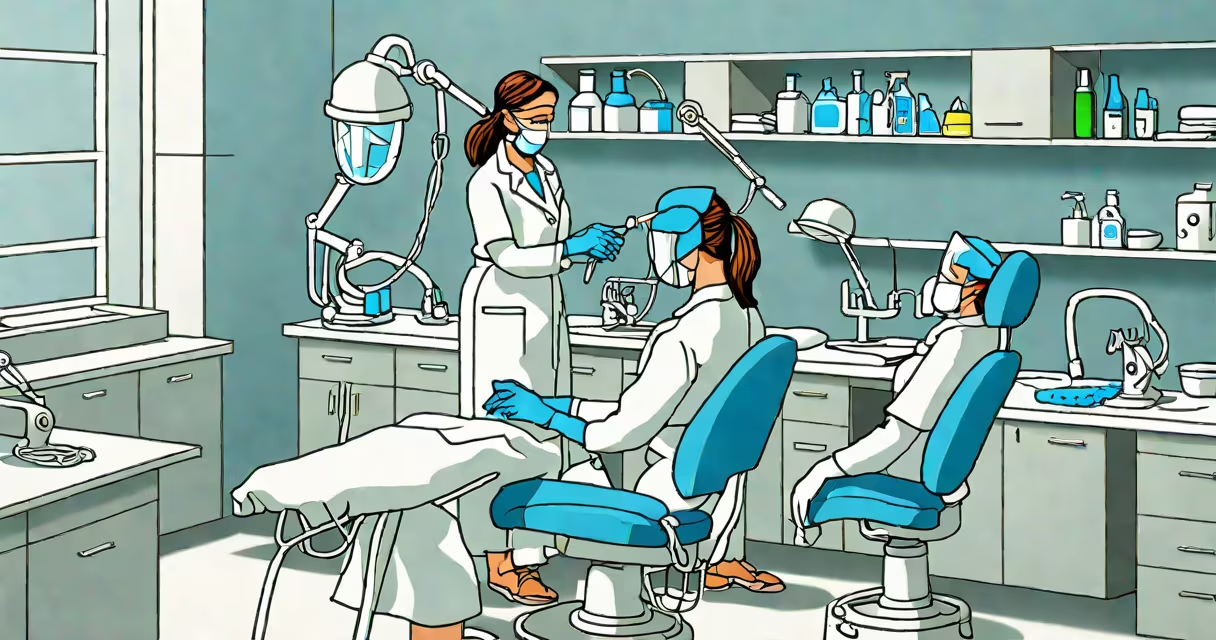
To become a dental hygienist, you must complete a dental hygiene program, which leads to an associate degree in dental hygiene. This is the only recognized academic path for licensure and practice. A bachelor's degree in a different field-such as biology or chemistry-is not sufficient on its own.
Dental hygiene programs are accredited by the Commission on Dental Accreditation (CODA), a body under the American Dental Association (ADA). These programs include both classroom instruction and supervised clinical experience. Students take courses in anatomy, physiology, microbiology, pharmacology, periodontics, and radiography. They also learn how to perform oral health assessments, clean teeth, apply sealants, and educate patients on preventive care.
The National Board Dental Hygiene Examination (NBDE Part II) is required for state licensing. Passing this exam confirms that candidates have met national standards for knowledge and clinical skills. Without completing an accredited dental hygiene program, you cannot sit for the NBDE or obtain a license to work in any U.S. state.
Dental hygiene programs typically last two years and lead to an associate degree. Most are offered at community colleges or technical schools. Admission is competitive and often requires prerequisite courses in biology, chemistry, and math. Some programs also require a minimum GPA and completion of a dental assisting internship.
Clinical training begins early. By the second semester, students begin working on live patients under direct supervision. They learn to use ultrasonic scalers, hand instruments, and polishing tools. They also gain experience in taking dental impressions and managing patient anxiety.
For example, the dental hygiene program at Los Angeles Valley College includes 600 hours of clinical practice. Students treat patients from the local community, many of whom are uninsured or low-income. This hands-on exposure prepares graduates for real-world settings such as private dental offices, public health clinics, and military dental centers.
There are two primary pathways into the profession:
| Type | Duration | Typical Degree | Admission Requirements |
|---|---|---|---|
| Associate Degree (Entry-Level) | 2 years | Associate of Science in Dental Hygiene | High school diploma, prerequisite science courses, minimum GPA 2.5 |
| Bachelor's Degree (Advanced) | 4 years | Bachelor of Science in Dental Hygiene | Same as above, plus additional upper-division courses in research and public health |
While associate degrees remain the standard, some institutions now offer bachelor's programs. These allow graduates to pursue roles in education, policy, or advanced clinical practice. For example, the University of Michigan's Bachelor of Science in Dental Hygiene includes a capstone project focused on community outreach.
No other major qualifies you to take the licensing exam. A degree in biology, nursing, or even pre-dental studies does not substitute for a CODA-accredited dental hygiene program. The curriculum is specific: you must learn how to manage gingival bleeding, interpret X-rays, and administer local anesthesia (in states where permitted).
Many people assume that dental hygienists are assistants who support dentists. That is incorrect. Hygienists are licensed healthcare professionals who diagnose and treat periodontal disease. They work independently in some states and can run their own clinics.
A common mistake is thinking that a general science degree allows entry into the field. The ADA clarifies: "Only graduates of CODA-accredited dental hygiene programs are eligible for licensure." According to the National Commission on Certification in Dental Hygiene (NCCDH), over 95% of licensed hygienists completed an associate or bachelor's program in dental hygiene.
Another misconception is that dental hygienists only clean teeth. While cleaning is a core task, they also screen for oral cancer, assess risk factors for tooth decay, and develop personalized prevention plans. They document findings, update treatment records, and collaborate with dentists on complex cases.
Consider Maria, a 22-year-old from Houston. She completed high school with a 3.7 GPA and took college-level biology and chemistry. She applied to the dental hygiene program at Houston Community College. After being accepted, she spent two years in class and clinic.
Her first clinical rotation was at a federally qualified health center serving low-income families. She treated 12 patients per week, including children with early signs of enamel erosion. She learned to adjust instrument pressure based on gum sensitivity and to explain fluoride use in simple terms.
After graduation, she passed the NBDE Part II and obtained her license in Texas. She now works in a private practice, earning $78,000 annually. Her job includes patient education, charting, and administering nitrous oxide sedation. She did not need a biology degree-she needed the dental hygiene program.
There is no alternative major for dental hygienist. The path is clear: enroll in a CODA-accredited dental hygiene program. This ensures you meet federal and state requirements for certification and employment.