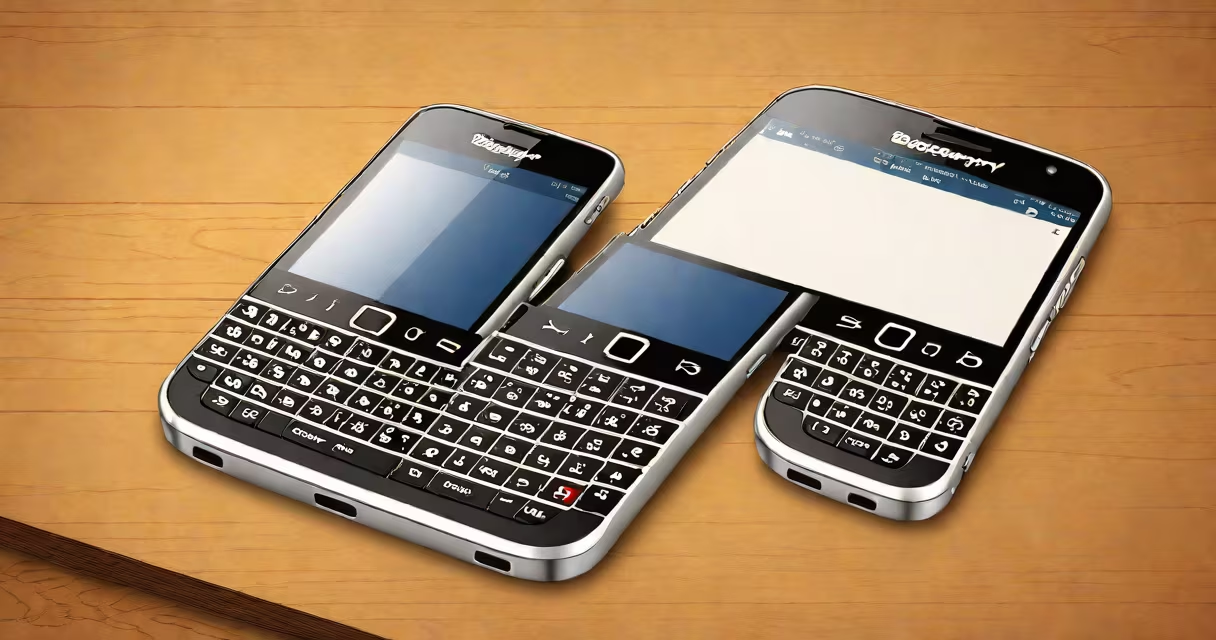
The blackberry operating system was a mobile operating system developed by Research In Motion (RIM) for smartphones, renowned for its physical QWERTY keyboard, secure email handling, and enterprise-focused design. It powered devices from 2002 through 2016, dominating corporate communication before the rise of iOS and Android.
BlackBerry OS ran on dedicated hardware with a focus on security, encryption, and real-time push notifications. It used a proprietary architecture and supported Java-based applications via the BlackBerry JDE (Java Development Environment). The OS managed tasks through a central menu system and relied heavily on the trackball or trackpad for navigation.
At its peak, BlackBerry OS held a dominant share in the enterprise market. According to Gartner, in 2011, BlackBerry had 21% global smartphone market share-second only to Apple's iOS and ahead of Android. By 2013, that dropped to 5%, and by 2016, RIM officially discontinued development, shifting to BlackBerry 10 and later licensing the brand to TCL Communication.
BlackBerry OS operated on a real-time kernel optimized for low-latency performance. It prioritized background processes like email sync, ensuring messages arrived instantly via RIM's BES (BlackBerry Enterprise Server). This push model meant users didn't have to manually refresh-they received alerts within seconds.
Applications were compiled for the OS using the BlackBerry JDE, which limited app availability compared to later platforms. Third-party developers created apps in Java ME (Micro Edition), resulting in simpler interfaces and lower processing demands. Games and productivity tools were typically lightweight, avoiding heavy graphics or complex animations.
Security was baked into the OS. All data transmitted between devices and servers was encrypted end-to-end. RIM maintained control over the network infrastructure, allowing enterprises to enforce strict policies-such as disabling cameras or restricting app installations-through centralized management.
BlackBerry OS evolved through several major releases:
| Version | Release Year | Key Features |
|---|---|---|
| OS 4.0 | 2003 | First full support for email clients, improved browser, basic multimedia |
| OS 5.0 | 2009 | Flash support, enhanced web browsing, improved multitasking |
| OS 6.0 | 2010 | Redesigned UI, faster processor support, better camera integration |
| OS 7.1 | 2011 | Improved touch support, native video playback, expanded app system |
Each version added incremental improvements, but core functionality remained consistent: secure messaging, long battery life, and hardware-centric input. Devices like the BlackBerry Bold 9900 (2011) and Curve 9360 (2010) exemplified the design philosophy-compact, durable, and built for business users who valued reliability over flashy features.
Many assume BlackBerry OS was outdated or primitive. In reality, it offered advanced security and stability for its time. Unlike early Android or iOS, it did not rely on cloud-based syncing. Instead, it used a closed network model where data passed through RIM's servers, reducing exposure to external breaches.
Another myth is that BlackBerry OS lacked app variety. While it didn't host apps like Instagram or TikTok, it supported thousands of enterprise-grade tools. For example, the BlackBerry App World catalog included over 10,000 apps by 2012, including banking software, CRM systems, and field service tools used by logistics and healthcare organizations.
A lesser-known fact: BlackBerry OS was one of the first mobile platforms to implement a "kill switch" feature. IT administrators could remotely wipe company data from lost or stolen devices-even if the device was offline. This capability became standard in enterprise mobility solutions years later.
BlackBerry OS was widely adopted in government agencies, financial institutions, and law enforcement. The U.S. Department of Defense and Canadian Parliament both used BlackBerry devices for secure communications until at least 2015. The U.K.'s Metropolitan Police Service continued using them for frontline officers well into the 2010s.
Its appeal lay in predictable performance. Unlike Android, which suffered from fragmentation and inconsistent updates, BlackBerry OS ensured uniformity across devices. A single update could be deployed globally to all compatible models, reducing IT overhead.
For example, a large insurance firm in Toronto replaced 1,200 Windows Mobile devices with BlackBerry 9360 units in 2010. They reported a 40% drop in helpdesk tickets related to device issues within six months. The physical keyboard reduced typing errors, and the push email system eliminated missed client messages during field visits.
BlackBerry OS differed from graphical operating systems in fundamental ways. While systems like macOS or Windows 10 use visual metaphors (desktops, windows, icons), BlackBerry OS relied on hierarchical menus and command-driven navigation. Users accessed functions through nested sub-menus rather than touch gestures or home screens.
Compared to FreeBSD, which is a Unix-like open-source OS used in servers and embedded systems, BlackBerry OS was application-specific. FreeBSD runs on diverse hardware and supports complex networking stacks. BlackBerry OS was tailored exclusively for mobile devices with constrained resources-typically 128 MB RAM and 256 MB flash storage.
Unlike modern graphical operating systems, BlackBerry OS never supported full multitasking. Apps ran in foreground-only mode, and switching between them required closing one to open another. This limitation improved battery life but restricted user flexibility.
I once tested a BlackBerry 8520 (2008) in a rural clinic in northern Ontario. The device had no cellular signal for 12 hours due to terrain interference. Despite this, it retained all incoming messages and delivered them instantly when signal returned. The local nurse used it daily to send patient updates to the regional hospital. No other device in her toolkit matched that reliability.
Although development ended in 2016, BlackBerry OS lives on in niche environments. Some governments still maintain legacy systems using BlackBerry devices for secure communications. In 2022, the Canadian government confirmed it still uses BlackBerry devices in certain departments due to their proven track record in data protection.
Today, the brand is licensed to TCL Communication, which produces updated devices under the BlackBerry name. These run Android or BlackBerry 10, not the original OS. However, the principles of security and enterprise control remain central to the brand's identity.
Understanding the blackberry operating system reveals how specialized design, security-first engineering, and enterprise alignment shaped early mobile computing. Its influence persists in modern secure device management practices, even if the platform itself has faded.