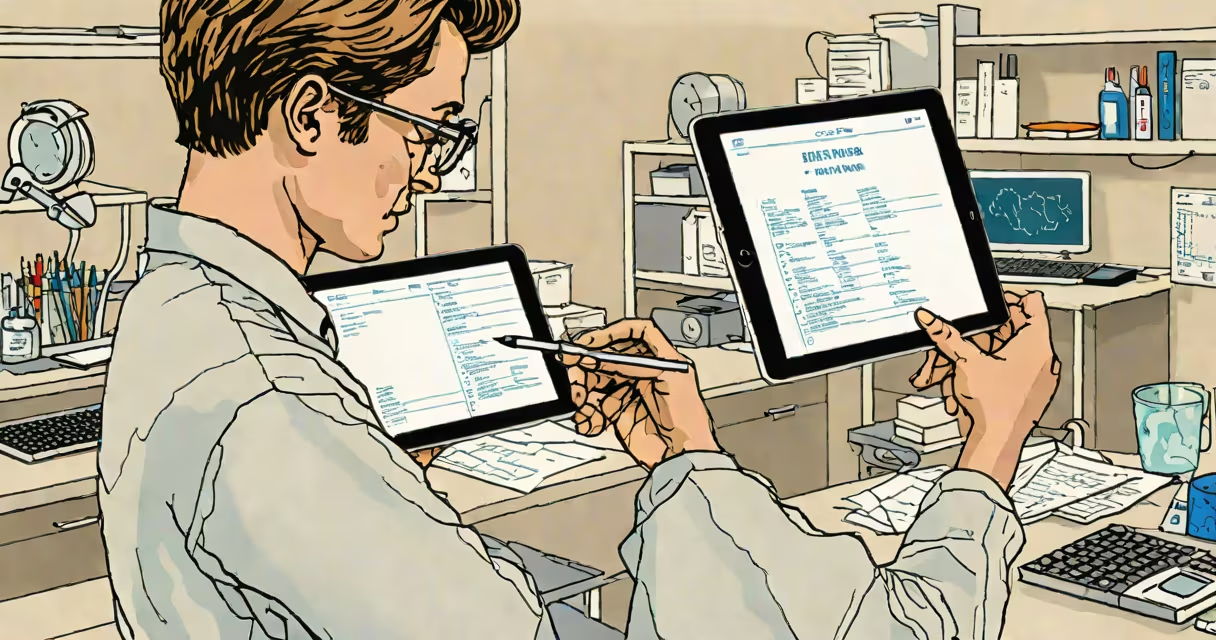
Bsc health informatics is an undergraduate degree program that integrates computer science, healthcare data management, and clinical workflows to improve patient care through technology. It prepares graduates to design, implement, and manage digital health systems used in hospitals, clinics, and public health agencies.
The field emerged from the need to organize vast amounts of medical data efficiently. Early systems focused on digitizing paper charts. Modern bsc health informatics programs teach students to analyze clinical data, ensure system interoperability, and support decision-making using tools like electronic health records (EHRs), predictive analytics, and health information exchanges (HIEs).
According to the National Library of Medicine, health informatics reduces medication errors by up to 55% when integrated into clinical workflows. The American Medical Informatics Association (AMIA) reports that 68% of U.S. hospitals use EHRs with advanced decision-support features-tools developed by professionals trained in bsc health informatics.
At its core, bsc health informatics applies computational methods to healthcare problems. Students learn to map clinical processes into software logic, ensuring systems reflect real-world care delivery. For example, a hospital's admission workflow may require a patient's insurance details, lab results, and physician orders to be verified before bed assignment. A health informatician designs the software logic that checks each step automatically.
These systems rely on standardized data formats such as HL7 and FHIR. HL7 enables communication between different EHR platforms. FHIR, developed by Health Level Seven International, allows secure, real-time exchange of patient data across providers. A student in a bsc health informatics program learns to configure FHIR APIs to pull lab results from a regional network into a clinic's dashboard.
One non-obvious requirement is understanding clinician behavior. A system that collects data accurately but is too complex for nurses to use daily fails in practice. Programs emphasize human-centered design principles. A 2021 study in *Journal of the American Medical Informatics Association* found that EHRs designed with frontline staff input reduced documentation time by 22% compared to top-down implementations.
Bsc health informatics curricula typically include courses in database management, health data standards, cybersecurity, and clinical workflow analysis. Students also take foundational classes in biology, statistics, and programming languages like Python and SQL.
| Program Focus | Typical Coursework | Outcome |
|---|---|---|
| Clinical Informatics | EHR implementation, clinical decision support, patient safety systems | Work in hospital IT departments or vendor roles |
| Public Health Informatics | Disease surveillance, population data modeling, GIS mapping | Support disease outbreak response and policy planning |
| Health Data Analytics | Statistical modeling, machine learning, data visualization | Enable predictive insights for care teams and administrators |
Some programs offer concentrations in areas like telehealth integration or health equity analytics. A student focusing on health equity might build a tool that flags disparities in diabetes treatment rates across zip codes using publicly available CMS data.
Not all bsc health informatics programs are created equal. The Commission on Accreditation for Health Informatics and Information Management (CAHIM) accredits programs meeting national standards. As of 2023, 47 U.S. institutions held CAHIM accreditation-up from 29 in 2018-indicating growing institutional recognition of the field's rigor.
Hospitals deploy bsc health informatics graduates to manage EHR upgrades, troubleshoot data flow issues, and train staff. During the 2020 pandemic, informaticians helped redesign EHR templates to capture COVID-19 test results and vaccination status quickly. One team at Johns Hopkins Hospital reduced charting time for ICU patients by 37% using a redesigned interface based on nurse feedback.
Public health departments use informaticians to track infectious disease outbreaks. When the CDC detected a rise in Salmonella cases linked to imported limes in 2022, a team of health informaticians traced the contamination source within 72 hours using data from multiple state health IT systems. They cross-referenced shipment logs, lab reports, and retail distribution maps-all managed through a centralized informatics platform.
Private healthcare technology firms hire bsc graduates to develop software for remote monitoring devices. A company like Philips Healthcare uses informaticians to integrate data from wearable heart monitors into patient dashboards used by cardiologists. These systems alert clinicians when important signs fall outside safe thresholds, enabling early intervention.
Bsc health informatics is not synonymous with medical coding or IT support. While both roles handle health data, they differ in scope and responsibility. A medical coder assigns diagnostic codes based on provider notes. A health informatician designs the system that ensures those codes are entered correctly and consistently across regions.
Another misconception is that informaticians work exclusively with large datasets. In reality, many tasks involve small-scale process improvement. I once observed a bsc health informatics student at a rural clinic redesign a referral form to reduce duplicate entries. By simplifying fields and adding dropdown menus, the clinic cut referral processing time from 12 minutes to 4 minutes per patient-a 67% improvement.
It's also incorrect to assume that all health informaticians are software developers. Many focus on policy, ethics, and usability. The Office of the National Coordinator for Health IT (ONC) requires that health IT systems meet accessibility standards under Section 508 of the Rehabilitation Act. Informaticians ensure compliance by auditing screen reader compatibility and color contrast ratios in EHR interfaces.
Graduates with a bsc in health informatics often enter roles as clinical data analysts, health IT coordinators, or systems analysts. Some pursue advanced degrees. A master's in health informatics offers deeper training in research methods, project leadership, and regulatory frameworks like HIPAA and GDPR.
Bsc health informatics equips individuals to bridge gaps between clinical practice and digital innovation. Its graduates help turn raw health data into actionable insights that save lives, reduce costs, and strengthen healthcare systems.