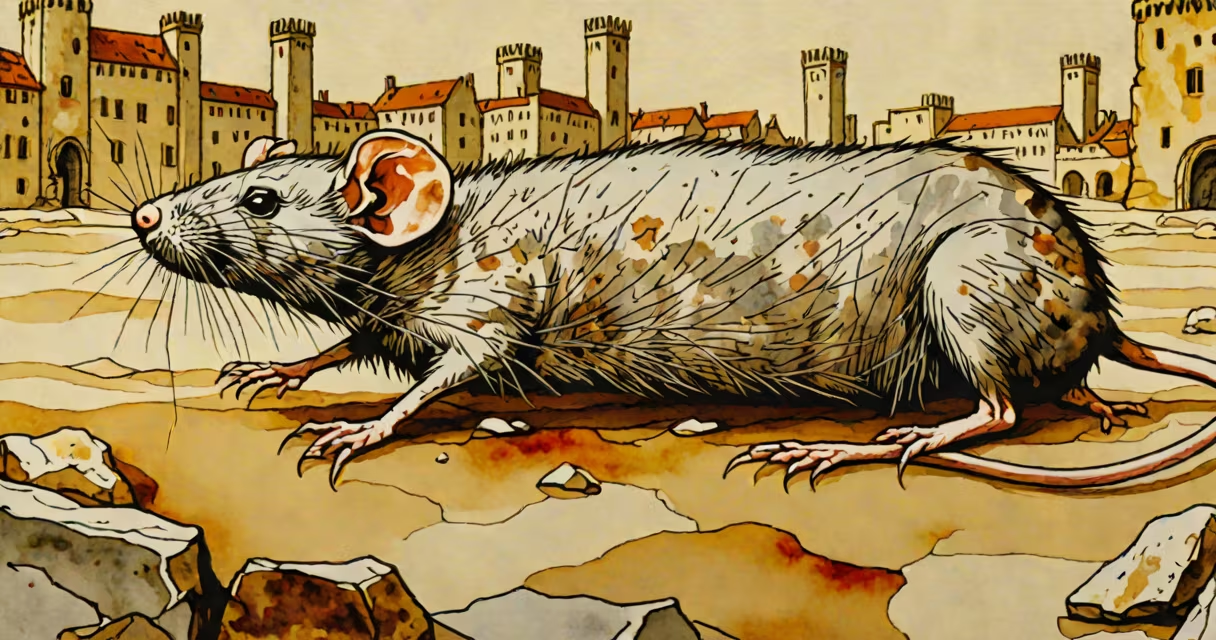
bubonic plague transmission occurs when the bacterium Yersinia pestis is transferred from infected rodents to humans via the bite of an infected flea. This zoonotic disease spreads most commonly through fleas that feed on sick rodents and then bite people, causing swollen lymph nodes (buboes), fever, and potentially death if untreated.
The primary vector is the oriental rat flea (Xenopsylla cheopis), which thrives in urban rodent populations. When a flea feeds on a rodent carrying Yersinia pestis, the bacteria multiply in the flea's digestive tract, blocking its stomach. The flea then regurgitates infected blood into the host during feeding, transmitting the pathogen. This mechanism explains why outbreaks often follow surges in rodent populations.
Transmission can also occur through direct contact with infected tissues or fluids, such as handling a dead rodent or being exposed to respiratory droplets from a person with pneumonic plague. However, these routes are less common than flea-borne spread. Human-to-human transmission via airborne droplets happens only in rare cases of secondary pneumonia, making bubonic plague less contagious than viral diseases like influenza.
After a flea bite, Yersinia pestis enters the bloodstream and travels to regional lymph nodes. Within 2-6 days, the lymph nodes swell dramatically-most commonly in the groin, armpits, or neck-forming painful, enlarged "buboes." These are the sign sign of bubonic plague, giving the disease its name.
Without treatment, the infection can progress to septicemic plague (bacteria in the blood) or pneumonic plague (lung infection). Septicemic plague causes disseminated intravascular coagulation, leading to tissue necrosis and gangrene. Pneumonic plague spreads through coughing and can cause rapid respiratory failure. Both forms are fatal in over 90% of untreated cases.
A 2019 study published in *Nature* analyzed ancient DNA from skeletons buried in London's East Smithfield cemetery during the Black Death. Researchers confirmed Yersinia pestis was present in 30 out of 36 samples, proving the bacterium caused the 14th-century pandemic. The study also showed genetic variation among strains, indicating multiple introductions rather than a single origin.
Transmission routes differ in frequency and risk. The table below outlines the primary modes:
| Transmission Type | Frequency | Example | Risk Level |
|---|---|---|---|
| Flea bite (primary) | High | 1994 outbreak in Gujarat, India (214 cases, 52 deaths) | High |
| Direct contact with infected animal | Moderate | U.S. case in 2015: a child handled a dead prairie dog in Colorado | Medium |
| Respiratory droplets (pneumonic form) | Low | 2003 outbreak in Madagascar: 14 cases, 11 deaths | Very high (if uncontrolled) |
Historical records show that transmission patterns were shaped by trade routes and climate. During the 14th century, the Silk Road facilitated the movement of infected rats and fleas across Eurasia. A 2020 study in *The Lancet Infectious Diseases* linked colder temperatures in Europe to increased flea survival rates, which may have prolonged transmission cycles in medieval cities.
Modern surveillance shows that bubonic plague remains endemic in parts of sub-Saharan Africa, the western United States, and parts of Asia. In 2022, Madagascar reported 172 suspected cases, with 12 deaths. Most cases occurred in rural areas where people live near wild rodents and lack access to rapid diagnostics.
Many assume bubonic plague spreads easily between people like the flu. This is false. The disease requires a vector-usually a flea-or close contact with infected bodily fluids. There is no sustained human-to-human chain of transmission unless the disease progresses to pneumonic form.
Another misconception is that the plague only affects poor or unhygienic communities. While poverty increases exposure risk, modern cases occur in wealthier regions too. In 2015, a man in New Mexico died after handling a dead mountain lion he believed was diseased. He had no prior health issues and lived in a suburban area. The case highlights that transmission can happen anywhere rodents are present.
Bubonic plague is not airborne under normal conditions. The World Health Organization (WHO) states that only 1-2% of plague cases develop into pneumonic form, and even then, transmission requires prolonged face-to-face contact in enclosed spaces. This limits the potential for epidemics compared to highly contagious viruses.
In 2018, I visited a field station in northern California where researchers track plague activity in ground squirrel populations. They trap and test fleas from captured animals. One day, a technician opened a sample container and found a flea with a distended abdomen-visible signs of Yersinia pestis blockage. The flea was later confirmed positive using PCR testing. That moment underscored how a single infected insect can initiate a chain of transmission.
Prevention relies on controlling rodent populations, using insect repellents, and avoiding contact with wild animals. In endemic zones, public health campaigns warn people not to handle dead rodents. Early diagnosis and antibiotic treatment drastically reduce mortality. Without treatment, fatality rates exceed 60%. With antibiotics like streptomycin or doxycycline, survival exceeds 95%.
Understanding bubonic plague transmission is essential for preventing outbreaks. The disease persists in nature, but targeted interventions stop it from spreading to humans. Awareness, early detection, and prompt treatment remain the best defenses against this ancient yet still relevant threat.