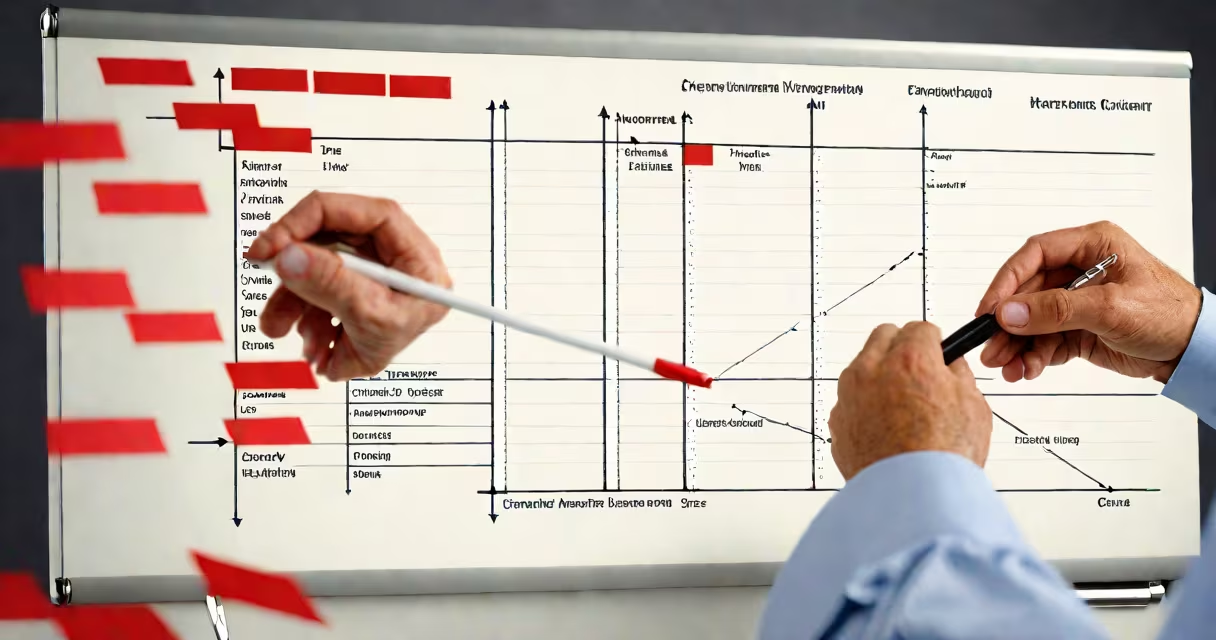
Project management preventing scope creep involves defining project boundaries early, enforcing formal change control processes, and maintaining consistent stakeholder communication to avoid unapproved additions that derail timelines, budgets, and deliverables.
Scope creep occurs when project requirements grow beyond the original agreement without adjusting time, cost, or resources. This expansion often starts subtly-"just one more feature" or "a small adjustment"-but accumulates into delays, budget overruns, and team burnout. Effective project management stops this by treating scope as a contract between stakeholders and the delivery team.
The Project Management Institute (PMI) defines scope as "the work required to deliver a product, service, or result." When that boundary is unclear or unenforced, changes slip in unnoticed. A 2022 PMI report found that 43% of projects fail due to poor scope management, with 64% of those failures linked to unplanned changes.
Preventing scope creep begins with a precise scope statement. This document outlines what is included and excluded from the project. It serves as a reference point whenever someone suggests adding new features or altering deliverables.
Once defined, scope is managed through a change control process. Any request to modify the scope must go through a formal review. The project manager assesses impact on schedule, budget, quality, and resources. Only approved changes move forward-and even then, they trigger updates to the project plan.
For example, during a software rollout, a client asked to add biometric login after the development phase began. The project manager refused immediate approval. Instead, the request was logged, evaluated against the original timeline and budget, and presented to the steering committee. After analysis, the team agreed to include it-but only in Phase 2, with a revised deadline. Without this process, the feature would have delayed launch by six weeks.
Project managers use several tools to enforce scope discipline:
Using a WBS helps every piece of work has a home. If a new task appears, it must be assigned to a WBS element-or it doesn't exist in the project. This clarity reduces ambiguity and prevents drift.
A 2021 study by the University of Cambridge found that teams using structured WBS and change control had 37% fewer scope-related delays compared to those relying on ad-hoc approvals.
Many assume that saying "yes" to client requests builds trust. But unchecked approval leads to erosion of project integrity. One project manager reported losing 28% of their timeline after agreeing to "small tweaks" without documentation. By the end, the team was working 60-hour weeks to meet deadlines.
Another myth is that scope creep only affects large projects. In reality, small initiatives suffer too. A marketing campaign for a local retailer expanded from a single social media post to a full video series, a website redesign, and influencer partnerships-all without updated budgeting. The project failed because the team ran out of funds after two months.
Some confuse scope with deliverables. Scope is the total work needed. Deliverables are the tangible outputs. Adding a new deliverable without expanding scope is impossible-it requires additional effort. Misunderstanding this difference causes overcommitment.
If scope creep has already begun, recovery starts with auditing current work against the original scope. Tools like Microsoft Project or Asana can show tasks outside the baseline.
Next, hold a stakeholder meeting to agree on what stays and what gets removed. Prioritize based on business value. For example, during a hospital IT upgrade, leadership approved 12 new modules. After evaluation, only five were essential. The rest were deferred to a future phase.
Finally, update the project charter and communicate changes. Transparency rebuilds trust. A team that understands why certain features were cut is less likely to push for more later.
| Factor | With Scope Control | Without Scope Control |
|---|---|---|
| On-time delivery rate | 78% | 41% |
| Budget overrun | 12% | 54% |
| Team satisfaction | 8.6/10 | 5.3/10 |
Data from the 2023 Standish Group Chaos Report shows that projects with formal scope governance are nearly twice as likely to succeed as those without.
AI-powered project management tools now flag potential scope drift in real time. For example, tools like ClickUp and Monday.com analyze task descriptions, timelines, and team workload to detect anomalies. If a task labeled "add user profile field" suddenly takes 40% longer than estimated, the system alerts the manager.
These systems don't replace human judgment-they improve it. One project manager used AI to detect that 14% of tasks in a web redesign were being reworked due to vague requirements. After refining the scope statement, rework dropped by 60% in two sprints.
I once led a mobile app launch where the design team added 17 new screens after sprint planning. The product owner hadn't signed off. We paused development, reviewed the original scope, and renegotiated. The extra screens were moved to a post-launch update. The app launched on time and within budget.
Project management preventing scope creep isn't about saying no. It's about saying "not now" with evidence, process, and clarity. When scope is controlled, projects deliver value-not chaos.
Teams that treat scope as changing but bounded achieve better outcomes. They avoid the trap of endless iteration and focus on what matters most: delivering on time, within budget, and with quality.