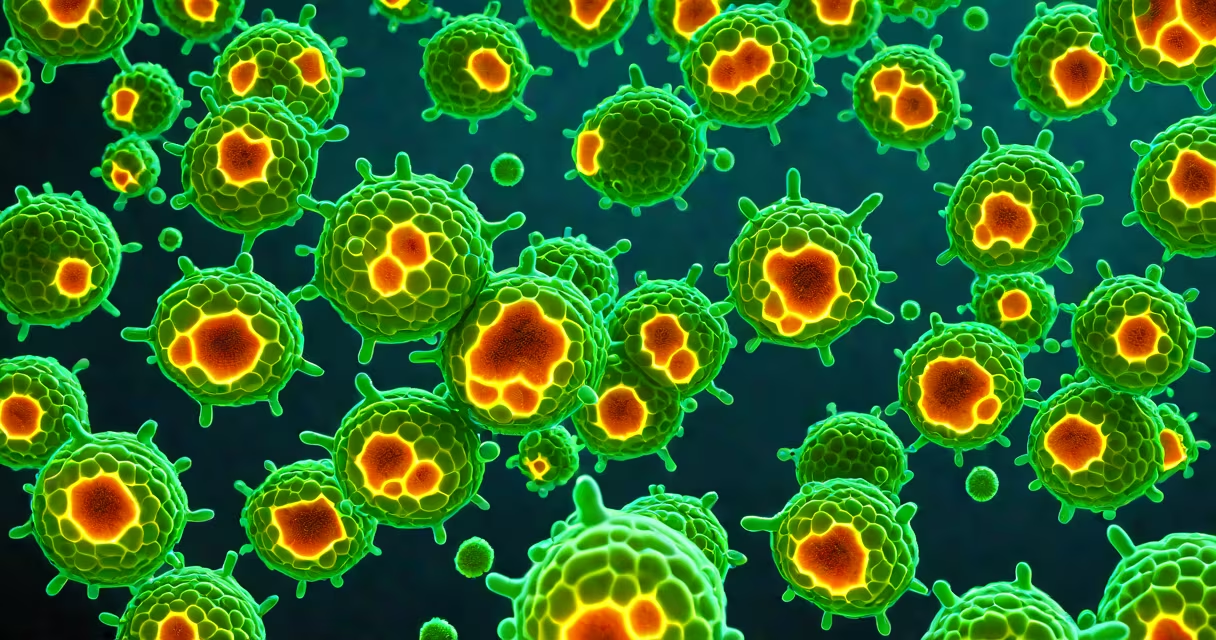
The cellular basis of life states that all living organisms are composed of one or more cells, and that the cell is the fundamental unit of life. This principle forms the foundation of modern biology and explains how life functions at every level, from single-celled bacteria to complex multicellular animals.
Cells are enclosed by a membrane and contain genetic material (DNA or RNA) and machinery to carry out metabolism, growth, and reproduction. Every organism-whether a bacterium, plant, fungus, or animal-depends on cellular processes to survive. Without cells, life as we know it cannot exist.
This concept was formalized in the 19th century through the work of Matthias Schleiden and Theodor Schwann, who established that plants and animals are made of cells. Later, Rudolf Virchow added that all cells come from pre-existing cells, completing the core tenets of cell theory.
Every biological process-from energy production to protein synthesis-occurs within or between cells. Cells maintain internal stability through homeostasis, regulate their environment via membrane transport, and respond to signals using receptors and signaling pathways.
For example, human muscle cells contract in response to nerve signals. These signals trigger ion channels in the cell membrane to open, allowing calcium ions to flood the cytoplasm. This change activates motor proteins that slide filaments past each other, generating force. All of this happens inside a single cell, orchestrated by molecular machines.
Even complex behaviors rely on cellular interactions. Neurons in the brain communicate via neurotransmitters released at synapses-the junctions between nerve cells. A single thought involves thousands of synaptic events across billions of neurons, each rooted in cellular activity.
There are two primary cell types: prokaryotic and eukaryotic. Prokaryotes, such as bacteria and archaea, lack a nucleus and membrane-bound organelles. Their DNA floats freely in the cytoplasm. Eukaryotes, including all animals, plants, and fungi, have a defined nucleus and specialized organelles like mitochondria and the Golgi apparatus.
| Type | Examples | Key Features | Size Range |
|---|---|---|---|
| Prokaryotic | Bacteria, Archaea | No nucleus, circular DNA, simple structure | 0.5-5 micrometers |
| Eukaryotic | Human cells, yeast, plant cells | Nucleus present, organelles, larger size | 10-100 micrometers |
Within eukaryotes, cell specialization enables complex functions. Skin cells produce keratin for protection. Red blood cells carry oxygen using hemoglobin. Neurons transmit electrical impulses. Despite these differences, all share the same underlying cellular architecture.
Some assume that viruses are alive because they replicate. But viruses lack cells entirely-they depend on host cells to reproduce. They do not metabolize, grow, or maintain homeostasis independently. This confirms that the cellular basis of life excludes non-cellular entities.
Another misconception is that all cells are visible to the naked eye. Most are microscopic. The average human cell is about 10 micrometers wide-too small to see without magnification. Electron microscopes reveal internal structures like ribosomes and cytoskeletal fibers, which are invisible under light microscopy.
A lesser-known fact: some cells exist in syncytia-multinucleated masses formed by fusion of individual cells. Human placental cells and skeletal muscle fibers are examples. These structures challenge the idea that each cell must be a discrete unit, yet they still operate under the cellular basis of life because they originate from and depend on cellular processes.
Understanding the cellular basis of life drives medical advances. Cancer arises when cells lose control over division due to mutations in genes regulating the cell cycle. Treatments like chemotherapy target rapidly dividing cells, exploiting their dependence on cellular machinery.
In 2010, scientists created the first synthetic cell, *Mycoplasma mycoides* JCVI-1.0, by transplanting a chemically synthesized genome into a recipient cell. The resulting organism grew and reproduced-proof that life can emerge from a designed set of instructions within a cellular structure. This experiment validated that the cellular basis of life remains central to defining what constitutes life.
Another example: stem cells can differentiate into multiple cell types. In regenerative medicine, researchers isolate hematopoietic stem cells from bone marrow and transplant them into patients with leukemia. These cells repopulate the blood system, demonstrating how cellular function underlies treatment and recovery.
The cellular basis of life shapes how we understand health, disease, and evolution. It informs public health policies-like vaccination programs-that rely on targeting pathogens at the cellular level. It also guides ethical debates around cloning and gene editing, since altering cells changes living systems at their most basic level.
I once observed a student struggle to grasp how a single cell could give rise to a human being. After watching a time-lapse video of a fertilized egg dividing into a blastocyst, she asked, "Where does the person start?" The answer lies in the cellular basis of life: identity emerges from coordinated cellular behavior, not from a single moment of transformation.
Modern biology rests on the cellular basis of life. It explains how organisms grow, adapt, and evolve. It defines what counts as life. And it provides the structure for treating disease, engineering new materials, and exploring the origins of life itself.