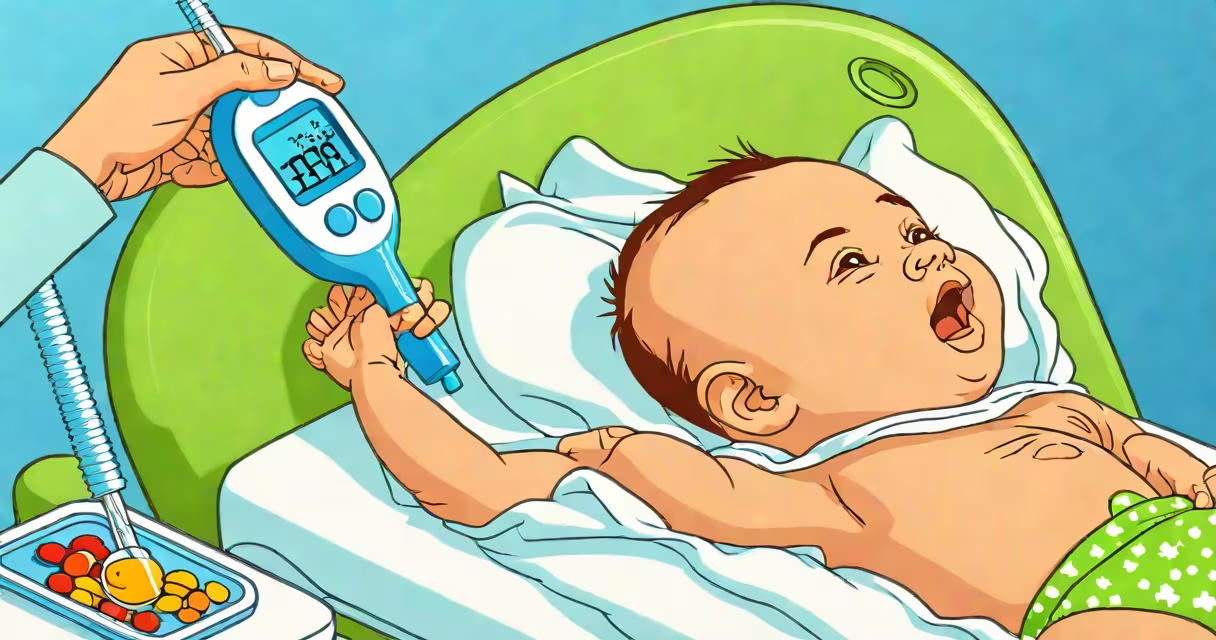
A fever in infants is defined as a rectal temperature of 100.4°F (38°C) or higher. This threshold applies specifically to rectal readings, the most accurate method for babies under 3 months old.
Infants have immature immune systems and cannot regulate body temperature as effectively as older children or adults. A fever indicates the body is responding to infection, often viral, but sometimes bacterial. Because of their small size and developing physiology, even mild fevers can signal serious illness in newborns.
The American Academy of Pediatrics (AAP) states that any fever in a baby under 3 months old warrants medical evaluation. For infants aged 3 to 6 months, a fever above 101°F (38.3°C) should prompt a call to a pediatrician. These thresholds reflect clinical guidelines based on risk of complications such as sepsis or meningitis.
Rectal thermometers provide the most reliable temperature reading for infants under 3 months. Axillary (underarm) and temporal artery (forehead) thermometers are less accurate and may miss low-grade fevers.
To take a rectal temperature:
For older infants (6+ months), axillary readings can be used as a screening tool. A reading of 99.5°F (37.5°C) or higher under the arm suggests a fever. However, this method may underestimate actual core temperature by 0.5 to 1.5°F (0.3 to 0.8°C).
Fevers are categorized by severity, though symptoms matter more than numbers alone:
| Temperature Range | Classification | Clinical Implication |
|---|---|---|
| <100.4°F (38°C) | Normal | No fever present. |
| 100.4-102.2°F (38-39°C) | Mild | Common with viral infections. Monitor closely. |
| 102.3-104°F (39.1-40°C) | Moderate | May indicate infection requiring evaluation. |
| >104°F (40°C) | High | Medical attention needed. Risk of febrile seizures increases. |
While high fevers are concerning, they do not necessarily correlate with disease severity. A child with a 103°F fever from a common virus may appear alert and hydrated, while a child with a 100.4°F fever due to pneumonia may seem lethargic.
One non-obvious fact: febrile seizures occur in approximately 2-5% of children between 6 months and 5 years old. They are most likely during rapid temperature spikes, not sustained high temperatures. A seizure lasting longer than five minutes requires emergency treatment.
Any fever in a baby under 3 months old is a red flag. Even a temperature of 100.4°F (38°C) should be evaluated by a healthcare provider within 24 hours. Delaying care increases the risk of undiagnosed sepsis, which can progress rapidly in neonates.
For infants 3 to 6 months old, consult a doctor if the fever reaches 101°F (38.3°C) or higher, especially if accompanied by irritability, poor feeding, or lethargy. The CDC notes that infants in this age group are at increased risk for invasive bacterial infections, including urinary tract infections and bacteremia.
For babies 6 months and older, watch for warning signs beyond temperature:
I once observed a 4-month-old infant brought to urgent care with a rectal temperature of 100.6°F. The baby was fussy, had a runny nose, and had not eaten well in 12 hours. Blood work revealed a urinary tract infection. The fever was mild, but the underlying condition required antibiotics. This case underscores that temperature alone doesn't tell the whole story.
Many parents assume that a fever causes brain damage. This is false. Fevers do not harm the brain unless caused by rare conditions like encephalitis or severe hyperthermia (e.g., heat stroke). The body's elevated temperature is a defense mechanism, not a threat.
Another misconception: "If my baby feels hot, they must have a fever." Skin temperature varies with environment, clothing, and activity. A warm forehead doesn't confirm a fever. Always verify with a thermometer.
Some parents use alcohol rubs or ice packs to reduce fever. These methods are ineffective and potentially harmful. Alcohol can be absorbed through the skin, especially in infants. Cold baths can trigger shivering, raising internal temperature further.
Over-the-counter medications like acetaminophen (Tylenol) or ibuprofen (Advil) can reduce fever and discomfort. Dosing must be precise-based on weight, not age. Giving too much can cause liver or kidney damage. Always follow label instructions or pediatric guidance.
If your infant has a fever, first confirm the reading with a clean, calibrated digital thermometer. Avoid mercury thermometers-these are banned in many countries due to toxicity risks.
Monitor behavior, hydration, and breathing. Offer breast milk or formula frequently. Dress the baby lightly to avoid overheating. Keep the room at a comfortable temperature (around 72°F/22°C).
Seek immediate care if the fever persists beyond 24 hours in infants under 3 months, or 72 hours in older babies. Also seek help if the baby develops a rash, stiff neck, or difficulty waking.
Remember: a fever is a symptom, not a diagnosis. It signals the body is fighting something. The goal is not to eliminate the fever, but to identify and treat the underlying cause.