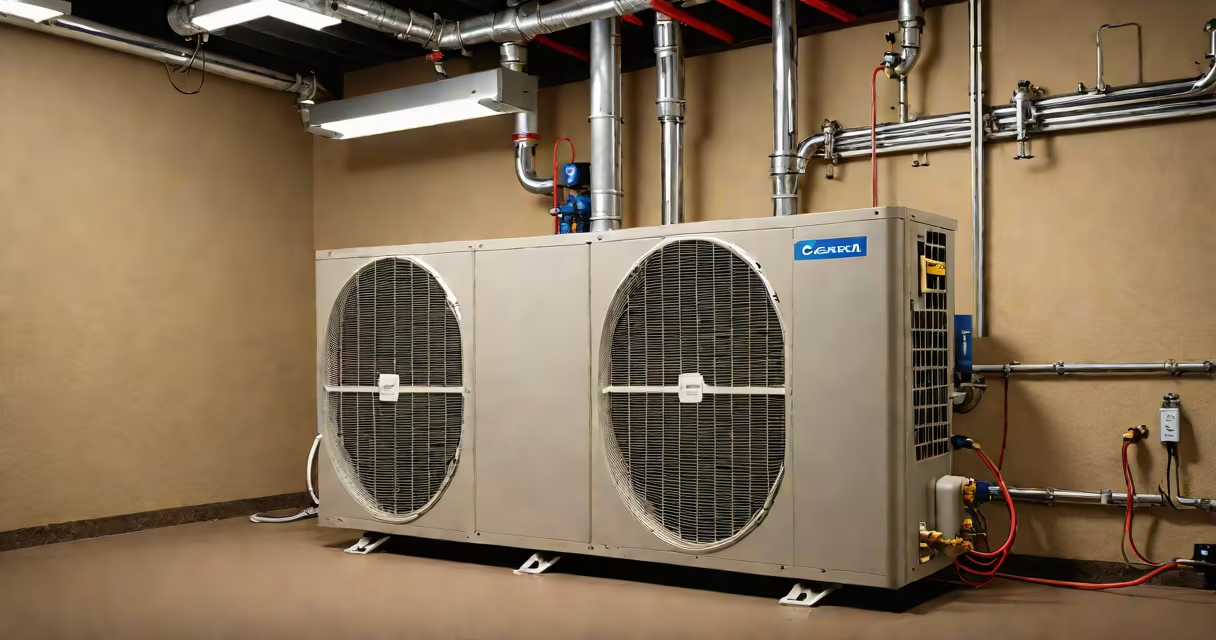
A central air conditioner meaning refers to a climate control system that cools an entire home through a network of ducts. It pulls warm indoor air through return vents, cools it using refrigerant in the indoor evaporator coil, and pushes the chilled air back out through supply registers. This system operates as part of a larger HVAC setup, including a furnace or heat pump for heating.
Unlike portable or window units, central air conditioners are permanently installed and designed for continuous, whole-home cooling. They rely on a compressor located outdoors, which pressurizes refrigerant to absorb heat from indoor air. The cooled air is then distributed via ducts, maintaining consistent temperatures across multiple rooms.
The term "central" emphasizes the system's centralized location and function. The outdoor condenser unit and indoor air handler work together to regulate temperature and humidity. Proper installation and maintenance ensure efficient performance and long-term reliability.
When the thermostat detects rising indoor temperature, it signals the central air conditioner to activate. The process begins with the indoor air handler pulling warm air through return grilles. This air passes over the cold evaporator coil, where heat transfers from the air to the refrigerant.
The refrigerant, now heated, travels to the outdoor condenser unit. There, a fan blows air over the hot coils, releasing the absorbed heat into the environment. The refrigerant cools and returns to the indoor unit as a liquid, repeating the cycle until the desired room temperature is reached.
Each cycle removes moisture from the air, reducing humidity. This dehumidification improves comfort levels, especially in high-humidity climates. A typical system runs in 15- to 20-minute cycles during peak summer heat, balancing cooling efficiency with energy use.
The central air conditioner consists of several interconnected parts. The outdoor condenser unit houses the compressor, condenser coil, and blower fan. The compressor pressurizes the refrigerant, enabling heat transfer. The condenser coil releases heat to the outside air, while the fan ensures adequate airflow.
Inside the home, the air handler contains the evaporator coil, blower motor, and air filter. The evaporator coil absorbs heat from indoor air. The blower motor circulates air across the coil and through the duct system. Filters trap dust, pollen, and debris, improving indoor air quality.
Ductwork connects the air handler to supply and return vents. Sealed, insulated ducts prevent air loss and maintain cooling efficiency. Leaky or poorly sized ducts can reduce system effectiveness by up to 30%, according to the U.S. Department of Energy.
| Component | Function | Location |
|---|---|---|
| Compressor | Pressurizes refrigerant to release heat outdoors | Outdoor condenser unit |
| Evaporator Coil | Absorbs heat from indoor air | Indoor air handler |
| Blower Motor | Forces air through ducts | Indoor air handler |
| Ductwork | Transports cooled air to rooms | Attic, basement, or crawl space |
Many assume that a central air conditioner cools faster than window units. This is false. Window units cool small spaces quickly because they're close to the area being cooled. Central systems take longer to lower room temperature due to the distance air travels through ducts.
Another myth is that higher BTU ratings always mean better cooling. While BTU capacity relates to cooling power, oversizing leads to short cycling-frequent on-off patterns that waste energy and reduce humidity removal. The U.S. Environmental Protection Agency notes that improperly sized systems can increase energy use by 20-30%.
Understanding BTU meaning for air conditioner is essential. For example, a 24,000 BTU unit cools approximately 1,000 square feet under standard conditions. But actual cooling depends on insulation, sun exposure, and local climate. A 24000 air conditioner may struggle in a poorly insulated attic with direct sunlight.
Consider a 1,600 sq ft home in Phoenix, Arizona. The house has double-pane windows, R-19 attic insulation, and a southern-facing roof. Using Manual J load calculation (ASHRAE standard), the cooling load is estimated at 36,000 BTUs per hour.
A 3-ton (36,000 BTU) central air conditioner is recommended. Installing a 2-ton (24,000 BTU) unit would result in constant running during summer days, failing to reach set temperature. Conversely, a 4-ton (48,000 BTU) unit would cycle too frequently, leading to uneven cooling and higher humidity.
I once evaluated a home where a 2-ton unit was installed in a 2,200 sq ft house. The homeowner reported inconsistent cooling and high electric bills. After recalculating the load, we replaced it with a 3.5-ton unit. Cooling improved, and monthly energy costs dropped by 18%.
Some homeowners consider a portable central air conditioner as a temporary solution. These units resemble large air purifiers with wheels and exhaust hoses. They draw indoor air, cool it, and vent hot air through a window or wall.
However, they do not connect to ductwork or integrate with existing HVAC systems. They cool only one room at a time and are less efficient than true central systems. A portable unit typically provides 8,000-12,000 BTU of cooling, suitable for small apartments or backup cooling.
For homes requiring whole-house cooling, a properly sized central air conditioner remains the most effective option. Portable units are best used in emergencies or for supplemental cooling in specific zones.
The central air conditioner meaning centers on a unified, duct-based cooling system that maintains consistent indoor comfort. It requires accurate sizing, proper installation, and regular maintenance to perform efficiently. Understanding how it works and what factors affect performance prevents costly mistakes.
When selecting a system, consult a licensed HVAC technician who performs load calculations. Avoid relying solely on square footage. Consider insulation, window types, and local weather. A correctly sized unit delivers optimal cooling, lower energy bills, and longer equipment life.