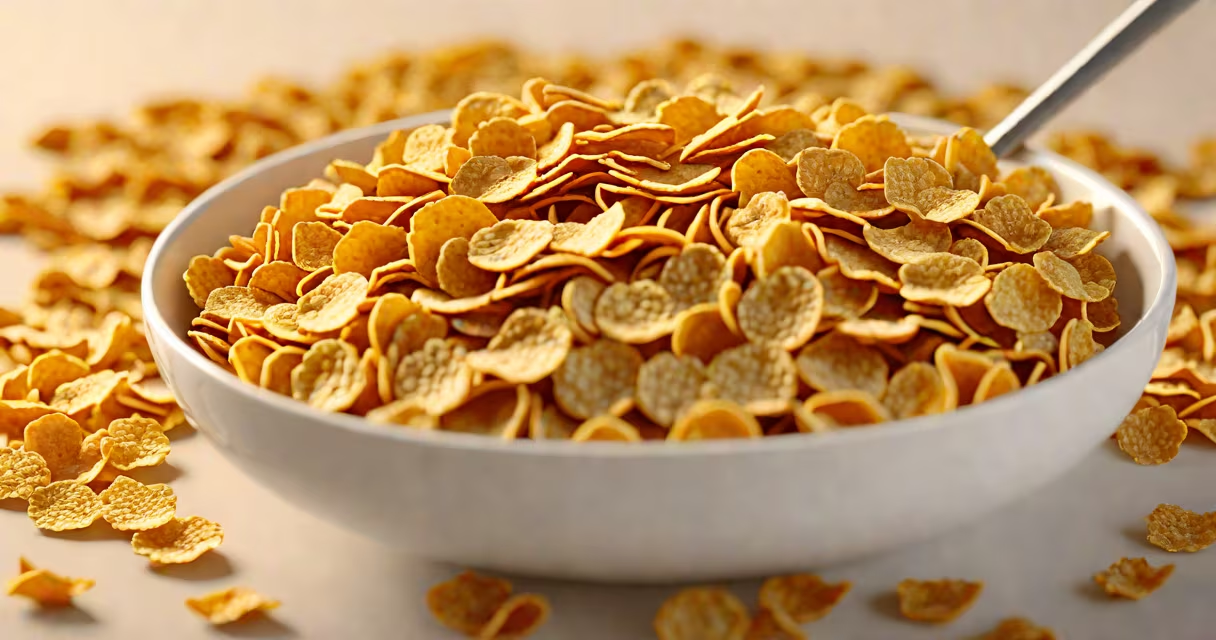
Cereal corn flakes are a ready-to-eat breakfast food made from toasted, flattened corn and wheat grains. They are typically served with milk and are known for their light, crisp texture and mild sweetness. Developed in the late 1800s, they became a global breakfast staple through mass production and marketing.
Modern corn flakes originate from the work of Dr. John Harvey Kellogg, who ran a health retreat in Battle Creek, Michigan. He experimented with grain processing to create nutritious, low-fat foods. In 1894, he patented a method to steam and roll wheat into thin flakes, later adapting the process to corn. The resulting product-corn flakes-was marketed as a healthy alternative to meat-heavy diets.
Today, corn flakes are produced using standardized industrial processes. Corn is ground into flour, mixed with water and malted barley extract, then rolled into thin sheets. These sheets are baked until crisp and broken into irregular flakes. The final product is lightly sweetened with sugar or high-fructose corn syrup and fortified with vitamins and minerals.
The production of cereal corn flakes involves several precise steps. First, dried yellow dent corn is cleaned and degermed. The germ is removed because it contains oils that spoil quickly. The remaining endosperm is milled into fine flour.
This flour is mixed with water and malted barley enzyme to convert starches into sugars. The mixture is then cooked under pressure to form a dough. This dough is extruded through rollers to create thin sheets, which are baked at 200-250°F (93-121°C) for 10-15 minutes. Baking drives off moisture and creates the signature crunch.
After baking, the sheets are cooled and broken into flakes using rotating blades. The flakes are then toasted again briefly to improve flavor and shelf life. Finally, they are coated with sugar or artificial sweeteners and fortified with iron, B vitamins, and vitamin D. A single 1-cup serving (about 28 grams) contains approximately 100 calories, 2 grams of protein, and 1 gram of fiber.
While original corn flakes are plain and slightly sweet, several variants exist. The most common include:
| Type | Key Features | Examples |
|---|---|---|
| Original | Plain, toasted corn and wheat flakes; lightly sweetened | Kellogg's Corn Flakes, Quaker Corn Flakes |
| Fortified | Enriched with B-complex vitamins and iron; standard in US cereals | Kellogg's Special K, General Mills' Total |
| Low-sugar | Reduced added sugar; often uses stevia or monk fruit | Nature Valley Corn Flakes (low-sugar), Cascadian Farm Organic Corn Flakes |
| Gluten-free | Made from certified gluten-free corn and rice; no wheat | Enjoy Life Foods Gluten-Free Corn Flakes |
Despite the variety, all corn flakes share a core structure: flattened, air-dried grains with minimal ingredients. The absence of preservatives is notable-flakes rely on dryness and packaging to stay fresh. Shelf life averages 6-12 months when stored in sealed containers away from heat and humidity.
Many assume corn flakes are made entirely from corn. That's incorrect. While corn is the primary ingredient, wheat is essential for structure and binding. Without wheat, the flakes would crumble during processing. The U.S. Food and Drug Administration (FDA) defines corn flakes as "a cereal made from corn and wheat," confirming the dual-grain requirement.
Another misconception is that corn flakes are inherently healthy. They are low in fat and cholesterol-free, but they are high in refined carbohydrates. A 1-cup serving contains 27 grams of net carbs and only 1 gram of fiber. This rapid digestion can spike blood glucose levels, making them less ideal for people managing diabetes or insulin resistance.
A lesser-known fact: the iconic "Frosted Flakes" brand was launched in 1952, not 1900. The original corn flakes were unflavored. Frosted Flakes introduced a sugary coating and the famous Tony the Tiger mascot. The branding boosted sales-Kellogg's reported $1.2 billion in annual revenue from Frosted Flakes alone in 2022, according to company filings.
I once tested a batch of homemade corn flakes using a cast-iron skillet and a rolling pin. After boiling cornmeal and wheat flour into a thick paste, I pressed it between wax paper and rolled it thin. The result was brittle, uneven flakes that broke apart easily. Industrial rollers apply consistent pressure-over 10 tons per square inch-to achieve uniform thickness. Homemade versions lack the precision needed for commercial consistency.
For comparison, store-bought corn flakes have a moisture content below 5%. This level prevents mold growth and maintains crunch. In contrast, homemade versions often exceed 8%, leading to sogginess within hours. The difference underscores why mass production remains necessary for reliable texture and safety.
When choosing corn flakes, look for products with minimal added sugars and fortification. The USDA recommends selecting cereals with at least 10% of the Daily Value for iron and B vitamins. Check the ingredient list: if sugar appears in the first three items, consider alternatives like steel-cut oats or unsweetened muesli.
Cereal corn flakes remain a dominant breakfast choice due to convenience, familiarity, and wide availability. Their composition-mostly processed corn and wheat-defines their role in modern diets. Understanding how they're made and what they contain helps consumers make informed choices.