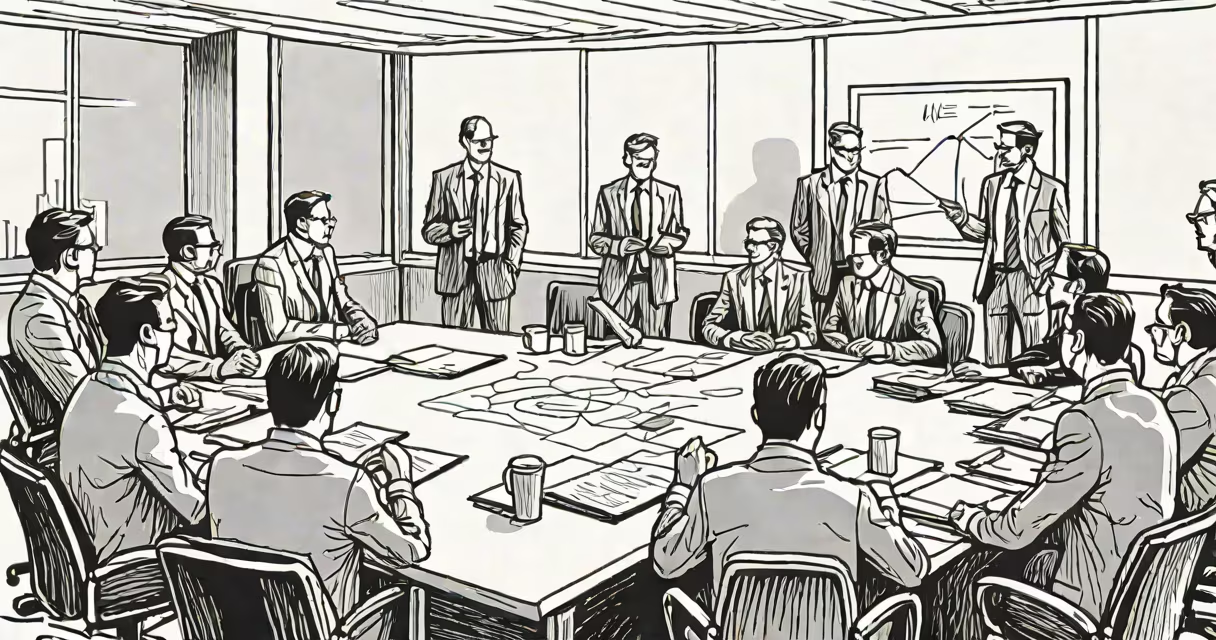
Organizational behavior management (OBM) applies principles of applied behavior analysis to improve individual and group performance in work environments. It uses data-driven strategies to reinforce desired behaviors, reduce errors, and increase productivity across teams and systems.
OBM focuses on observable actions and measurable outcomes. Instead of relying on intuition or vague goals, it identifies specific behaviors-like completing tasks on time, following safety procedures, or using customer service scripts-and designs interventions to strengthen those actions. This method is widely used in healthcare, education, manufacturing, and corporate settings to boost efficiency and morale.
For example, a call center reduced missed calls by 40% in six weeks by implementing a daily feedback system based on real-time call recordings. Agents received immediate praise for hitting targets, and managers reviewed performance data weekly. This structured reinforcement led to consistent improvements without increasing staff turnover.
OBM operates on four core components: measurement, intervention, evaluation, and adjustment. Each step relies on objective data rather than assumptions.
First, performance is measured. Managers track specific behaviors-such as the number of completed sales calls per agent or the frequency of safety checklist completions. These metrics are recorded daily or weekly, creating a baseline for change.
Next, an intervention is designed. Based on the data, leaders identify which behaviors need support. For instance, if agents frequently skip follow-up emails, a manager might introduce a visual reminder system or offer small rewards for consistent follow-ups. Interventions are tailored to the environment and the people involved.
Then, results are evaluated. After two weeks, the team's email completion rate is compared to the original baseline. If progress is steady, the strategy continues. If not, adjustments are made-perhaps adding peer recognition or adjusting reward thresholds.
Finally, successful strategies are scaled. Once a behavior shows sustained improvement, the organization embeds it into standard operating procedures. A hospital that reduced medication errors by 65% through daily checklists later rolled out the same process across all departments.
OBM draws from behaviorism, particularly B.F. Skinner's work on reinforcement. It assumes that behavior is shaped by consequences. Positive reinforcement increases the likelihood of repetition; negative reinforcement removes an unpleasant stimulus to encourage action.
Common OBM strategies include:
| Strategy | How It Works | Real-World Example |
|---|---|---|
| Performance Feedback | Providing timely, specific information about behavior relative to goals. | A retail store manager gives each employee a printed report showing their daily sales vs. target, updated every morning. |
| Goal Setting with Reinforcement | Setting clear, achievable goals and offering rewards upon achievement. | A warehouse team earns extra paid time off for maintaining 98% accuracy in order fulfillment over three months. |
| Public Recognition | Sharing positive performance in group settings to amplify motivation. | A software company highlights top-performing developers in a monthly all-hands meeting with a certificate and gift card. |
| Behavioral Contracts | Formal agreements between employees and supervisors outlining expectations and rewards. | An HR department signs a contract with a new hire: if they complete onboarding tasks within 10 days, they receive a $200 bonus. |
One non-obvious insight: OBM doesn't assume people are unmotivated. It treats behavior as a function of the environment. A worker who misses deadlines may not lack effort-they may lack clear instructions or timely feedback. OBM corrects the system, not the person.
According to the Association for Applied Behavior Analysis (AABA), OBM interventions show average performance gains of 30-50% in controlled settings. A 2021 study published in the Journal of Organizational Behavior Management found that teams using OBM had 27% lower turnover rates over 18 months compared to control groups.
OBM is most effective in high-stakes, repetitive, or safety-critical environments. Healthcare providers use it to ensure nurses follow handwashing protocols. Manufacturing plants apply it to reduce machine downtime. Customer service centers use it to maintain response times and quality scores.
It's also increasingly adopted in remote and hybrid workplaces. One tech firm reported a 35% rise in project completion rates after introducing daily check-ins and automated progress dashboards. Employees received instant notifications when they met milestones, reinforcing on-time delivery.
OBM differs from traditional human resources practices. While HR often relies on surveys, training sessions, and culture initiatives, OBM focuses on direct behavioral influence. It doesn't wait for employees to "feel engaged"-it creates conditions where engagement emerges naturally through structure and feedback.
I once observed a school district implement OBM to improve teacher attendance. Before, absenteeism averaged 12 days per teacher annually. After introducing a peer-nominated "Attendance Champion" award and weekly public updates on team participation, absences dropped to 4.3 days per year within one academic cycle. The change wasn't due to new policies-it was due to visible, consistent reinforcement.
OBM is often confused with motivational speaking or generic team-building exercises. But it's not about inspiration-it's about systematic change. A leader who says "Let's give it our best!" lacks the precision OBM requires. OBM specifies *which* behavior to reinforce, *how often*, and *what reward* follows.
Another misconception: OBM is seen as manipulative. But research from the Journal of Organizational Behavior Management confirms that transparent, fair, and consistent reinforcement leads to higher trust and job satisfaction. Employees understand the rules and see the connection between effort and outcome.
Some assume OBM only works in large organizations. Yet small businesses have successfully used it. A family-owned bakery improved dough preparation consistency by posting a chart of daily success rates and giving a free coffee to anyone who hit 100% accuracy for five days straight. Within a month, error rates fell by 60%.
OBM is not a one-size-fits-all solution. Its success depends on accurate measurement, realistic goal-setting, and ongoing adaptation. It fails when managers skip data collection or apply rewards inconsistently. It thrives when leaders treat behavior as a variable they can manage-not a mystery.
Organizational behavior management is not a trend. It's a proven system for improving results through structured, data-backed behavioral design. When implemented correctly, it transforms how teams operate, leading to measurable gains in efficiency, safety, and employee well-being.