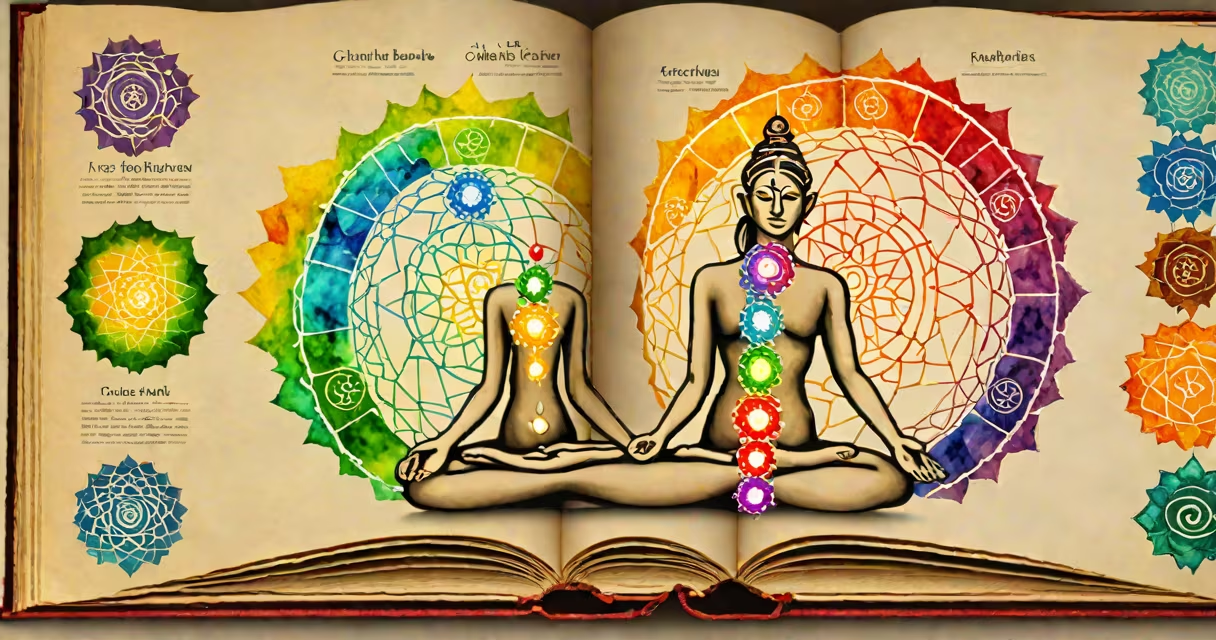
Chakra books for beginners are instructional guides that explain the seven primary energy centers in the human body, their associated colors, functions, and methods to balance them through meditation, breathwork, and lifestyle adjustments. These books simplify esoteric concepts into actionable steps for those new to energy healing.
The concept of chakras originates in ancient Indian philosophy, particularly within yogic and Ayurvedic traditions. Modern interpretations often blend these roots with New Age spirituality, making chakra books accessible to readers without prior knowledge of Sanskrit or meditative practices. A well-structured book for beginners avoids jargon while grounding each chakra in physical, emotional, and psychological correlates.
For example, *The Chakra Bible* by Judy Hall uses numbered chapters for each chakra, pairing historical context with daily exercises. The root chakra (Muladhara) is linked to feelings of safety and survival-its imbalance may manifest as anxiety about finances or housing. The book suggests grounding exercises like walking barefoot on grass or visualizing red light at the base of the spine to restore balance.
These books function as step-by-step manuals for energy awareness. They typically begin with an overview of the chakra system's origins in Hindu and Buddhist texts, then move into practical application. Most include guided meditations, journal prompts, and affirmations tailored to each center.
Each chakra corresponds to a specific area of the body and a set of emotional traits. For instance, the heart chakra (Anahata) governs love and compassion. When blocked, individuals may struggle with trust or feel emotionally detached. A beginner-friendly book will suggest breathing techniques-inhaling for four counts, holding for four, exhaling for four-to activate this center.
According to the National Center for Complementary and Integrative Health (NCCIH), mindfulness-based practices like those taught in chakra books can reduce stress and improve emotional regulation. While the NCCIH notes that scientific evidence for chakras themselves remains limited, the mental health benefits of structured meditation are well-documented.
Not all chakra books serve the same purpose. Readers should distinguish between foundational guides, illustrated handbooks, and those focused on specific outcomes like healing or manifestation.
| Type | Focus | Best For | Example |
|---|---|---|---|
| Foundational | History, structure, basic balancing | First-time readers | *The Seven Chakras* by Dr. Deepak Chopra |
| Illustrated | Visual learning, symbolic meanings | Visual learners, children | *Chakra Coloring Book* by Sarah K. Johnson |
| Therapeutic | Emotional healing, trauma recovery | People dealing with anxiety or grief | *Healing Your Chakras* by Anodea Judith |
| Manifestation-focused | Abundance, confidence, attraction | Goal-setters, self-development seekers | *Chakra Power* by Doreen Virtue |
A common mistake is assuming all chakra books promote the same approach. Some emphasize crystal therapy-placing stones like red jasper on the root chakra-while others focus solely on breath and visualization. A beginner should choose based on their comfort level with metaphysical tools.
One non-obvious distinction: books labeled "for beginners" may still assume familiarity with terms like "prana" or "kundalini." Always check the introduction. *The Complete Guide to Chakras* by Barbara Brennan includes a glossary and defines "energy body" as the subtle field surrounding the physical form-an essential concept for understanding how chakras interact with emotional states.
Chakra books for beginners are most frequently used in personal wellness routines, especially among people exploring alternative health practices. They're popular in yoga studios, meditation apps, and online communities centered on complete living.
For example, a 2021 survey by the Pew Research Center found that 16% of U.S. adults practice meditation regularly, with many citing energy work as part of their routine. Chakra books provide a low-cost entry point into this space. A person recovering from burnout might use a chakra guide to identify which center-often the solar plexus-is contributing to low self-worth.
I once observed a group session at a community wellness center where participants used *The Chakra Workbook* by Rachel L. Smith to map their emotional patterns. One woman reported feeling "lighter" after focusing on the throat chakra for five days. She'd been avoiding speaking up at work due to fear of judgment. The workbook's daily prompt-"I speak my truth "-helped her reframe her internal narrative.
Many confuse chakra books with spiritual self-help titles that lack structure. Not all books claiming to teach chakras are grounded in tradition. Some present chakras as interchangeable with mood rings or personality quizzes, reducing complex systems to superficial traits.
Another error: assuming chakra imbalance causes physical illness. While imbalances may correlate with stress-related symptoms-such as digestive issues from a sacral chakra block-there is no clinical evidence that chakras cause disease. The American Psychological Association warns against replacing medical treatment with energy healing for diagnosed conditions.
Also, some books claim chakras can be "cleared" in under ten minutes. This oversimplifies the process. Real balancing takes consistent effort. A study published in *Frontiers in Psychology* (2020) found that sustained daily practice over six weeks led to measurable improvements in emotional resilience, compared to one-off sessions.
Let's walk through a real-world scenario using *Chakra Meditation for Beginners* by Maya Singh. The author recommends a 10-minute daily practice for seven days to stimulate the third eye (Ajna), located between the eyebrows.
After seven days, the reader reports increased clarity during decision-making. One participant noted, "I stopped overthinking small choices. My mind felt less cluttered." This aligns with findings from a 2019 pilot study at the University of California, San Diego, which showed improved cognitive focus in participants who practiced targeted chakra meditation.
Beginners should start with one chakra at a time. Trying to balance all seven simultaneously leads to overwhelm. Choose the chakra most relevant to your current challenge-fear, creativity, relationships-and build consistency.
Chakra books for beginners are not a substitute for professional care. They are tools for self-awareness, not diagnosis. Use them as part of a balanced wellness plan, not as a replacement for therapy or medicine.