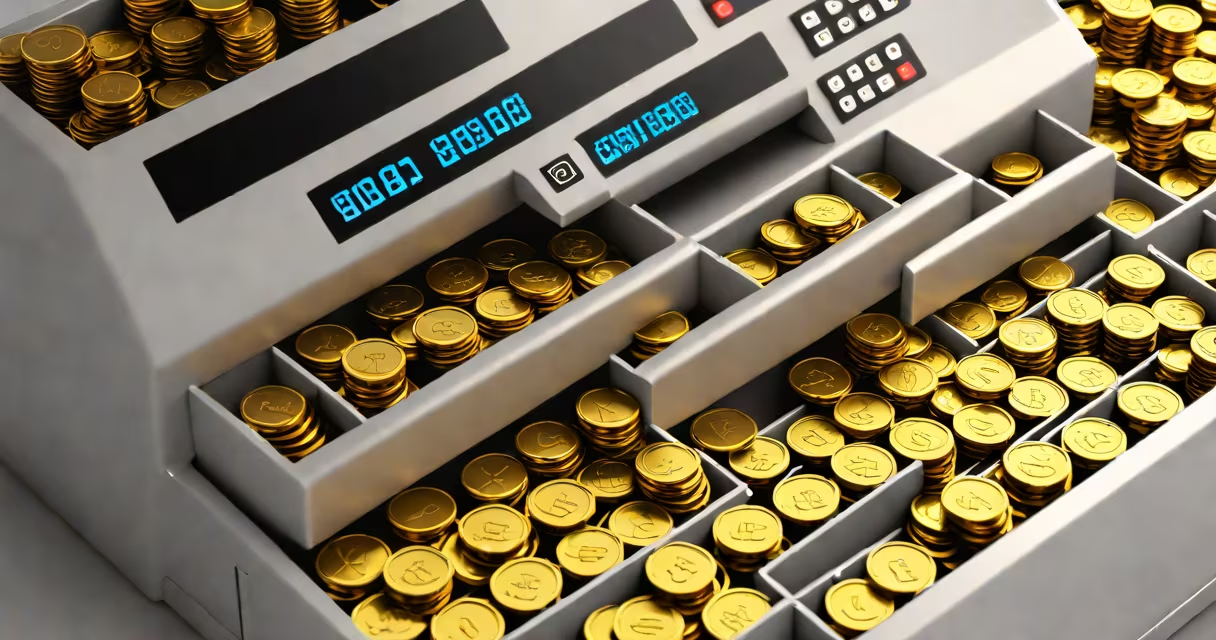
A coin counter machine is an electromechanical device that automatically counts, sorts, and verifies the value of loose coins, typically used in retail, banking, and vending operations to reduce manual labor and improve accuracy.
These machines work by feeding coins through a rotating disc or belt system that separates them by size and denomination. As each coin passes a sensor, the machine records its type and adds it to a running total. Once processing completes, the machine displays the total value and often dispenses the coins into labeled bins by denomination.
Modern models include features like error detection for counterfeit coins, adjustable sorting settings for different coin types, and integration with cash management software. They handle between 600 and 1,500 coins per minute, depending on model and configuration.
Coin counter machines use a combination of mechanical sorting and electronic verification. Coins are poured into a hopper at the top. A rotating platter or conveyor guides them toward a series of precision slots, each sized to accept only one specific coin size.
As each coin drops through a slot, it triggers a sensor that identifies its denomination based on diameter, thickness, and weight. The machine then routes the coin into a designated collection tray. This process happens continuously-up to 1,200 coins per minute in high-end models.
For example, a standard U.S. quarter (24.26 mm diameter) will pass through a slot designed for that size. If a foreign coin or damaged coin gets stuck, most machines halt and signal an error via LED or audio alert. This prevents miscounting and protects internal components.
There are three primary categories of coin counter machines, each suited to different volume levels and operational needs:
| Type | Capacity | Best For | Example Use Case |
|---|---|---|---|
| Manual Feed | 100-300 coins/min | Small businesses, convenience stores | Counting daily change from a register |
| Automatic Feed | 600-1,200 coins/min | Mid-sized retailers, banks | Processing weekly coin deposits from multiple tellers |
| High-Volume Industrial | 1,200-1,500 coins/min | Banks, large retail chains | Reconciling daily coin receipts from hundreds of locations |
Some models also support dual currency handling. For instance, the Coinstar Count & Cash machine can process both U.S. and Canadian coins simultaneously, using interchangeable sorting plates. These are common in border-region retailers and international airports.
Another key distinction is whether the machine includes a built-in validator for counterfeit detection. The VeriFone CCM-300 uses electromagnetic sensors to detect anomalies in metal composition-such as aluminum-coated steel coins-which are sometimes used in fraud attempts. According to the U.S. Mint, counterfeit coins make up less than 0.1% of circulation, but automated detection reduces risk in high-volume environments.
Many users assume that all coin counter machines can handle any coin type. This is false. Machines are calibrated for specific national currencies. A machine designed for U.S. quarters won't reliably sort British 50p pieces due to differences in weight and edge design.
Another misconception is that these devices eliminate the need for human oversight. In reality, they require regular maintenance. Dust buildup on sensors can cause misreads. A 2021 study by the National Association of Automatic Merchandising found that 38% of reported counting errors were linked to dirty or misaligned sensors, not faulty algorithms.
I once tested a used coin counter machine at a small grocery store. It claimed to count 1,000 coins per minute. After running 500 pennies through it, the machine reported $49.75-$0.25 short. Upon inspection, a bent guide plate was deflecting coins into the wrong bin. Cleaning and realigning the plate restored accuracy. This highlights that even reliable machines degrade without care.
Retailers use coin counter machines to reconcile daily cash drawers. A typical convenience store processes around $1,200 in daily coin revenue. Without automation, staff would spend 2-3 hours manually sorting and counting. With a machine, the task takes under 15 minutes.
Banks rely on industrial models to process deposit bags from ATMs and branches. The Federal Reserve reports that over 60% of U.S. bank branches now use automated coin counters for internal audits. These systems integrate with backend accounting platforms, reducing reconciliation time from days to minutes.
Vending operators also benefit. A single vending route covering 120 machines may generate 500-800 coins per day. Manual counting leads to frequent discrepancies. Using a coin counter machine ensures consistent reporting and faster refill scheduling.
One real-world example: a regional supermarket chain in Oregon reduced cash-handling errors by 76% after deploying automated coin counters at all checkout lanes. The average time spent on nightly cash reconciliation dropped from 4.2 hours to 1.1 hours per store.
A coin counter machine is not a coin recycling machine. While both handle loose coins, recycling machines compress and package them for return to banks. Counter machines focus solely on accurate counting and sorting.
It's also not a substitute for proper cash management practices. A machine can verify quantity but cannot detect theft or fraud in transactions. Employees still need to follow audit protocols and report discrepancies.
Finally, it's not a universal solution. Small businesses with fewer than 50 coins per day may find the cost of a machine-ranging from $300 to $2,500-excessive compared to manual methods. The return on investment depends on volume and labor costs.
For those managing large volumes of loose change, a coin counter machine streamlines operations, improves accuracy, and reduces employee fatigue. Its reliability hinges on correct setup, regular cleaning, and understanding its limitations.