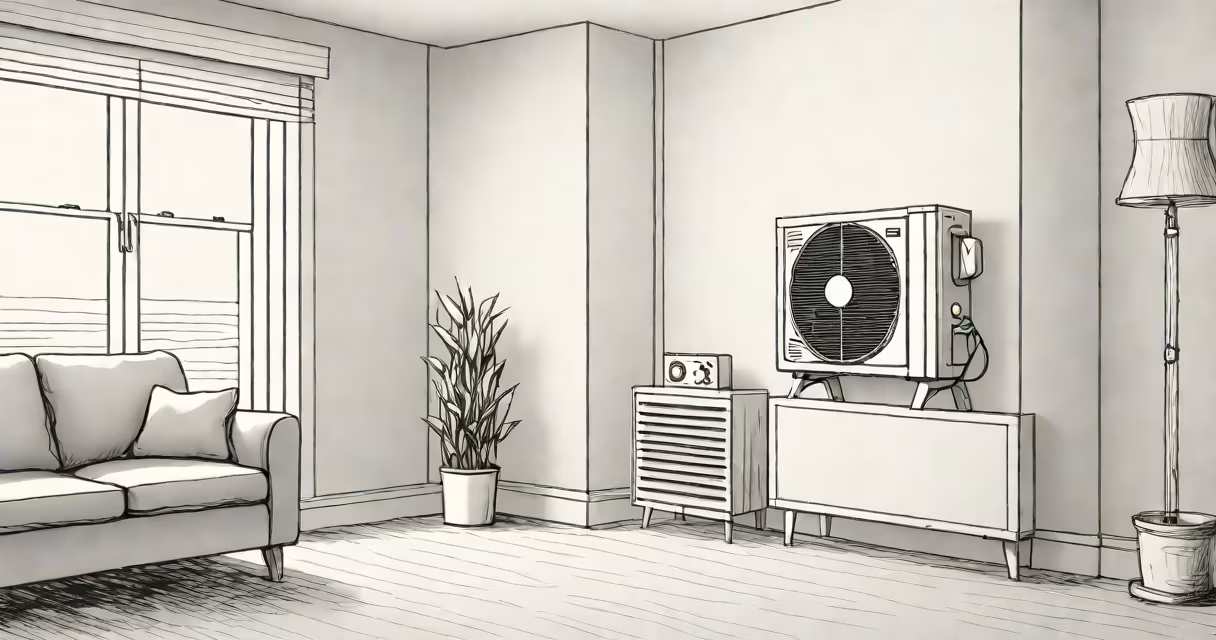
Comfort air conditioning is a system that cools indoor spaces to maintain thermal comfort, typically between 68°F and 76°F, while managing humidity levels below 60%. It uses a refrigeration cycle powered by electricity to remove heat from indoor air and expel it outdoors.
These systems rely on a closed-loop refrigerant circuit. A compressor pressurizes refrigerant gas, which then flows through a condenser coil outside the home. There, it releases heat and becomes a liquid. The liquid travels indoors, passes through an expansion valve, and evaporates in the indoor evaporator coil. As it evaporates, it absorbs heat from the indoor air. A blower fan circulates the cooled air through ductwork into living spaces. The refrigerant returns to the outdoor unit to repeat the cycle.
The process begins when a thermostat detects indoor temperature rising above the setpoint. It signals the air handler to turn on the blower and the compressor to start the refrigeration cycle. Modern units include variable-speed compressors and smart thermostats that adjust cooling output based on occupancy and outdoor conditions. This reduces energy waste and improves efficiency.
At its core, comfort air conditioning operates on the vapor-compression refrigeration cycle. This principle has been standard since the early 20th century and remains the foundation of all residential cooling systems. The cycle consists of four stages: compression, condensation, expansion, and evaporation.
Refrigerant enters the compressor as a low-pressure gas. The compressor increases pressure and temperature, turning it into a high-pressure, high-temperature gas. This gas flows into the outdoor condenser coil, where ambient air cools it. As it loses heat, it condenses into a liquid. The liquid refrigerant then passes through an expansion valve, which reduces its pressure and temperature dramatically.
Now a cold, low-pressure liquid, the refrigerant reaches the indoor evaporator coil. Warm indoor air blows over the coil, transferring heat to the refrigerant. The refrigerant absorbs heat and turns back into a gas. The cooled air is distributed through ducts. The gaseous refrigerant returns to the compressor to restart the cycle. This loop repeats continuously until the thermostat calls for cooling to stop.
Residential comfort air conditioning systems fall into three primary categories: central air, ductless mini-split, and window units. Each serves different building layouts and cooling needs.
| Type | Installation | Efficiency (SEER) | Best For | Use Case Example |
|---|---|---|---|---|
| Central Air | Requires ductwork; installed in attic or basement | 14-26 SEER | Whole-home cooling in homes with existing ducts | Split-level house in Texas with central ducts; runs 8 hours daily in summer |
| Ductless Mini-Split | Wall-mounted indoor units; connects via conduit to outdoor compressor | 18-30 SEER | Room-by-room control; no ducts needed | Basement apartment in Chicago; controls bedroom and living room separately |
| Window Units | Installed in windows; self-contained | 10-14 SEER | Small rooms; temporary or supplemental cooling | Studio apartment in Miami; used during power outages when central AC fails |
Central air systems dominate U.S. homes, serving 58% of single-family residences according to the U.S. Energy Information Administration (EIA). They offer whole-house cooling but require ductwork, which can lose 15-30% of cooling capacity due to leaks and poor insulation. Ductless mini-splits avoid this loss entirely, making them ideal for older homes without ducts or for adding cooling to sunrooms.
Window units are less efficient and harder to install properly. A poorly sealed unit can allow warm air to enter, reducing effectiveness. However, they remain popular in rentals and small apartments due to low upfront cost and ease of installation.
Many people confuse comfort air conditioning with dehumidification or ventilation. While all three affect indoor air quality, they serve distinct purposes. Comfort air conditioning primarily lowers temperature and moderately reduces humidity. Dehumidifiers focus solely on moisture removal and do not cool air. Ventilation systems bring in fresh outdoor air but don't cool or dehumidify.
A common error is assuming that higher SEER ratings always mean lower operating costs. While higher SEER units use less energy per hour of cooling, their actual savings depend on local electricity rates and climate. In Phoenix, a 20 SEER system saves $180 annually compared to a 14 SEER model. In Seattle, the same upgrade saves only $60 due to milder summers. The U.S. Department of Energy notes that payback periods for high-efficiency upgrades average 5-7 years.
Another misconception is that air conditioners "cool the air." They don't create cold air-they remove heat from it. The cooled air is a result of heat transfer, not generation. This distinction matters for maintenance: dirty coils reduce heat absorption, leading to longer run times and higher bills.
A family in Atlanta uses a 16 SEER central air system with a 3-ton compressor. The home has 12 windows, a south-facing roof, and two-story ceilings. During July, peak temperatures reach 95°F with 70% humidity. The thermostat is set to 72°F.
The system runs 10 hours per day on average. With a SEER rating of 16, it consumes approximately 1.2 kilowatts per hour. Over 31 days, the monthly energy use is 372 kWh. At $0.14/kWh, the monthly cost is $52.10. The system maintains indoor humidity around 55%, preventing mold growth and discomfort.
When the filter was replaced every 90 days, the system ran 12% more efficiently. Dust buildup reduced airflow and forced the compressor to work harder. Replacing filters improved cooling speed and reduced wear on components.
I installed a smart thermostat in my own home in Austin. After switching from a basic model, I saw a 14% drop in cooling energy use over six months. The device learned our schedule and adjusted cooling based on weather forecasts. It also sent alerts when the filter needed changing-something I'd previously overlooked.
Not every home benefits from traditional comfort air conditioning. In climates with mild summers, such as San Diego or Portland, passive cooling methods often suffice. Using ceiling fans, reflective window films, and nighttime ventilation can maintain comfort without mechanical cooling.
Comfort air conditioning is not a one-size-fits-all solution. Its performance depends on proper sizing, maintenance, and integration with home design. Understanding how it works and when alternatives make sense ensures better comfort, lower energy use, and long-term savings.