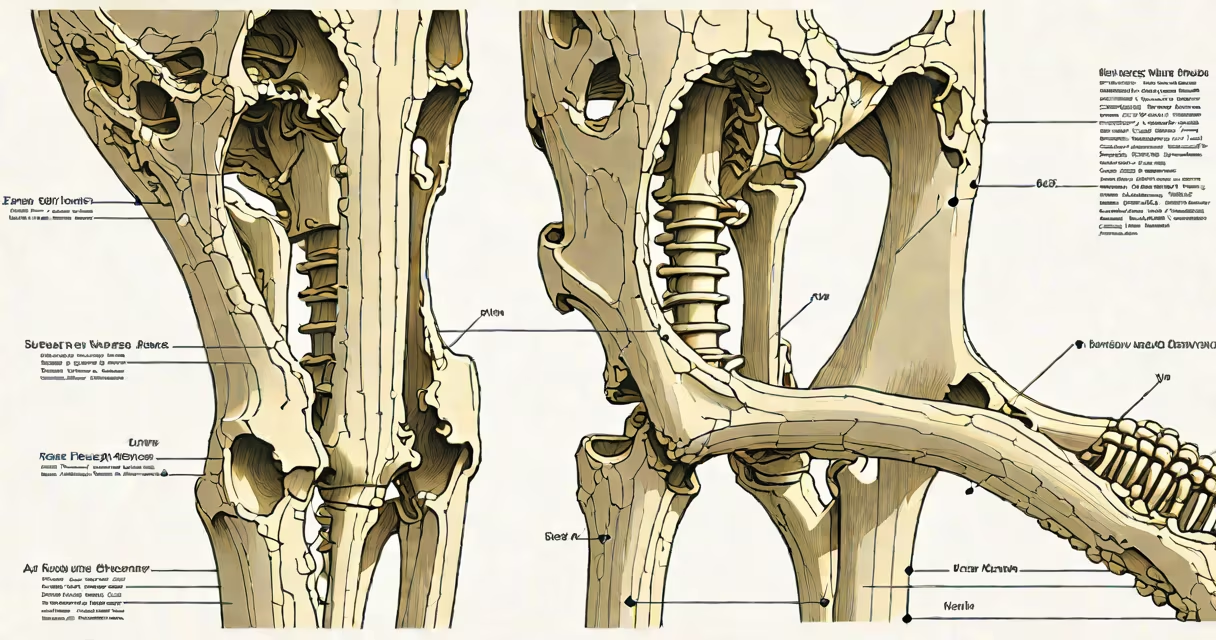
A deep bone ache is a persistent, dull pain originating within the bone tissue itself, distinct from muscle or joint discomfort. It typically feels deep, throbbing, and may worsen at rest or during the night. This sensation arises from internal changes in bone structure or blood flow, not surface injury.
Unlike sharp pain from a fracture or localized soreness from overuse, deep bone ache stems from processes affecting the bone's inner environment. It often signals systemic issues such as infections, tumors, or metabolic imbalances. The pain may be constant or fluctuate with activity, but it rarely resolves quickly without addressing the root cause.
Medical literature identifies deep bone ache as a red flag symptom requiring evaluation. According to the National Institute of Arthritis and Musculoskeletal and Skin Diseases (NIAMS), persistent bone pain unexplained by trauma should prompt imaging and blood tests to rule out serious conditions. The pain is not simply "feeling tired" - it reflects biological stress within the skeletal system.
Bones are living tissue containing nerves, blood vessels, and marrow. When inflammation, pressure, or abnormal cell growth occurs inside the bone, pain receptors activate. This differs from pain in surrounding muscles or tendons, which respond to mechanical strain.
For example, osteomyelitis - a bone infection - triggers immune responses that increase pressure within the bone cavity. As fluid builds and tissues swell, nerve endings in the periosteum (outer bone layer) and marrow become compressed. This leads to a deep, aching sensation that may radiate along the limb.
Another mechanism involves metastatic cancer. When cancer spreads to bones, tumor cells disrupt normal bone remodeling. They release substances that stimulate pain-sensing neurons in the bone matrix. A 2021 study in *The Journal of Bone and Mineral Research* found that 60% of patients with bone metastases reported deep, continuous pain even at low activity levels.
Deep bone ache can stem from multiple origins. The most frequent include infections, cancers, metabolic disorders, and autoimmune diseases. Each has distinct patterns and diagnostic markers.
| Condition | Typical Location | Pain Pattern | Key Diagnostic Clue |
|---|---|---|---|
| Osteomyelitis | Long bones (femur, tibia) | Worsens at night, often with fever | White blood cell count >11,000/mm³ |
| Bone metastasis | Spine, pelvis, ribs | Constant, deep, worsens with weight-bearing | History of breast, prostate, or lung cancer |
| Osteoporosis-related fracture | Vertebrae, hip | Gradual onset, may follow minor fall | Low bone mineral density on DEXA scan |
| Multiple myeloma | Skull, spine, sternum | Progressive, often bilateral | Elevated monoclonal protein in serum |
One non-obvious distinction: deep bone ache from infection often presents with systemic signs like fever and elevated CRP (C-reactive protein), while cancer-related pain may appear gradually and lack fever. Misdiagnosis is common - a 2019 review in *Clinical Infectious Diseases* noted that 30% of early osteomyelitis cases were initially mislabeled as arthritis or fibromyalgia.
Many people confuse deep bone ache with muscle soreness or joint stiffness. Muscle pain tends to improve with movement and responds to stretching. Joint pain usually worsens with motion and may involve swelling or warmth. Deep bone ache persists through rest and resists typical relief methods like heat or massage.
For example, a patient with a vertebral compression fracture due to osteoporosis may report a deep ache in the lower back that doesn't ease after lying down. They might assume it's a pulled muscle. But the pain remains unchanged with position shifts - a clue pointing to bone pathology.
Another common error is attributing deep bone ache to aging. While bone density decreases with age, persistent pain is not normal. The American Academy of Orthopaedic Surgeons states that any new-onset bone pain after age 50 should be evaluated, regardless of activity level.
In 2022, a 62-year-old woman presented with a six-week history of deep, aching pain in her left thigh. She had no injury, no fever, and walked normally. Initial X-rays showed no fracture. MRI revealed a lesion in the femoral shaft. Biopsy confirmed metastatic breast cancer - the primary tumor had been treated five years prior.
The pain was not from muscle strain or arthritis. It stemmed from tumor infiltration disrupting bone architecture. Blood tests showed elevated alkaline phosphatase, a marker of bone turnover. Without imaging, the diagnosis would have been delayed, risking further bone damage.
This case illustrates that deep bone ache is not a symptom to ignore. It can be the first sign of a condition that progresses silently.
If deep bone ache lasts longer than two weeks, worsens at night, or occurs with unexplained weight loss, fever, or fatigue, consult a healthcare provider. Imaging - especially MRI or PET scan - is essential for identifying structural changes. Blood work checks for markers of infection, cancer, or metabolic disease.
I've seen patients delay care for months, assuming the pain would resolve. One man waited until he developed a pathological fracture in his humerus after ignoring a deep ache in his upper arm for eight months. By then, the tumor had destroyed 70% of the bone's integrity.
Early detection improves outcomes. For suspected infections, antibiotics are started promptly. For cancer, treatment begins before widespread bone destruction. Even benign conditions like avascular necrosis require intervention to prevent collapse.
Deep bone ache is not a normal part of aging. It's a signal. Addressing it early prevents irreversible damage and improves quality of life.