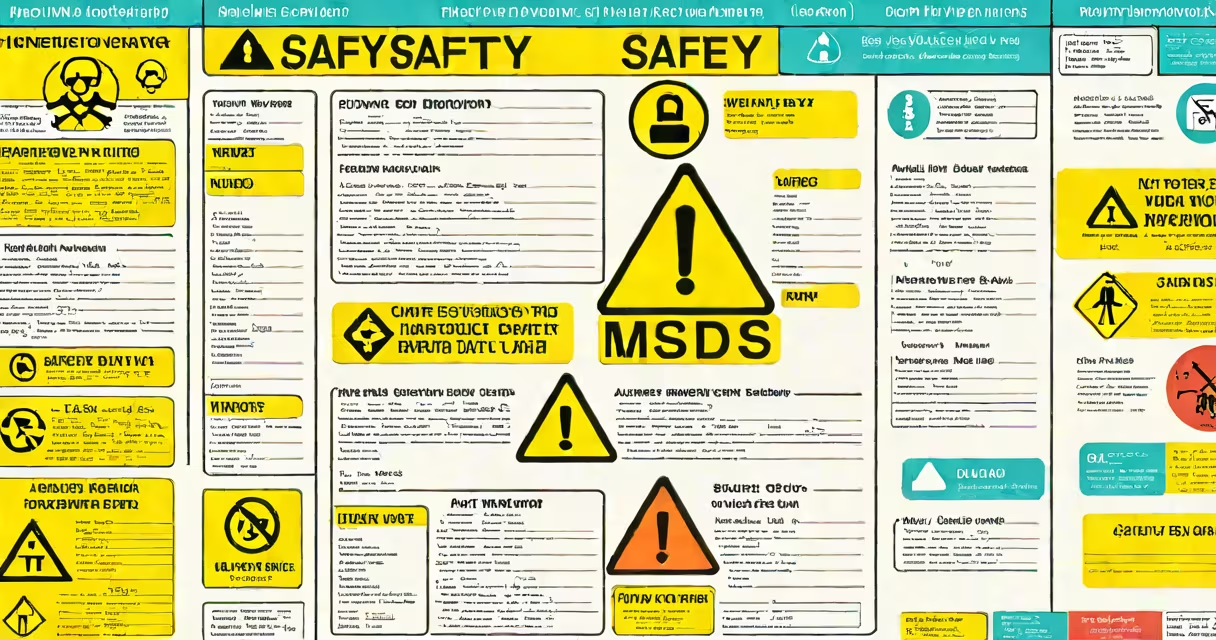
What msds means is a safety data sheet-a standardized document detailing the hazards, handling, storage, and emergency response protocols for a chemical substance. It ensures consistent communication of risks across industries and regulatory bodies.
MSDS stands for Material Safety Data Sheet. It was the original format used globally to communicate chemical safety information. Since 2012, the Globally Harmonized System of Classification and Labeling of Chemicals (GHS) replaced the traditional MSDS with a new format called the Safety Data Sheet (SDS), though many still refer to it as an MSDS.
The shift from MSDS to SDS wasn't just a name change. The GHS system standardized 16 sections, including identity, hazards, composition, first aid measures, fire-fighting measures, accidental release, handling, exposure controls, and stability. This uniformity reduces confusion in international supply chains and improves worker protection.
A safety data sheet provides actionable information for anyone handling chemicals-from lab technicians to warehouse workers. It includes physical properties like flash point, boiling point, and solubility, which determine how a substance behaves under different conditions.
For example, acetone has a flash point of −20°C, meaning it can ignite at very low temperatures. An SDS will list this under "Physical and Chemical Properties" and recommend storing it away from heat sources and ignition risks. Without this detail, a worker might store it near a heater, creating a fire hazard.
Emergency response instructions are critical. If someone spills hydrochloric acid, the SDS specifies using neutralizing agents like sodium bicarbonate and wearing nitrile gloves and goggles. It also gives steps for skin and eye exposure: flush with water for 15 minutes and seek medical help immediately.
The 16-section format of the SDS is mandated by OSHA in the United States and adopted by the UN. Each section serves a distinct purpose, ensuring clarity and compliance.
| Section | Content | Example |
|---|---|---|
| 1 | Identification | Product name: Sulfuric Acid 98%, CAS Number: 7664-38-2 |
| 2 | Hazard identification | Signal word: DANGER. Hazard statements: Causes severe skin burns and eye damage. |
| 3 | Composition | Contains 98% sulfuric acid; impurities include iron and arsenic. |
| 4 | First aid measures | Eye contact: Rinse eyes with water for at least 15 minutes. Seek medical attention. |
| 5 | Fire-fighting measures | Use dry chemical extinguisher. Do not use water-it may cause violent reaction. |
Section 12, "Ecological information," is often overlooked but important. It details environmental impact-like how a pesticide degrades in soil or harms aquatic life. This helps companies meet EPA and EU environmental standards.
Workplaces using chemicals-manufacturers, laboratories, construction sites, and hospitals-must have an SDS for every hazardous product on-site. OSHA requires employers to maintain accessible SDS files and train staff on their use.
In 2021, OSHA reported that 42% of workplace injuries involving chemicals were linked to improper handling due to missing or misunderstood SDS information. That number dropped to 27% after mandatory SDS training was enforced in high-risk facilities.
When transporting chemicals, the SDS supports compliance with DOT (Department of Transportation) and IATA (International Air Transport Association) regulations. For example, shipping ethanol by air requires a specific SDS section outlining flammability and vapor pressure, which determines packaging class and labeling.
Many assume an MSDS is optional or only needed for dangerous substances. This is false. Even low-hazard products like cleaning wipes require an SDS if they contain any regulated ingredient-such as ammonia or bleach.
Another error: treating the SDS as a static document. It must be updated whenever new data emerges. In 2019, a study by the National Institute for Occupational Safety and Health (NIOSH) found that 34% of SDSs reviewed had outdated toxicity data, leading to incorrect risk assessments.
Some confuse the SDS with a product label. Labels show immediate hazards-like skull-and-crossbones icons-but lack detailed procedures. The SDS complements the label with full context, such as long-term health effects and safe disposal methods.
Formaldehyde is used to preserve tissue samples. Its SDS lists it as a known human carcinogen (IARC Group 1). The document specifies a permissible exposure limit (PEL) of 0.75 ppm over an 8-hour workday.
At a hospital in Chicago, a technician noticed a faint odor during slide preparation. Consulting the SDS revealed that the concentration exceeded the PEL. Immediate action included improving ventilation, switching to a lower-concentration solution, and installing a fume hood. This prevented chronic exposure and potential cancer risk.
I've personally reviewed dozens of SDSs during a safety audit at a chemical distributor. One stood out: a container labeled "non-toxic" with a green symbol, but the SDS listed it as corrosive to metals and harmful if swallowed. The discrepancy between label and SDS nearly caused a spill incident. That's why reading the full document matters-even when marketing claims suggest otherwise.
While people still say "MSDS," the correct term today is "Safety Data Sheet." The GHS standardization eliminated inconsistencies across countries. For example, the European Union uses CLP (Classification, Labeling, and Packaging), which aligns with GHS but enforces stricter labeling rules.
Even within the U.S., states like California have additional requirements. The California Air Resources Board (CARB) mandates that certain solvents include VOC (volatile organic compound) emission data in the SDS, which isn't required federally.
When reviewing an SDS, always check the version date. A 2010 version may not reflect current hazard classifications. OSHA's Hazard Communication Standard (29 CFR 1910.1200) requires updates within six months of new scientific findings.
What msds means is not just a document-it's a legal and operational tool for protecting people and the environment. It's not optional. It's not decorative. It's a requirement under federal and international law.
Understanding what msds means ensures safer workplaces, compliant operations, and informed decisions-every time.